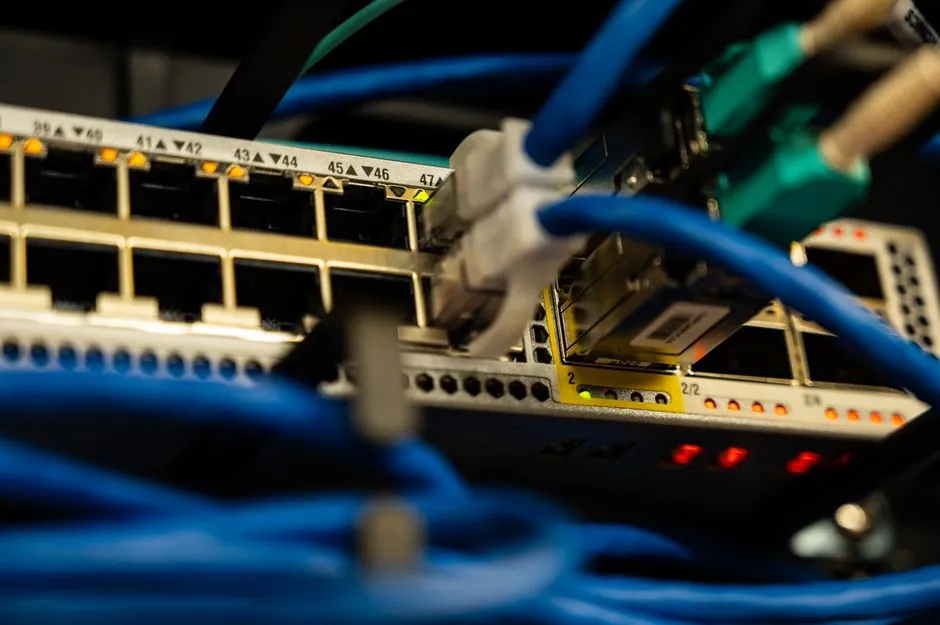
Centrifugal chiller lead times for hyperscale AI data centers stretched to 40-60+ weeks by mid-2026, roughly three times the 16-20 week baseline that held before 2020, because the NVIDIA GB200 NVL72 platform pulls about 120 kW per rack and forces liquid cooling onto every new build [S5][S6].
The squeeze sits on the heat-rejection side of the loop, not the IT load: a 500 MW AI campus needs 100-200 coolant distribution units (CDUs) and several large chillers, with CDU lead times alone at 20-40 weeks and a typical 500-ton+ centrifugal chiller built to order at a handful of OEMs [S4][S5].
From 15-20 kW/rack Air Cooling to 120 kW/rack Liquid: The Demand Shock
Traditional enterprise data centers ran at 5-10 kW per rack on raised-floor air handling, and the practical ceiling for CRAC-supplied air sits at roughly 15-20 kW per rack before silicon starts thermal-throttling [S5][S6]. The GB200 NVL72 exceeds that envelope by about 6-10x, which is why liquid cold-plate loops with rack-local coolant distribution units have moved from optional to mandatory on every new hyperscale AI hall [S4][S6].
Liquid heat transfer is 50-1,000 times more efficient than air at standard density, but that efficiency comes bundled with new equipment categories: in-rack CDUs, brazed-plate heat exchangers, glycol-compatible secondary loops, and 3-way control valves that did not exist in the air-cooling bill of materials [S3][S4]. A typical 100 MW liquid-cooled campus needs thousands of CDUs, each one a custom-engineered skid with redundant pumps, plate exchangers, and PLC control, which is why procurement moved from a 90-day packaged chiller PO to a 6-9 month engineered-to-order cycle [S3][S4].
Chiller Lead Times and the OEM Capacity Wall
Large 500-ton and above centrifugal chillers are built-to-order at five main OEMs: Carrier, Trane (Trane Technologies), Daikin, Mitsubishi Heavy Industries, and Johnson Controls (York), and all of them are running at full allocation with hyperscalers competing for the same production slots [S5]. Cooling towers from EVAPCO and Baltimore Aircoil have settled into a 30-50 week window, and new factory capacity takes 2-3 years to commission, which means the 2026-2027 squeeze is structurally locked in [S5].
The chiller procurement window now sits upstream of the electrical and IT gear: a transformer delivery that used to be the gating item is being paralleled by chiller allocations, and developers are reporting that the chiller PO is the first commitment they must lock before a site is even graded [S3][S5].
CDU Supply: 20-40 Weeks and a Custom-Engineering Tax

CDU lead times expanded from 12-16 weeks in 2024 to 20-40 weeks in mid-2026, with US demand pulling the long end of that range, because liquid-cooled data center design starts surged in late 2025 and CDU makers have not been able to scale [S4]. A 500 MW AI campus needs 100-200 CDUs at tens of thousands of dollars per unit, which puts the CDU procurement alone in the tens of millions of dollars and concentrates orders at a short list of suppliers: CoolIT Systems, Boyd, Vertiv, nVent, Chilldyne, and a handful of legacy air-conditioning houses that added CDU lines (Stulz, Schneider) [S4][S5].
The CDU is not one part, it is an assembly of four constrained subsystems: stainless brazed-plate heat exchangers from Alfa Laval, Kelvion, and GEA; cast-case pumps hit by the same copper and casting bottlenecks as the rest of the HVAC pump market; 3-way valves with electric actuators that need both semiconductor drivers and copper-alloy bodies; and PLC plus sensor packages (10-15 temperature sensors, 3-5 flow meters per unit) that depend on the same power-electronics supply feeding VFDs [S4]. One-for-one custom engineering per site, with no agreed standard for primary-loop temperature, glycol mix, or dielectric versus water coolant, blocks the line-speed learning curve that would normally compress lead times [S4].
PFAS and Refrigerant Regulation: A Parallel Bottleneck
Refrigerant availability is now a second-order constraint on chiller design: 3M exited PFAS manufacturing at the end of 2025, the EU is moving toward a broad PFAS restriction by 2030, and the 3M Novec fluids that single-phase immersion cooling depended on are being phased out [S5]. Bio-degradable replacement fluids from Shell and ExxonMobil are slated for commercial availability in 2027-2028, and during the interim window, direct-to-chip water cooling is the safer bet because it sidesteps the dielectric-fluid question entirely [S5].
For traditional air-conditioning refrigerants (R-410A, R-134a), the EU F-gas phase-down keeps adding design revisions onto chiller OEM engineering loads, so even a standard centrifugal chiller order now absorbs extra engineering hours for refrigerant compliance, which lengthens the quoted lead time on top of the factory queue [S5].
Water Stress, PUE, and the Site-Selection Domino
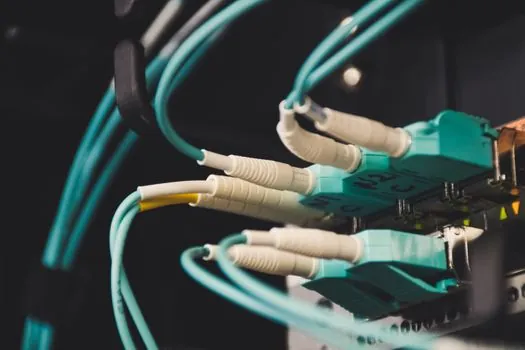
Free-cooling in Nordic climates delivers a WUE near 0.2 L/kWh against a data center industry average of about 1.8 L/kWh, but those same Nordic sites carry 3-7 year grid-interconnection queues and a thin construction-labor market, so the cooling fix just trades one bottleneck for another [S5].
Of 809 planned US data centers tracked through mid-2026, 517 sit in counties that were in drought for the prior year, and the Guardian's June 2026 analysis projects aggregate US datacenter water demand rising from about 17 billion gallons in 2023 to as much as 73 billion gallons per year by 2028, a four-fold jump that is hardening local opposition to new water-cooled builds in Pecos County, Carson County, and Walla Walla County [S1]. A January 2026 Bloom Energy forecast put combined US data center energy demand at 80 GW in 2025 rising to 150 GW by 2028, the equivalent of adding a Spain-sized load, and the electricity bill spikes in places like Manassas, Virginia are already showing up on residential meters [S2].
Air vs. Liquid vs. Hybrid: A 2026 Sourcing Decision Matrix
Air handling with economizers remains the lowest-cost install and the easiest to staff, but it loses above roughly 30 kW per rack and forces thermal throttling on any AI training pod sized for sustained turbo boost [S3]. Cold-plate direct-to-chip loops deliver the 50-1,000x heat-transfer gain that justifies the CAPEX, at the cost of one CDU per rack row plus a facility water-treatment regime, and the pressure sensor plus flow meter density per rack is roughly 10x what an air-cooled hall carries [S3][S4].
Rear-door heat exchangers and in-row CDUs are the format most brownfield sites pick first because they reuse existing hot-aisle/cold-aisle containment, and operators running mixed virtualization under 15 kW per rack generally get a better PUE delta by tightening cold-aisle sealing and adding free-cooling than by tearing into a liquid skid project, which is why hyperscale colos bid liquid to AI tenants and air to enterprise tenants on the same campus [S3]. For brownfield sites where floor loading, ceiling height, or local water rules block a full secondary loop, the practical answer is rear-door heat exchangers or single-phase immersion on one or two rows with the rest of the hall on upgraded CRAC units [S3][S5].
Who Should Spec Liquid in 2026 and Who Should Stay on Air

Liquid cold-plate retrofits pay back when the workload is steady-state HPC, dense GPU training, or inference pods running above the 30 kW/rack threshold for most of the billing cycle, because every kilowatt reclaimed from throttling is billable compute that air cooling cannot deliver [S3]. Operators running general-purpose virtualization under 15 kW per rack generally get a better PUE by upgrading CRAC units and adding free-cooling economizers than by chasing a liquid retrofit, and that segmentation is exactly how hyperscale colos price liquid to AI tenants and air to enterprise tenants on shared campuses [S3].
The retrofit penalty is real: converting an air-cooled hall to liquid runs 1.3-1.8x the cost per kW of a greenfield liquid build, mostly because of piping rework, floor loading upgrades for chilled water skid weight, and the longer commissioning cycle (liquid loops take 2-3x the commissioning hours of an equivalent air system) [S4][S5]. Most operators facing a 30+ kW/rack demand profile therefore push toward new construction, which feeds directly into the same land, power, and permitting queues that the transformer shortage is already filling.
Trackable Signals to Watch Through 2027
Two signals will tell operators whether the chiller and CDU squeeze is easing: the quarterly chiller lead-time prints from Carrier, Trane, Daikin, and Mitsubishi Heavy Industries, and the CDU order books at CoolIT, Vertiv, and Boyd, both of which have publicly indicated that new factory capacity will not come online in volume before late 2027 [S4][S5]. On the refrigerant side, the first commercial shipments of PFAS-free dielectric fluids from Shell or ExxonMobil, currently slated for 2027-2028, will determine whether single-phase immersion can scale beyond the pilot sites that depend on 3M Novec today [S5].