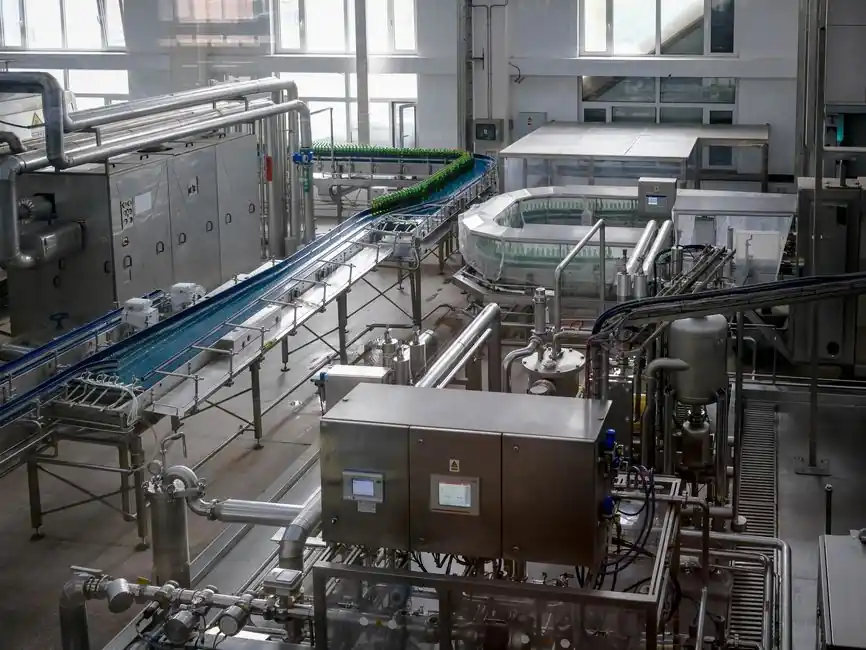
Air blast rejection can be considered for small, lightweight products running at high speeds, and one H-series air-blast configuration has a maximum weight of 300 g and a capacity of 330 packs/min.
The pressure setting must be tuned against product weight, package stability, line speed, and spacing, because the air pulse must displace the product without damaging it or blowing adjacent good packs into the reject stream [S1][S2].
Where Air Blast Rejection Fits
Air blast uses a focused air pulse to push a rejected package sideways off the conveyor, allowing continuous operation without the extension and retraction cycle of a mechanical pusher [S1][S6].
The method is intended for lightweight packaged products such as granola bars and bags of potato chips, rather than open packages, heavy containers, or bulky products [S5]. Air blast is also unsuitable where a forceful sideways impulse could damage a fragile package, deform contents, or disturb neighboring products [S1][S5].
A checkweigher makes the accept or reject decision from the preset acceptable weight range, but the reject mechanism must physically remove the nonconforming package [S2]. That division matters: accurate weighing does not compensate for a nozzle that is too weak to eject the package or too strong to preserve it [S1][S4].
Air Blast, Pusher, and Drop Compared
Air blast, pusher, and drop rejects should be selected from the same set of application variables: package weight, dimensions, packaging format, line speed, and product spacing [S2].
This comparison places the pressure-setting question in context: air blast is the high-speed option for light packs, while pushers provide greater force for heavier products and drops suit flexible packages that can discharge by gravity [S2][S4].
Start Pressure From Product Mass and Packaging
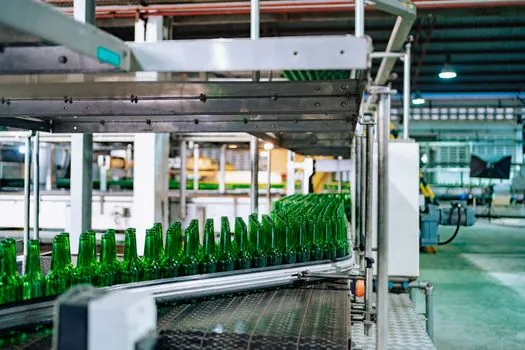
One H-series air-blast checkweigher configuration has a maximum weight of 300 g and a capacity of 330 packs/min. These are application boundaries, not universal pressure values.
No fixed bar value can be assigned from the available technical material because acceptable pressure depends on nozzle geometry, air concentration, package drag, belt friction, and product stability. A bag that is heavier may require more force because drag rises with mass, but a fragile bag may require less force because its seam or wall deforms before it slides [S1][S5].
Use a controlled ramp during commissioning. Start at the lowest setting that produces reliable separation, then increase it in small increments while checking three outcomes: complete lateral displacement, no package deformation, and no rejection of adjacent good product [S1]. Record the accepted setting against the specific package, line speed, and reject-nozzle configuration, since changing any one of those variables can alter the required pulse [S1][S2].
Match the Pulse to Conveyor Speed and Spacing
Reject timing depends on line speed, product length, product spacing, product distribution, and the inspection system that sends the reject command [S1]. The nozzle must fire when the nonconforming package reaches the reject position, and the pulse must move that package into a defined reject path without striking the next acceptable package.
The H-series air-blast reject system has a capacity of 330 packs/min. These figures demonstrate that high-speed pneumatic rejection is practical, but they do not prescribe one pressure setting across both architectures.
At higher conveyor speeds, a fixed-duration pulse can act later relative to the package because the nozzle-to-product delay must be recalibrated [S1]. Short spacing also reduces the available margin for error: an overpowered pulse can send one reject into the following good package, while an underpowered pulse may leave the nonconforming pack on the belt scale infeed path [S1][S2].
Protect Fragile and Lightweight Packages
Air blast is a non-contact rejection method for lightweight products, but the product still experiences a concentrated pneumatic impulse [S6]. Open packages are not recommended because the discharge can spread or disturb their contents, while tall gusseted pouches may require a different reject geometry because of their shape and height [S1][S5].
Lightweight does not mean unrestricted air pressure. The nozzle must be aligned and focused so the force acts across the package's stable surface rather than an exposed corner or seam [S6]. For low-mass packs, excessive pressure can make the package flutter, deform, or strike nearby products instead of following a clean lateral trajectory [S1][S5].
Validate the setting with the least robust acceptable package in the production mix, not only with the nominal pack. Test at the intended line speed and with representative product spacing, then inspect rejected and adjacent good packages for crushed corners, split seals, torn film, crushed contents, and unintended diverts [S1][S2].
Tune by Air Delivery, Timing, and Reject Path
The practical adjustment is not limited to a regulator on the nozzle. Air delivery, pulse duration, firing delay, nozzle position, and reject-bin geometry work together to produce a stable separation event [S1][S6].
First confirm that the nozzle produces a focused burst rather than an unrestricted flow across the line [S6]. Second, verify the command timing against actual product travel, including the response interval of the weighing system [S1]. Third, confirm that a rejected package enters the bin or reject conveyor without striking the belt edge or returning to the accepted stream [S1].
Then tune pressure against the lowest acceptable setting, checking at least 3 operating conditions: the intended production speed, the fastest planned speed, and the condition with the least product spacing [S1][S2]. If a light pack rejects reliably at low pressure, raising the setting has no engineering benefit unless it solves a demonstrated failure. If it fails to clear, diagnose timing and nozzle alignment before assuming that more pressure is required.
Air preparation also affects repeatability. Contaminated or restricted air paths can change nozzle output, while an unstable source can make identical pressure settings behave differently across a production run [S1][S4]. Establish the supply condition required by the reject system and document it with the pressure setting rather than recording pressure alone.
Sizing the Checkweigher and Reject Combination

The checkweigher and rejector must be sized as one system. Published H-series data includes a maximum product weight of 300 g, 330 packs/min, approximately 60 kg empty weight, and IP66 washdown construction for that configuration [S3]. These figures identify the scale and environmental envelope of one documented model, not a universal limit for air blast equipment.
A filling-weighing-scale can provide the mass signal that triggers rejection, but production speed, package pitch, and reject travel still determine whether a short pneumatic pulse can separate one pack from its neighbors [S1][S2]. The conveyor must also provide enough infeed length for the product to stabilize before weighing [S2].
Specify the intended package family in grams, maximum operating speed in packs/min or units/min, minimum spacing, conveyor width, acceptable reject direction, and available air-supply conditions. These inputs are necessary because no research source supplies a universal air-blast pressure, and a pressure copied from another product can damage packaging or leave a rejected pack on the line [S1][S2].
Close the commissioning record with two measurable signals: first-pass rejection accuracy, including any adjacent good-product rejects, and the count of damaged or incompletely ejected packages at the intended line speed. Track checkweigher accuracy for underweight and overweight detection separately from ejector performance, because a correct NG decision can still produce poor physical rejection if the air pulse or timing is wrong.