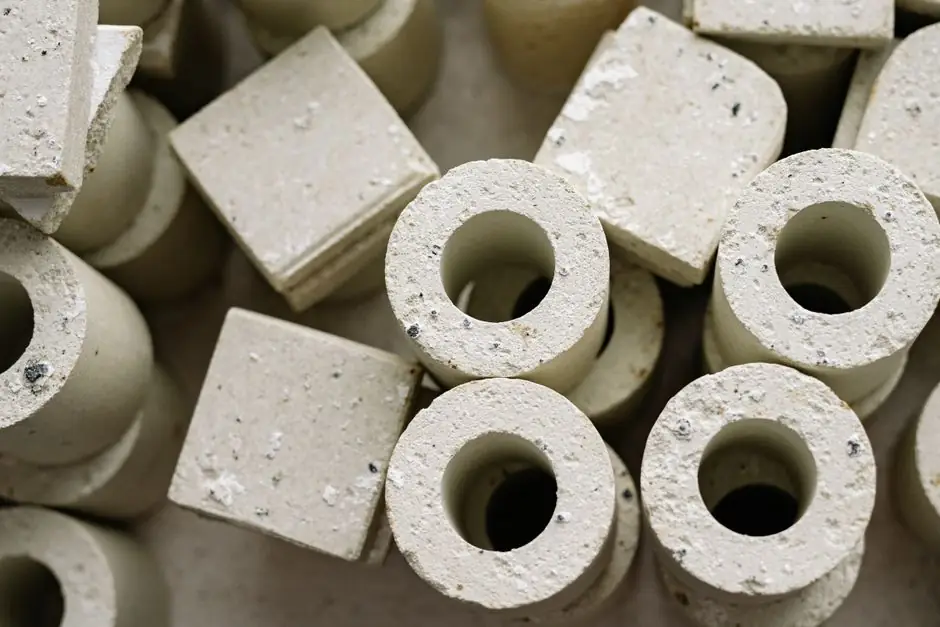
HP alloy can be cast satisfactorily from 3/16-inch section thickness, while HK40 cast trays favor heavy-load applications where carbon content and creep resistance dominate.
The decision is not simply “higher temperature equals better alloy”: furnace atmosphere, thermal cycling, section thickness, load, repair method, and life-cycle cost determine whether HK40, HP, or a wrought hybrid is the defensible choice.
What the two cast alloys are used to solve
HK40 and HP are heat-resistant cast alloy families used for trays, baskets, grids, racks, and other load-supporting fixtures that remain in service during heating, cooling, carburizing, annealing, hardening, tempering, or quenching operations. Cast fixtures can incorporate grids, ribs, locating features, shoes, tabs, and furnace-specific geometry directly into one component [S2][S4].
The practical distinction begins with casting behavior. HP castings have good machining and welding properties, and sections from 3/16 inch upward can be cast satisfactorily in HP alloy [S3]. This makes HP relevant when a tray requires thinner cast sections, complex geometry, or later machining. HK40 is generally associated with a higher-carbon, higher-creep-strength casting approach that supports heavy loads but has greater cracking susceptibility under thermal cycling [S1].
Both choices must be tied to a defined heat treatment furnace duty. The relevant operating facts are the actual metal temperature, atmosphere, cycle count, maximum load, support span, section thickness, and whether the tray is quenched while loaded.
HK40 versus HP across decision criteria
HK40 is the stronger default for a rigid, highly loaded cast tray with substantial section thickness and relatively gentle cycling. Its higher carbon content supports load-bearing capability, while the casting process can provide high creep strength and complex shapes ready for use [S1]. The trade-off is crack risk: cast fixtures can develop cracks during frequent temperature changes, and a heavy HK40 tray that retains more thermal mass can demand more severe maintenance.
HP is the stronger default for thin cast sections, machined features, complex grids, and applications where repair welding is important. Its documented 3/16-inch castability threshold gives the designer a concrete minimum section to work from, while its good machining and welding properties can reduce fabrication and repair constraints [S3]. HP should not be treated as automatically superior at temperature; published comparative work on HK-40 and HP-45 specifically examines creep-rupture behavior rather than establishing a universal superiority claim [S6].
For cost, cast construction generally provides a lower cost per unit and can consolidate multiple features into one piece [S1]. For cycle survival, wrought construction is normally better because its lower carbon content and defined grain structure improve resistance to sudden temperature changes [S1]. For very heavy loads, cast HK40 has the better structural logic. For thin geometry and easy rework, HP has the better fabrication logic. For the most severe thermal cycling, a wrought or cast-wrought hybrid may outperform either fully cast choice [S1].
Match the alloy to furnace duty and load
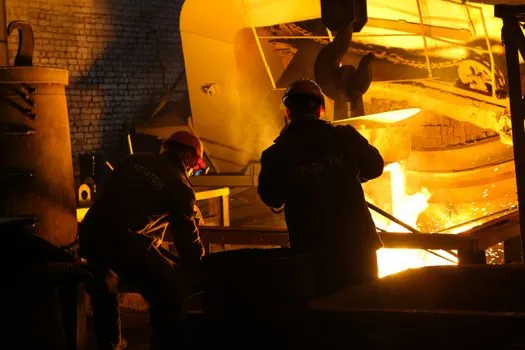
Carburizing and atmosphere furnaces impose different constraints from vacuum furnaces. Wirco manufactures roller, pusher, skid, and batch carbonizer trays in reversible and non-reversible designs [S5]. The attachment arrangement matters because a heavy cast tray can transmit thermal and mechanical loads directly into the furnace structure.
Commercial cast trays are available from 10 to 2,000 lb across designs using alloys ranging from low-grade heat-resistant alloys to superalloys [S5]. That range demonstrates why furnace compatibility and load, rather than alloy name alone, must govern the purchase.
Supplier examples include 2.4879 heat-treatment baskets and trays and 1.4849 heat-resistant furnace base trays [S4].
Thermal cycling, oxidation, and repair consequences
Thermal cycling is the main reason a tray that survives a static temperature check can still fail in production. Wrought alloys can be used in thinner sections, are repairable and weldable, and resist thermal fatigue better than cast material; thin wrought construction also reduces fixture weight and the energy required to heat the fixture [S1]. A fully cast tray trades that cycling tolerance for low unit cost, high creep strength, complex shape, and greater resistance to deformation under heavy loads [S1].
HE alloy castings have good machining and welding properties [S3]. The alloy designation alone does not qualify a repair weld. A qualified procedure and the applicable casting manufacturer’s data should govern repair limits.
Atmosphere also changes the comparison. Carburizing conditions can expose a tray to carbon enrichment and subsequent decarburization effects, while oxidizing or reducing atmospheres impose different alloy-surface demands. The furnace service specification and grade-specific data should be reviewed before setting a maximum operating temperature.
Life-cycle economics and purchase criteria
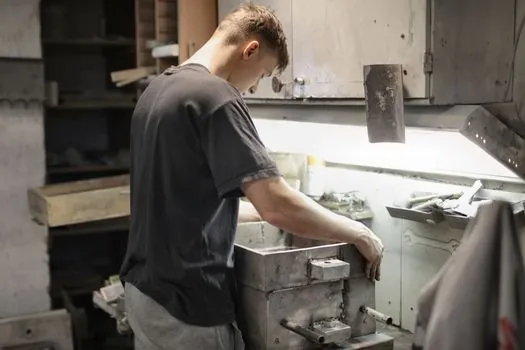
Initial tray price is only one line in the business case. The governing measure is life-cycle cost per pound of heat-treated product, including fixture mass, heat-up energy, replacement frequency, weld repair, downtime, and yield loss [S1]. A cheaper HP casting with a short cracking interval can cost more than a stable HK40 tray; a heavy, stable tray can lose through excessive fuel use and handling time.
A cast fettling grinder is not part of the operating system, but fixture preparation still affects life. Cast grids can retain gates, flash, casting skin, and dimensional deviations from drawings [S4]. The purchase specification should therefore define casting process, inspection, machining allowance, datum surfaces, flatness, grid openings, locating features, weld repair limits, and traceability rather than specifying only “HK40” or “HP.”
Steeltech markets trays in multiple shapes, sizes, and thicknesses, with cast-in or bolt-on shoes, multiple-tray bolting, pusher or puller modifications, perimeter tabs, and reversible or non-reversible configurations [S2]. Wirco separately identifies roller, pusher, skid, and batch carbonizer trays, with tray masses spanning 10–2,000 lb and specialist alloys ranging from low-grade alloys to superalloys [S5]. These capabilities support custom engineering, but they do not replace an alloy-specific service-life test.
Recommended selection by use case
Specify HK40 for a thick-section, heavy-load pusher or skid tray in a furnace with controlled cycling, where creep strength and resistance to permanent deformation justify the greater cast mass. Specify HP for a thin-section, geometrically complex tray with machining or weld-repair requirements, provided its verified temperature and atmosphere limits meet the duty. [S5]
Use a wrought or hybrid fixture when rapid temperature changes, repeated quench exposure, or frequent thermal shock governs failure, because wrought material has better thermal-fatigue resistance [S1]. A hybrid can still retain cast locating features or heavy sections without making the entire fixture a fully cast stress concentrator.
Do not use either alloy family for a general-purpose tray when load, temperature, and atmosphere are undefined. Require a supplier to state the exact grade, ASTM or EN designation, casting route, section dimensions, service temperature, atmosphere, load, and expected cycle count. For complex requirements, compare the proposed design with the selection basis for heat-treatment furnace conveyors by duty, then validate the alloy and geometry in the intended furnace atmosphere.
Sourcing, standards, and procurement controls
Supplement 9 of the Steel Founders’ Society of America high-alloy data sheets provides HP casting information, including the 3/16-inch minimum satisfactory cast section and the alloy’s machining and welding characteristics [S3]. This is a material data reference, not a universal furnace-design standard. The procurement document should identify the applicable edition and exact HP grade rather than relying on the family name.
For HK40, specify the applicable grade and material standard separately from the ASTM casting designation and the service standard used for the furnace and atmosphere. The research establishes that HK40 and HP-45 have been compared for creep-rupture behavior and that weldment performance can differ from parent-metal performance [S6]. That distinction supports requiring weld-procedure qualification data for any fabricated or repaired tray.
The most traceable procurement signals are a defined alloy grade, a dimensioned drawing with minimum section thickness, maximum loaded weight, furnace type, atmosphere, operating-temperature range, cycle rate, inspection criteria, and repair limits. Track fixture mass, replacement intervals, heat-affected-zone repairs, cracking locations, and cost per pound of processed product. Those records turn an alloy label into a defensible life-cycle decision rather than an assumption based on furnace temperature alone.