
Hot box core making uses more energy than cold box curing because hot box uses heated tooling, whereas cold box cores harden chemically at room temperature [S2][S3].
The comparison covers heating demand, curing time, tooling exposure, gas handling, and production suitability for high-volume, large, complex, or low-volume castings [S1][S4][S5].
Energy split and curing mechanisms
Hot box core shooting sends resin-coated sand into a preheated core box, where heat activates the resin binder and cures the core rapidly [S3][S4]. The process must supply thermal energy to heat the tooling, maintain its working temperature, replace heat lost from the tool surface, and support the curing cycle [S1][S2].
Cold box core making mixes sand with a two-part resin binder, shoots the mixture into a vented core box, and cures it at room temperature through a chemical reaction [S3][S5]. It therefore removes sustained mold heating from the curing stage, which is the principal reason cold box systems consume less energy [S1][S2].
The distinction is thermal energy, not total electrical demand. Cold box still uses power for sand mixing, compressed air, resin dosing, gas generation, extraction, and core ejection. Its energy balance shifts toward those utilities, while hot box shifts energy toward heating and temperature control [S3][S4].
Tooling temperature and continuous heat demand
By comparison, cold box tooling cures the core without sustained heating, and the chemical curing route operates at room temperature [S1][S3].
Hot box tooling also has to withstand thermal stress, while cold box tooling avoids that thermal load [S1]. The consequence is not merely a lower heater rating: a hot box line requires continuous thermal power during production, including the energy needed to offset losses from heated surfaces [S1][S2].
One comparison document explicitly notes that electric heating can consume substantial electricity, while electricity use for the same output is lower with cold box cores, with the proportion depending on the product [S4]. That qualification matters: the gap varies by core geometry, resin system, production rate, and the efficiency of the heating plant.
Cycle time, productivity, and energy per core
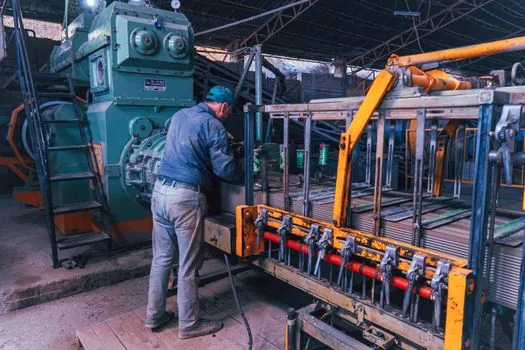
Hot box curing provides a short hardening cycle and supports high-volume production once the tooling has reached its controlled temperature [S4]. Its fast curing is one reason foundries continue to use hot box systems where the shop is already organized around thermal curing [S3].
Cold box has a longer hardening time than hot box according to the process comparison, which can constrain output for some applications [S4]. It can produce cores without heating the tooling, and cold box generally uses less energy than hot box [S1][S2][S5].
The key engineering comparison is therefore energy per acceptable core, not heater consumption alone. A hot box machine may cure each core in less time, but it must supply heat to the box and maintain that condition between shots. A cold box line may add chemical curing time and auxiliary handling, yet it does not continuously heat the tooling [S3][S4].
Process selection by production requirement
It also suits established high-volume lines with experienced operators, stable repeat cycles, and the plant infrastructure needed to heat resin tooling [S1][S3].
Cold box uses less electricity than hot core at the same output and produces more consistent core hardness through the core section [S4].
Cold box is not the universal answer. It requires chemical curing infrastructure, including a source of triethylamine curing gas and tail-gas handling [S4][S6]. Its sand mixture also has poorer fluidity than coated sand used in the hot box route, and mold exhaust requirements are higher [S4]. These utility, ventilation, and material-handling requirements must be included in any plant comparison.
Comparison of hot box and cold box
Hot box uses heated tooling to cure cores, while cold box cures at room temperature [S2][S3]. On thermal-energy demand, hot box requires heated equipment and continuous power; cold box omits sustained tooling heat [S1][S2]. On cycle behavior, hot box offers short hardening time and rapid output, while cold box has a longer chemical hardening cycle [S4].
On shop-floor utilities, cold box requires resin mixing, compressed air, amine curing gas, and tail-gas treatment, while hot box requires thermal power and temperature-controlled tooling [S4][S6]. These five criteria show why cold box can use less energy without necessarily being the simpler or faster production system.
Environmental and maintenance constraints
Cold box eliminates the hot box smoke and smell associated with heated resin, but its curing route produces triethylamine gas that requires a tail-gas tower [S4]. Gas exposure, extraction capacity, and chemical handling therefore replace part of the thermal burden [S6].
Cold box cores are described as having consistent hardness from the outside toward the inside after molding and as being less prone to deformation during casting than hot box cores [S4]. Cold box cores also require less cleaning after work, while hot box equipment requires daily cleaning of the shot area and auxiliary equipment, extending non-productive time [S4].
Those maintenance and emissions differences can change the operating-cost comparison, but they do not reverse the basic energy result: the cold box route avoids the hot box process requirement for thermal curing power. A foundry should verify the result with its own core mass, cycle rate, shell or tooling surface area, heater efficiency, and cure recipe before making a capital decision.
Where shell core methods fit

Shell core shooting also uses heat to cure resin-coated sand, with controlled heating determining shell thickness, bonding, and core strength [S5]. It should not be treated as the low-energy alternative to hot box in this comparison. Its tooling temperature, resin consumption, sand recycling requirements, and cure schedule create a different operating profile [S4][S5].
Foundries comparing tooling economics and energy use across shell and hot box equipment can use the detailed comparison of shell and hot box core shooters to separate machine output from the curing route. The core-machine overview for hot box core making and cold box core making provides the relevant process definitions, while a shell core shooter belongs in the comparison only where shell curing is genuinely under consideration.
The defensible answer is therefore process-specific: hot box core making generally uses more energy than cold box curing because it adds sustained heating above 200°C. For procurement, measure energy per accepted core under production conditions rather than comparing nominal heater ratings, because binder chemistry, core size, cycle rate, and recovery time can materially narrow or widen the gap.