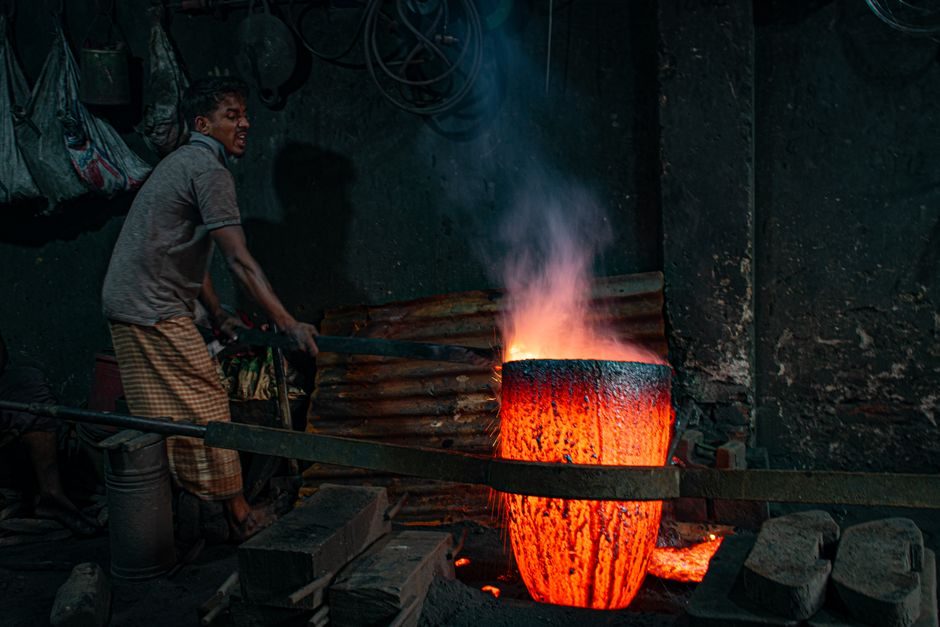
Hot chamber die casting machines in the 12T to 30T clamping-force class are purpose-built for zinc, Zamak and lead alloys, with KYLT Industrial Limited's standard product line confirming 12T, 15T, 20T, 22T and 30T ratings deployed across China, Brazil, India and Bangladesh [S1].
The process is a high-pressure injection of molten metal into a reusable steel die, and machines are commonly rated in clamping tons equal to the die-opening resistance the lock-up can sustain — sizes from 400 tons up to 4000 tons are referenced across the used-equipment market, with hot-oil units sized to keep the die and the entering metal at uniform temperature so porosity and cold-shut defects are controlled [S2][S10].
Where Hot Chamber Fits — and Where It Does Not
Hot chamber machines keep the metal pot, gooseneck and plunger immersed in molten metal inside an integrated furnace, which cuts cycle time on zinc, Zamak and lead work and is the reason KYLT explicitly labels its line "zinc alloy injection machines & lead alloy injection machines" rather than aluminium or magnesium units [S1]. The process window is bounded by the alloy: zinc and Zamak typically run near 380–420 °C at the nozzle, and lead alloys below that, so any process chemistry above roughly 480–500 °C belongs in cold-chamber territory.
For aluminium, magnesium, brass and high-melting zinc alloys the specification moves to a cold chamber die casting machine, where the shot is dosed into a cold sleeve from an external furnace. Haitian's HDC Series, for example, climbs from 180 t up to 8800 t clamping force with servo-driven energy saving and a rigid machine body, sized for automotive structural and new-energy-vehicle castings that exceed any hot-chamber machine's alloy tolerance [S6]. If the part is an EV battery aluminium cooling housing, a structural chassis node or any aluminium-magnesium structural component, hot chamber is the wrong machine class [S8].
Clamping Force, Shot Weight and Platen Geometry
The two non-negotiable sizing inputs are projected area of the part plus line pressure, which set the required clamping tonnage, and the shot weight in grams, which sets the plunger diameter and injection stroke. KYLT's published range (12T, 15T, 20T, 22T, 30T) is the small-format end of the market and is typical for hardware, fittings, electrical enclosures and Zamak decorative parts rather than automotive structural nodes [S1]. Larger used machines on the second-hand market run to 4000 t with matching platen sizes, and the Italpresse line covers the full span of cold-chamber plus hot-chamber models for aluminium, brass, magnesium, zinc, Zamak and lead, with Italpresse founded in 1969 under parent SIL Industrie (founded 1942) [S7].
A 25-ton-class hot chamber such as the SH-25 Hot Chamber Zinc Die Casting Machine is representative of the small-format / die-cast hardware segment — sized for compact Zinc Zamak parts with moderate projected area [S4]. The practical engineering gate is this: calculate required clamping force as projected area × effective injection pressure × a safety factor of 1.1–1.3, then size the machine so the rated tonnage comfortably covers that figure with margin for flash and high-viscosity start-up shots.
Injection Speed, Intensification and Cycle Time
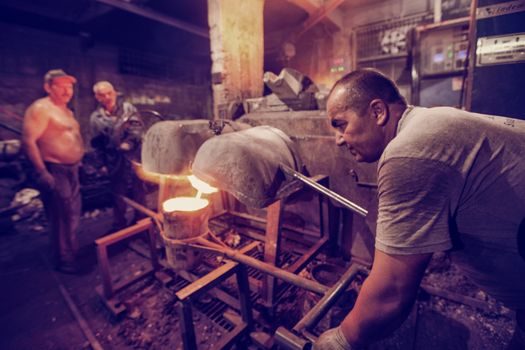
Cycle time on zinc and lead is dominated by fill time and die-open/close, not by metal-melting, so the spec levers that matter are plunger velocity in m/s, intensification ratio (the hydraulic boost that raises line pressure at the end of fill), and accumulator sizing. A faster intensification stage reduces porosity in thick sections; a slow fill on thin-wall zinc hardware gives cold-shut defects. The shot-end must be matched to the projected shot weight — a 20T machine is not a candidate for shots that demand the die-cavity area of a 200T platen, and oversizing the shot-end while under-sizing clamping force is a common quoting mistake. [S1]
Energy and control are converging across the segment: Haiti's HDC cold-chamber line carries an "intelligent computer control system" plus "energy saving servo drive technology", and the same control-and-servo direction is migrating into hot-chamber retrofits and new builds because the hydraulic power pack typically dominates the connected load of a small hot-chamber cell [S6]. For the smaller tonnages a quoted hot-oil unit capacity in kW and maximum allowable oil temperature (commonly 200–320 °C depending on fluid) is the next data point the specifier should pin down [S10].
Thermal Management: Hot Oil, Platen Heating and Die Life
Die temperature uniformity is the single largest defect-control variable on zinc and lead, and the standard cell configuration routes a thermal fluid (hot oil) heater through the die platen, the die itself, and sometimes the shot block. The intent is to eliminate cold spots that would freeze the metal before the cavity fills; cold spots show up as misruns, cold shuts and surface streaking. Hot-oil units sized to "both heat the mold and also keep the metal a uniform temperature as it enters the die" are described in die-casting process literature covering preowned and reconditioned equipment [S10].
Spec-side, the levers to pin down are: heater power in kW, pump flow in L/min, maximum operating temperature of the chosen thermal fluid, and the number of heating zones (platen, fixed die half, moving die half, shot block). On a 20T to 30T zinc machine, common practice is 3–4 zones with a single 6–12 kW heater; under-sizing the heater shows up as cycle-time creep on cold-start Monday mornings. If the process is part of a broader casting line, an aluminum die casting machine downstream of the same cell is not a candidate — alloys above the zinc/lead window demand a cold-chamber build.
Selection Criteria at a Glance
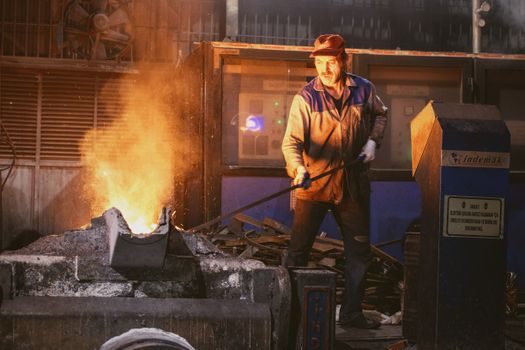
Five gates cover most specification decisions. (1) Alloy class: zinc, Zamak or lead only — anything else forces a cold chamber die casting machine class. (2) Clamping tonnage: projected area × line pressure × 1.1–1.3 safety factor. (3) Shot weight: must fit the plunger diameter and stroke of the targeted tonnage. (4) Platen size and tie-bar spacing: must clear the die footprint plus robot or hand-load clearance. (5) Thermal control: hot-oil kW, zone count and fluid temperature rating must match the die mass and cycle time. [S2]
On sourcing: Alibaba lists 1246 hot-chamber-die-casting-machine suppliers with main-market tags (Africa 13%, Eastern Asia 10%, South America 10%) and an average response rate of 91.6% on a representative supplier profile, indicating the segment is fragmented and price-driven [S9]. China-customs classification data sits the equipment in HS heading 8453 subheadings and 8422.40.00.90 for related packaging machinery, which is the tariff lineage relevant to importers [S5]. For buyers comparing categories, the same data discipline that drives industrial ceramic selection by material grade and sourcing lever applies: pin the spec values, then ask for the certificate.
Limits, Failure Modes and When to Walk Away
Hot chamber is a poor fit when any of these are true: the alloy exceeds the zinc/lead window, the projected area demands more than roughly 4000 t clamping, the cell must run 24/7 with unattended shifts (plunger and gooseneck wear become scheduled-maintenance items every 100k–300k shots on zinc and far sooner on lead), or the part has porosity limits tighter than what a hot-chamber injection can deliver without vacuum assist. In that last case, the relevant upgrade is a vacuum die casting machine configured to evacuate the cavity before intensification. [S3]
Other disqualifiers: shot weight well below the machine's minimum stable shot (you cannot throttle a hot-chamber plunger the way you can a cold-chamber shot sleeve); corrosive or abrasive alloys that attack the gooseneck; and parts that need inserts loaded in a way that collides with the gooseneck/submerged plunger geometry. For high-volume zinc hardware where none of those limits apply — bathroom fittings, lockset components, electrical boxes, decorative Zamak — a 12T to 30T hot-chamber cell with proper hot-oil zoning and a servo-driven lock-up is the lowest-cost-per-shot configuration in the entire die-casting family.
Trackable signal: the next data point to watch is whether small-tonnage hot-chamber OEMs such as KYLT (12T–30T) and the Italpresse small-format line publish standardised energy and idle-power figures comparable to the HDC cold-chamber series, because that benchmark will decide whether a 2027 cell is sized around throughput or around kWh per kilogram of zinc injected. For related process-engineering context, the sand casting buying guide on process, spec and cost bands sets a useful cost-frame reference, while the industrial relay selection criteria piece is a useful template when a specifier has to run the same five-gate logic on a non-casting category.