
Sand casting mold selection in 2026 turns on four numeric axes — net part weight (0.1–5,000 kg), linear tolerance band (CT 8–13 per ISO 8062), surface roughness (Ra 12.5–50 µm on green sand, Ra 3.2–6.3 µm on shell) and order MOQ (1 kg–1,000-piece batches), all of which move the unit price 5–20× from green-sand blank to machined stainless casting [S6].
The four commercial routes a buyer will actually see quoted in 2026 are green sand, chemically bonded no-bake (furan/phenolic-urethane), shell (Croning) and lost-foam/expendable-pattern, distinguished by binder chemistry, mold re-use and achievable tolerance, not by brand [S3][S4]. A typical Chinese export quote for a CNC-finished stainless sand casting sits at US$10.00/piece MOQ 1, while raw zinc/aluminum die-cast auto blanks price as low as US$5.00/kg MOQ 1 — the same OEM tier does not cross between the two routes [S6].
Process families and the binder chemistry behind them
A sand casting mold is a shaped, single-use aggregate-and-binder tool; the binder is what differentiates the four commercial routes and drives 70% of the cost and tolerance spread [S1][S4]. Green sand uses clay (bentonite) + water activated by mulling, is the cheapest route, and is what Qingdao Longquan Hongda Cu-Al Casting and similar integrated copper/aluminum job shops default to for runs above 500 pieces [S6].
Chemically bonded systems (furan no-bake with acid catalyst, phenolic-urethane no-bake) harden at room temperature and are the standard choice for 100–5,000 kg steel and iron castings; recent sensor work correlates embedded-sensor data to 24-hour transverse strength, allowing strength prediction in phenolic-urethane and furan systems before strip [S5]. Shell molding (Croning) uses a thermoset phenolic-coated sand dropped onto a heated pattern (≈250–300 °C), giving the thinnest walls (2–5 mm) and the tightest sand-side tolerance in the family [S3]. Lost-foam/expendable-pattern burns a polystyrene pattern out of unbonded sand during pour, and is selected when the part geometry would be impossible to draft conventionally [S4].
Selection criteria: weight, tolerance, material, lot size
Step 1 is net part weight: under 1 kg favors shell or investment-like sand-shell; 1–50 kg is the green-sand/no-bake overlap; 50–5,000 kg with steel or iron is no-bake territory [S3][S4]. For reference, the broader casting-mold families are catalogued at the casting mold encyclopedia entry, which lines up permanent-mold, die and investment against sand.
Step 2 is tolerance and surface. ISO 8062-3 ductile-iron sand casting tolerance is typically CT 10–CT 12 (≈ ±1.0–2.5 mm on a 100 mm feature) on green sand, tightening to CT 8–CT 9 on shell; green-sand Ra runs 12.5–50 µm, shell Ra 3.2–6.3 µm before machining [S3]. Buyers who skip this step over-spec by a full tolerance band and pay for unnecessary CNC stock. The dedicated sand casting mold page covers the standard mold/draw/draft nomenclature used in these drawings.
Step 3 is alloy. Cast iron and carbon steel are the default for green-sand and no-bake; aluminum, copper and zinc are the default for die casting and permanent mold, but sand remains specified for low-volume aluminum (tooling-cost amortisation) and for large copper alloy housings, exactly the niche Qingdao Longquan Hongda Cu-Al occupies [S6]. For comparison, finished cast iron buying guide 2026 reference data lines the gray/ductile/white grades buyers will see quoted against sand-cast steel equivalents.
Cost bands 2026: what a quote actually contains
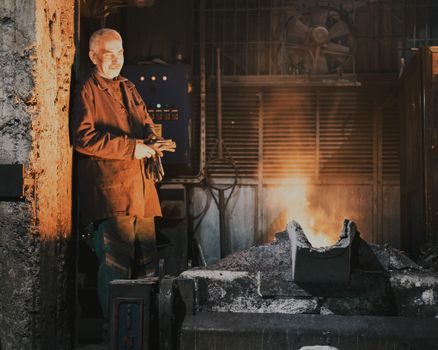
Headline 2026 sand-casting export prices cluster in three bands: US$5.00/kg MOQ 1 for raw zinc/aluminum die-cast auto blanks, US$10.00/piece MOQ 1 for CNC-machined stainless sand castings, with ISO 9001:2015 audited suppliers (e.g., Zibo Qingdong Machinery) sitting at the upper edge [S6]. A typical price stack is 30–45% raw alloy (Cu, Al, Fe, SS304/316), 20–30% pattern + mold, 15–20% melting + labor, 10–20% finishing + inspection, 5–10% overhead — alloy swing therefore dominates any 6-month quote re-valid.
Material-cost context for 2026 sits in the copper material 2026 price & cost guide, since copper-alloy sand casting is the most alloy-sensitive route in the family. A die-casting-die comparison is useful when buyers are choosing between the two routes at low-to-mid volumes; the die casting die 2026 bands shows where sand wins on amortization and where die-cast wins on cycle time. For tooling-side reference, tool and die steel buying guide 2026 covers the AISI P20/H13/D2 grades used for sand patterns and core boxes.
QA, simulation and embedded sensor controls
OEM-grade sand foundries in 2026 run mold-fill and solidification simulation (Keysight/ESI ProCAST and equivalents) on every new tooling job, to optimize gating/risering, predict shrinkage porosity, and cut physical trial pours by 30–60% [S2]. The same toolset is now paired with embedded miniature sensors that track curing progression inside chemically bonded molds; the published regression correlates sensor output to 24-h transverse strength of phenolic-urethane and furan no-bake systems, allowing the foundry to release the mold only when the predicted strength threshold is met [S5].
The practical procurement consequence is a 3-document QA pack: (1) PPAP or Cpk data for critical dimensions at CT band, (2) radiographic or ultrasonic evidence per ASTM E446 / E186 for steel/iron castings above agreed section thickness, and (3) a mold-fill simulation report archived with the tooling. Buyers who do not ask for (3) in 2026 are leaving defect-cost recovery on the table — it has moved from optional to mainstream.
Use cases and routing decision
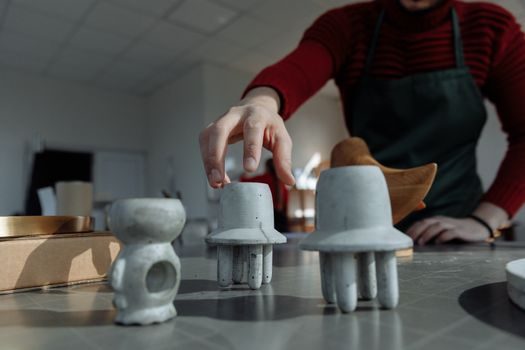
Sand casting is the right default when: net part weight exceeds 5 kg, alloy is cast iron/carbon steel/bronze, lot size is 50–5,000 pieces/year, and the part tolerates ±1.0–2.5 mm on a 100 mm feature [S3][S4]. It is the wrong choice when: lot size exceeds 20,000 pieces/year (die-cast or permanent-mold economics dominate), wall thickness must drop below 2 mm (investment casting), or the part must be a wrought-grade aluminum forging (forged 6061/7075).
Green-sand routes fit rough blanks, counterweights, pump housings and low-pressure cast iron pipe fittings; no-bake fits large steel/iron machine bases, valve bodies and gear blanks; shell fits thin-wall (2–5 mm) instrument housings and small stainless/carbon steel brackets; lost-foam fits complex one-piece aluminum or iron castings where internal draft would otherwise split the geometry [S4]. A simple decision tree — alloy → weight → tolerance → lot size — covers ~90% of routing calls without simulation.
Common failure modes and the constraints buyers hit
Sand-side defects split into four families: gas porosity (wet sand or inadequate venting), shrinkage cavities (under-risered hot spots), sand inclusions (eroded mold surfaces), and metallurgical defects (cold shuts, misruns). Each has a known design-side cause and a known process-side countermeasure [S3]. Buyer-side constraints that surface repeatedly in 2026 quotes: pattern lead time 15–25 days for wood/cast aluminum, 25–40 days for CNC-patterned steel; sand-system change-over time 2–6 hours on no-bake lines; and a minimum economical order of 100 kg poured weight per alloy/heat.
Mold and core handling also drives the mold base selection when assemblies are referenced in the print; standardize on the supplier's frame to avoid field-fit issues. Buyers who skip the draft-and-machining-allowance step on a green-sand print typically pay 8–15% scrap premium on first article.
Next node: a buyer ready to RFQ should lock alloy + heat-treat spec, target CT band, net weight, lot size, surface finish (as-cast or machined) and required QA documents; with those five inputs, a 2026 Chinese export quote for green-sand or no-bake sand castings typically returns within 48 hours, with pattern lead time 15–25 days and first-article 30–45 days after PO [S6]. Two trackable 2026 signals to watch: (1) wider rollout of simulation + embedded-sensor QA packages from mid-tier Chinese foundries beyond the OEM top tier, and (2) tighter tolerance floors (CT 8) on shell-molded stainless castings as resin chemistry stabilises [S2][S5].