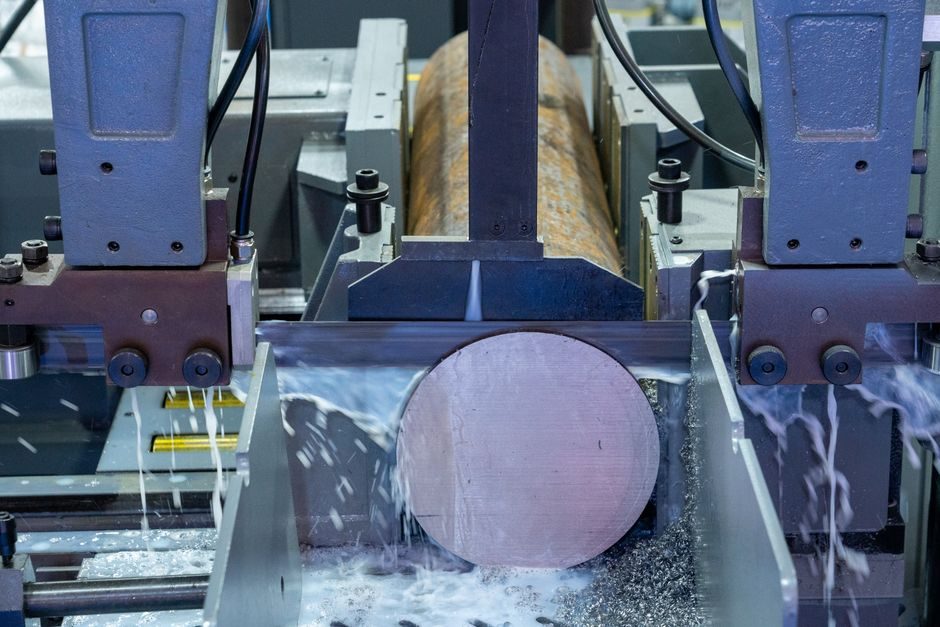
A hot-chamber die casting machine keeps the injection plunger, gooseneck, and nozzle submerged in a molten-metal bath, so each cycle refills without a ladle transfer; published cycle data for small zinc components sits below one second, with a typical maximum around 2-3 minutes for castings of several pounds [S3].
The architecture is alloy-restricted by design: zinc, magnesium, lead, and low-melting copper alloys are the practical feed, while aluminum and high-temperature copper alloys are forced into cold-chamber machines because their melt attacks the ferrous gooseneck, pot, and plunger [S1][S3]. For a definition-grounded view of the machine class, the hot-chamber machine reference entry covers the basic layout; related cold-chamber architecture is documented under die casting machine.
Process Logic: Why the Plunger Sits in the Bath
In hot-chamber cells the furnace, gooseneck, and injection cylinder form a single molten-metal loop, so the plunger rising uncovers a port that lets melt refill the cylinder, and the next downward stroke closes the port and forces metal through the nozzle into the die cavity [S3].
This submerged-construction arrangement removes the ladling step used in cold-chamber die casting machine cells, which is the structural reason published hot-chamber cycle times for thin-wall zinc hardware run faster than cold-chamber cycles of equivalent shot weight. The trade-off is direct contact between molten alloy and the cast-iron or steel gooseneck, which is why the process is restricted to alloys whose chemistry does not aggressively dissolve iron or attack the plunger at operating temperature [S1][S3].
Alloy Fit: Where Hot-Chamber Wins and Where It Cannot Run
Zinc is the headline fit: lowest melting point in the die-casting alloy set, highest ductility, easiest to cast, thinnest walls, and longest die life because the melt never approaches the temperatures that hammer tooling steel [S1]. Magnesium is also compatible and is the lightest structural option in the alloy table, with the best strength-to-weight ratio, though it oxidises rapidly and demands cover-gas discipline at the bath surface [S1].
Aluminum and standard copper alloys sit on the excluded list. Both require melt temperatures that erode the submerged gooseneck, so they are routed to aluminum die casting machine cells, which are typically built as cold-chamber machines with shot sleeves rated for the higher thermal load [S1]. The selection gate is therefore chemistry, not tonnage: a 200-tonne zinc part and a 200-tonne aluminum part are not made on the same machine class.
Throughput and Cost Levers
Cycle time drives the cost-per-part calculus. The Fundamentals of Diecasting reference puts the short end of a hot-chamber cycle at less than one second for sub-ounce zinc hardware, expanding to two-to-three minutes only when shot weight reaches several pounds [S3]. The cited structural drivers are elimination of the ladle transfer, shorter metal-delivery path, and stable bath temperature around the gooseneck.
Energy and die-life data also tilt toward zinc hot-chamber work: low melt temperature extends die life, and the absence of a cold-shot sleeve reduces idle heat loss [S1]. On supplier economics, China-origin hot-chamber cells listed on B2B channels in 2026 are typically positioned as the most cost-effective option for zinc hardware, with Western Europe and North America listed as the lead export regions [S2]. For plants already running a gravity die casting machine line, a hot-chamber cell is the usual high-volume complement rather than a replacement, since gravity cells handle larger castings that do not need the cycle-time advantage.
Failure Modes and Operating Limits
Iron pickup is the headline failure mode: zinc and magnesium melts dissolve iron from the gooseneck and plunger, and the dissolved iron migrates into the casting as a contaminant that embrittles the alloy and stains plated finishes, which is the documented reason zinc hardware generally needs a corrosion-protective coating [S1][S3].
Plungon and gooseneck wear is the second limit. Because the seal between plunger and cylinder runs hot and wet, the hardware replacement interval sets the practical uptime ceiling. Die life is also alloy-bound: zinc's low-melt operation is explicitly credited with long die life, while higher-melt alloys that would otherwise be attractive are excluded precisely because they destroy tooling [S1]. For vacuum-sensitive zinc hardware — electronics housings, RF shields — a vacuum die casting machine variant is used, with the same hot-chamber injection geometry but sealed shot geometry to suppress porosity.
Machine Class and Sourcing Snapshot
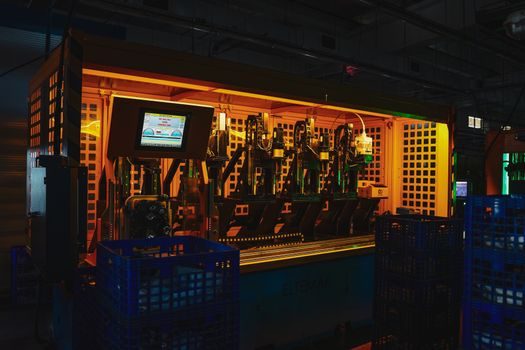
The traditional hot-chamber supplier set documented by industry references includes Frech, Idra, Italpresse, Weingarten, Triulzi, NTP, Prince Machinery (Bühler Prince), HPM, National, Toshiba, KDK, and LK Machinery, with multi-slide specialists such as Techmire, Dynacast, Triad Speedcaster, Lama Automation, and Fishercast covering the high-volume slider market [S3]. A representative small-format unit on the 2026 market is the SH-25 hot-chamber zinc die casting machine listed at 25-tonne clamp class for zinc hardware [S5].
For buyers comparing machine classes, the practical buy-decision tree is: alloy → machine family → tonnage → cycle-time target. A zinc hardware buyer needing thin-wall, high-volume, plated-surface parts is squarely inside the hot-chamber envelope; a buyer needing aluminum structural castings is not, regardless of how attractive the cycle-time numbers look on a hot-chamber datasheet. The detailed taxonomy of the class is mapped in Hot Chamber Die Casting Machine Types and Classifications, and the field-side install gates — gooseneck preheat, bath chemistry, plinth loading — are walked through in Hot Chamber Die Casting Machine Installation: Four-Gate Field Guide.
Decision Matrix: When to Specify Hot-Chamber
Specify a hot-chamber cell when the alloy is zinc, magnesium, or lead; when wall thickness targets sub-2 mm; when cycle time per part is the dominant cost driver; and when the production volume justifies a dedicated gooseneck/plungon wear-parts inventory. Do not specify it for aluminum or copper hardware, for castings above the machine's rated shot weight, or when the part geometry demands vacuum-assisted porosity control beyond what a standard sealed hot-chamber shot can deliver [S1][S3].
For magnesium specifically, the extra discipline of cover-gas management at the bath and shot zone is the price of admission; if the cell cannot be sealed for SF6/CO2 cover gas, route magnesium work to a magnesium die casting machine cell configured for it. Two trackable signals for the rest of 2026 are the price floor on Chinese-origin 25-160 tonne hot-chamber cells on B2B channels, and the incremental die-life data that alloy suppliers publish as Zamak and magnesium multi-slide cells run longer campaigns.