
A 2026-vintage cold-chamber die casting machine can lock 300–3500 t of clamp force, run an 8-second rapid-prototyping cycle, and turn out complex aluminium, zinc or magnesium parts with wall sections well under what gravity casting allows — at the cost of die steel, central melting, post-machining and per-shot energy that no short run can absorb [S3][S4].
Die casting is the dominant high-pressure process for non-ferrous net-shape volume: SYX runs six cold-chamber LK cells from 300 T up to 3500 T, plus 88 T and 160 T hot-chamber units, fed by central melting furnaces at 1 T/h and 1.5 T/h, casting standard alloys ADC12, A380 and A360 with parts up to roughly 132 lb [S3]. For a buyer weighing capital, throughput and part geometry together, that mix of machine classes, tonnage, alloy stack and ancillary capacity is the actual decision tree — not the brand sticker.
Process Mechanics and Where Die Casting Actually Wins
Die casting injects molten non-ferrous alloy into a hardened tool under controlled velocity and pressure, then ejects a near-net-shape part with repeatability no sand or gravity die casting route can match [S1][S4]. Longhua's published spec sheet calls out "8 second product rapid prototyping" inside a fully automatic cycle, with permanent sensor-based process monitoring, multi-shift operation, and "extremely stable value of the machine" as the engineering rationale for the cycle time [S4].
Compared with gravity or low-pressure casting, the high-pressure injection collapses gas porosity into smaller, more dispersed pores and packs metal against die surfaces at high velocity — that is what yields the thin walls, sharp internal features and as-cast surface finishes (typically Ra 1.6–3.2 µm on a well-vacuumed die) that downstream machining and coating can refine rather than rescue. For complex housings, heat sinks and structural castings where geometry would force a multi-piece weldment, this is the one process that can deliver the part in one shot at three-figure-second cycle times.
The Realistic Advantages Spec Sheets Underline
Cycle time and throughput: an 8-second rapid-prototyping window combined with full automation is the headline win — once the die is hot and stable, a single cold-chamber cell can clear thousands of net-shape parts per shift with one operator supervising several machines [S4].
Dimensional stability and complexity: high clamp tonnage (300 T up to 3500 T in a single SYX shop) holds flash to a minimum on large, complex dies, while closed-loop shot control on modern platforms (YIZUMI LEAP / HII-S lines) targets repeatable shot weight and faster pressure rise to keep flash and porosity inside spec [S2][S3].
Material range and lightweighting: standard aluminium alloys ADC12, A380 and A360 are the workhorses, with magnesium die casting — backed by China's leading magnesium reserves and explicitly tied to automotive lightweighting programmes — opening the door to sub-aluminium-density structural parts in NEV body and chassis programmes [S3][S5]. For higher-volume zinc hardware, zinc die casting hot-chamber machines at 88 T and 160 T lockup still beat aluminium on cycle time and chrome-plateability, which is why they persist in hardware, lock and decorative trim.
The Honest Disadvantages Nobody Prints on the Banner
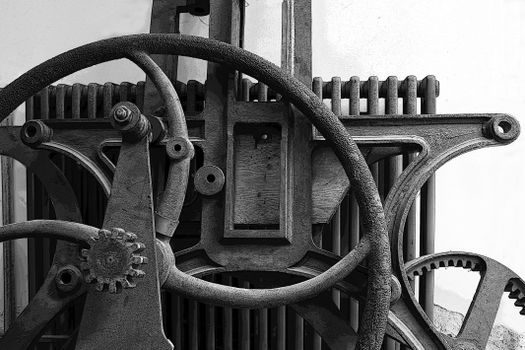
Capex and tooling burden: a single cold-chamber cell plus central melting, shot-control, robotics and post-machining is a multi-million-dollar line item before the first good part ships. Made-in-China lists a 1250 T cold-chamber aluminium line from Longhua at US$ 258,750–258,950 per piece with 1-piece MOQ — just one machine, not a turnkey cell [S1].
Die wear, life and lead time: hardened H13-class die steel in a high-velocity aluminium or magnesium environment does not last forever; thermal fatigue, soldering and erosion are the dominant failure modes, and a new die's lead time routinely runs weeks to a few months. SYX addresses this with an in-house tool shop running three CNC machining centres with strokes of 850 mm, 1060 mm and 1580 mm — explicitly so tooling problems can be solved without waiting on an external shop [S3].
Energy, scrap and gas porosity: high-pressure injection needs a central melting furnace (1 T/h and 1.5 T/h in the SYX case), high-pressure hydraulics, and either a vacuum system or proper venting to avoid gas porosity in thick sections [S3]. Defect control — not peak tonnage — is the real margin lever; unstable injection shows up as flash, porosity and hidden scrap that only show up after machining or in the field, which is why YIZUMI's 2026 messaging is built around "stable shot consistency, repeatable process control" rather than headline clamp force [S2].
Process fit: short runs and frequent design changes punish die casting economically — the die cost amortises only across a long production run, and every material change (e.g. swapping ADC12 for A380) drags die life and process parameters with it [S3]. This is where vacuum die casting and magnesium die casting variants earn their keep: vacuuming the die cavity raises mechanical properties on heat-treated parts, and magnesium opens the lightweighting envelope that aluminium cannot reach — but both demand tighter process discipline and dedicated machine options rather than a generic cell [S1][S5].
Option Comparison by Selection Criteria
When the part, alloy and volume are fixed, the machine class picks itself — and the criteria that matter are alloy, shot weight, clamp tonnage and porosity tolerance: [S1]
Cold-chamber aluminium: SYX runs 300 / 500 / 800 / 1250 / 2000 / 3500 T cells on standard ADC12, A380, A360, with parts up to about 132 lb — the broadest tonnage and alloy envelope, the right answer for automotive structural and NEV body castings [S3].
Hot-chamber zinc: 88 T and 160 T hot-chamber units handle zinc hardware at the fastest cycle times in the shop — best for fasteners, locks and decorative trim where chrome plating and surface finish dominate the spec [S3].
Magnesium variants: thixomolding and dedicated magnesium die casting platforms target NEV lightweighting programmes; SERES and Baowu Magnesium mass-production tie-ups in 2026 are the active commercial proof points [S2][S5].
High-end / vacuum: vacuum die casting and integrated aluminum die casting machine cells with closed-loop shot control suit heat-treatable structural parts and safety-relevant castings where porosity tolerance is tightest [S1][S2].
A useful shortcut: if the part is mostly cosmetic zinc, pick hot-chamber; if it is a structural aluminium housing above a few kilograms, cold-chamber is mandatory; if it is a structural magnesium NEV part, expect a dedicated magnesium cell plus inert-gas coverage rather than a generic swap-in. For a broader spec-by-spec framing of the equipment classes, the die casting machine types and classifications reference lines the tonnage and process options up against each other.
Use Cases, Limits and Standards Anchors
SYX lists automotive, electronics, communications, medical, oil and gas, and lighting as its active end markets — a fair cross-section of where the cost-per-part math actually closes [S3]. Automotive and NEV structural castings dominate tonnage; 5G communication and consumer electronics enclosures lean on the surface finish and thin-wall capability; medical and oil-and-gas push the IATF 16949 and ISO 9001 quality-system envelope that the same shop is certified to.
The hard limits are still physics: aluminium and zinc solidify fast and conduct well, so die life and cooling-channel design drive defect rates more than clamp tonnage does; magnesium brings corrosion and ignition hazards that need inert-gas coverage and chip-handling discipline; thin-wall and micro-feature work pushes you toward vacuum-assisted cold-chamber cells rather than the cheapest machine in the catalogue. The shop-side cost story is the same: ancillary capacity (40 CNC machining centres from 3-axis to 5-axis, 10 sand-blasting units, 10 shot-blasting units, 5 tumble units and a powder-coating line in SYX's case) is what turns raw castings into shippable parts, and that downstream cost belongs in any honest die-casting business case [S3]. For buyers who already know the machine class they need, the practical install-side gates are covered separately in the die casting machine installation tonnage, foundation and utility specs reference.
Sourcing, Standards and What to Verify Before Signing
Quality-system anchors to ask for, in writing, are ISO 9001 and IATF 16949 — SYX holds both for its aluminium die casting scope [S3]. For automotive safety-relevant parts, NADCA acceptance criteria and ASTM E505 reference radiographic grades are the conventional gate on internal soundness, and a buyer should pin the acceptance grade (typically Grade 1–3 by NADCA) into the print before tooling cuts steel.
Practical verification before any cell is ordered: confirm published tonnage at the die platen (not just nominal), shot-weight envelope, central melting capacity per hour, integrated process-monitoring sensor list, and the OEM's published rapid-prototyping cycle (Longhua's "8 second product rapid prototyping" is the kind of number a supplier should be willing to back with a video) [S4]. Tie price quotes to a defined die life in shots, a defined alloy (e.g. ADC12, A380, A360, or AZ91D for magnesium) and a defined acceptance grade — three numbers that turn a glossy brochure into a contract. With those locked, the remaining decision is whether the volume and part-mix justify a die casting machine line at all, or whether gravity die casting or sand casting still wins on total cost.