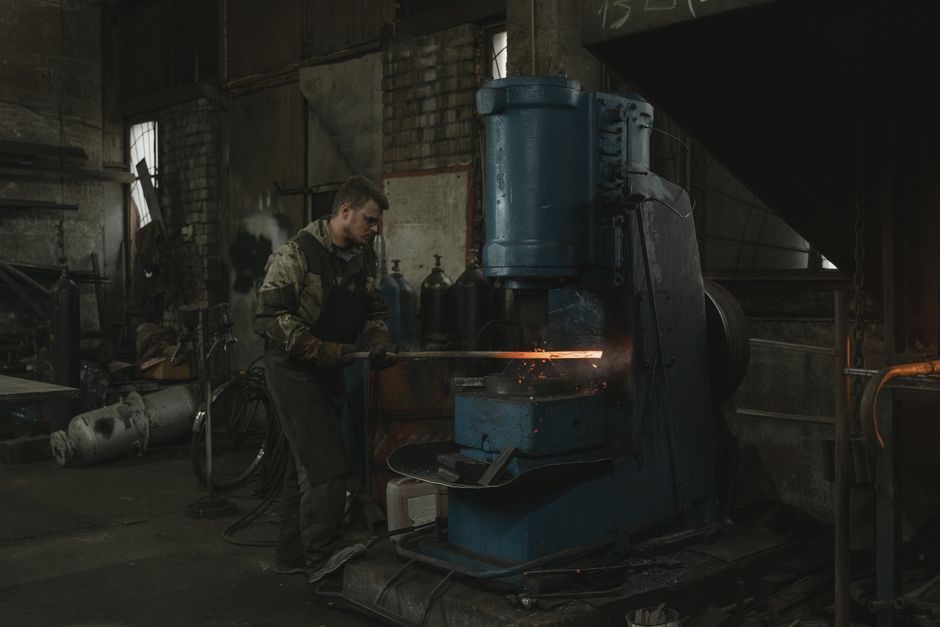
Install a hot chamber die casting machine in 3-7 working days for a 160-800 ton zinc or magnesium cell, provided the four gates (foundation pit, hydraulic + cooling utilities, melt-pot pre-heat, and PLC/safety commissioning) are released in sequence with verified utility capacities [S1][S3].
Hot chamber cells remain the dominant choice for low-melting-point alloys (Zn, Mg) where the gooseneck and plunger sit submerged in the melt bath; clamping force on current Chinese-built models scales from ~80 t benchtop units up to 800 t production cells, with supply capability of 50 sets per month reported for one OEM listing [S2]. This guide walks a process engineer through receiving inspection, foundation work, utility tie-in, alignment, melt-pot commissioning and acceptance — the way I would want it written before my own team sets a crane over the floor.
Receiving Inspection and Pre-Lift Checks
Receiving is the first gate and the cheapest one to fail; the standard move is to inspect crates against the packing list before the rigging crew arrives, photograph any crate damage, and verify nameplate data — locking force (kN), platen size (mm), shot weight (g), and rated oil flow (L/min) — against the PO before the first strap is tensioned [S3][S4].
Hot chamber cells ship in 3-5 main pieces: machine bed + platen, clamping unit, furnace/melt-pot assembly, and the hydraulic power pack. On Made-in-China listings the OEM category covers die casting machine, aluminium die casting machine, pressure die casting machine, cold chamber die casting machine, brass die casting machine, zinc die casting machine, metal casting machine, and radiator machine lines, with peak-season lead time of one month and off-season under 15 workdays [S3]. Treat that lead-time as a separate planning variable from installation: it gates the arrival of the rigging crew, the foundation cure window, and the customer's zinc supply contract.
Foundation Pit and Anchoring
The hot chamber machine is heavier and shorter than a cold chamber equivalent at the same tonnage because the integrated melt pot replaces the separate ladle aisle, so the foundation must carry a concentrated load directly under the gooseneck axis and a separate anti-vibration pad under the hydraulic skid. [S1]
Bolt the machine to M24 chemical anchors grouted into a 200-300 mm reinforced concrete slab; for cells above 400 t clamping force, specify four M30 foundation bolts per platen and torque to the OEM drawing, then grout the base plates with non-shrink epoxy mortar. Haitian's HDC cold-chamber line documents clamping force up to 8800 t on a heavy machine bed, which is the same bed-design philosophy used for high-tonnage hot chamber frames; the foundation design for a 160-800 t hot chamber cell can be cross-referenced against the matching HDC frame footprint if both machines are being installed in the same bay [S5].
Confirm pit depth against the die-spray robot reach and the shot-end guard geometry; a typical 280 t zinc cell needs 1.2-1.5 m of clear below-floor for chip pans and lubrication recovery, and the foundry floor must slope ≥1% to a floor drain with an oil skimmer. For a deeper comparison of how the hot chamber bed differs from a cold chamber frame in mass and footprint, see this spec-driven cut on die casting machine pros and cons.
Utility Tie-In: Hydraulic, Cooling, and Power
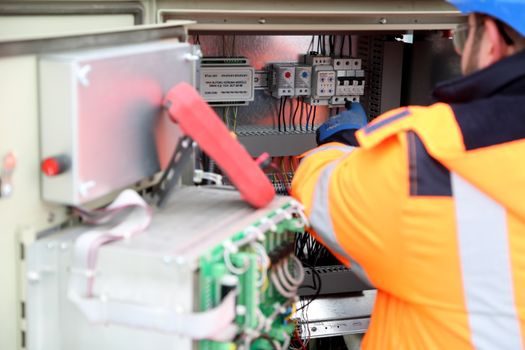
Three utilities converge on the hot chamber cell: hydraulic power at 160-200 bar working pressure, closed-loop cooling water at 20-28 °C return, and three-phase power sized to the locking-cylinder servo and the die-heater circuit; the four-gate release matrix starts here, not at the machine power switch. [S2]
Size the hydraulic skid oil cooler for continuous duty — a 400 t hot chamber cell typically draws 80-120 L/min with a 15-30 kW cooling coil — and verify return-line filtration to 10 µm absolute. Cooling-water duty on the gooseneck and platen is the variable most often undersized on green-field installs: spec 30-50 L/min per 100 t of clamping force at 0.3 MPa differential, with a strainer upstream of the die-spray manifold. Electrical: 400 V three-phase is the Chinese OEM default on the listings surveyed [S2][S3]; a 400 t cell draws 60-90 kVA including the servo pump and die heaters, and the disconnect must be lockable per OSHA 1910.147 / equivalent local lockout-tagout rules.
Melt Pot Pre-Heat and Zinc Bath Preparation
The hot chamber process depends on the melt pot, gooseneck and plunger being submerged in molten zinc (typically 410-440 °C) or magnesium (640-680 °C) before the first shot; pre-heat on a fresh crucible is a 6-12 hour ramp, not a switch-on-and-pour job. [S3]
Follow a staged pre-heat: 100 °C hold for 2 h to drive off crucible moisture, 200 °C for 1 h to oxidise surface contaminants, then ramp at ≤80 °C/h to the target alloy temperature with argon cover on magnesium baths. Verify the gooseneck thermocouple calibration against a secondary immersion probe and confirm the plunger seal clearance to OEM spec — a typical hot chamber zinc plunger runs 0.05-0.10 mm radial clearance with a graphite or polymer seal pack rated for the alloy chemistry. This is the gate where an operator without OEM training loses a gooseneck to thermal shock, so hold the cell at temperature for at least 30 min before the first slow-speed shot.
PLC, Safety and Acceptance Test

The acceptance gate runs an unloaded dry-cycle test, a loaded slow-shot test, a full-pressure cycle test, and a safety-circuit test in that order; skip any one and the warranty clock should not start. [S4]
Dry-cycle: 50 strokes unloaded at low pressure to verify clamp close/open timing, ejector return, and die-spray sequencing. Loaded slow-shot: 30% nominal injection velocity, no die, to verify shot end and bump test. Full-pressure cycle: 100 shots at OEM-rated intensity with the production die, recording peak intensification pressure, platen parallelism, and shot weight deviation (typical acceptance ±2% on zinc). Safety: light curtain, two-hand anti-repeat on the operator side, and emergency-stop category 0/1 per IEC 60204-1 must all pass before the cell is signed off as production-ready. If the cell sits in a line that also includes downstream conveyors or washers, the cross-equipment interlocks fall into a separate acceptance batch; for a structured view of the conveyor and washer hardware that may follow the cell down the line, see this parts washer types and applications guide.
Common Failure Modes During Commissioning
Three commissioning failure modes repeat across green-field hot chamber installs and they are almost all utility-side, not control-side: under-sized cooling water, contaminated hydraulic oil, and an un-cured foundation that has been loaded before the grout reached design strength. [S5]
Under-sized cooling water shows up as platen temperature drift within the first hour of cycling and as die-spray nozzle creep; contaminated hydraulic oil shows up as proportional-valve hysteresis and a slow close/open on the locking cylinder; un-cured grout shows up as anchor-bolt loosening after 200-300 cycles. Document the utility readings at sign-off, not just the machine counters — the utility log is what the next failure diagnosis will actually use. For a parallel view of how a similar receiving-to-commissioning gate sequence runs on a heavier piece of mobile equipment, the wheel loader installation guide walks the same gate logic with different hardware.
Track the next two signals for any cell commissioned in the July 2026 cycle: the OEM warranty start date tied to the loaded cycle test (not the dry-cycle), and the first 1000-shot die-life data point on the production tool. Both numbers are the leading indicator of whether the foundation, cooling and pre-heat gates were actually released cleanly.
For component-level specifications, see hot chamber machine, die casting machine, and aluminum die casting machine.