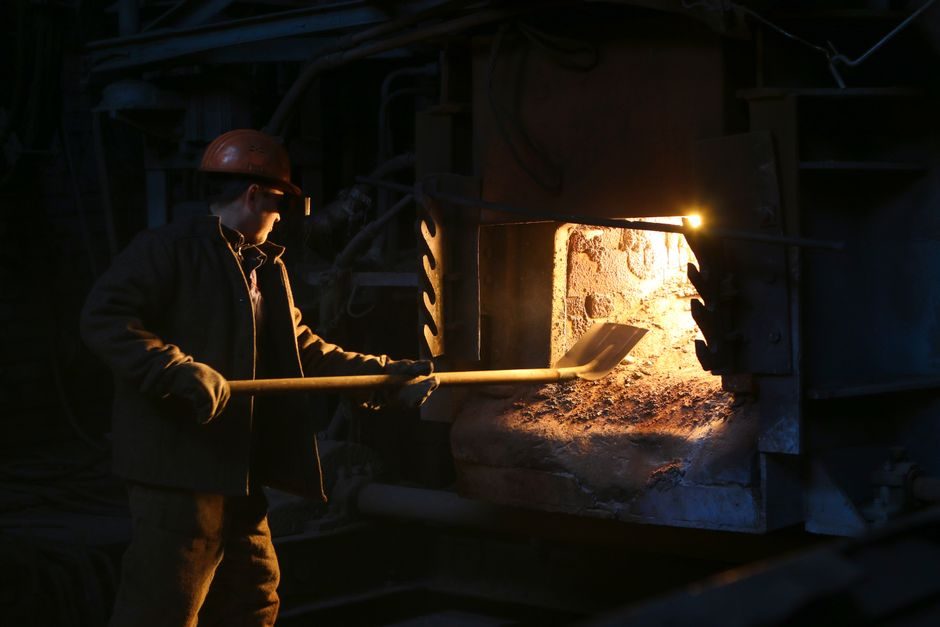
Buyers comparing a 25-ton hot-chamber zinc unit at USD 10,000-11,000 against a 280-ton cold-chamber aluminum machine at USD 43,500-50,000 must look past the FOB line item to model electricity, hydraulic oil, refractory die care, preventive maintenance hours, and scrap rate before the cheaper machine is actually cheaper [S1].
Defining TCO for a Die Casting Cell
Total cost of ownership, in the framework formalized for production machinery, subsumes every cost portion that occurs for the operator of a machine across its entire period of ownership, not just the purchase order [S2]. For a die casting cell, that envelope covers acquisition, installation, energy, maintenance, consumables (die lubricants, hydraulic fluid, release agent), labor, downtime, quality-rework scrap, and end-of-life disposal.
The cost-of-ownership concept exists precisely to stop capital-approval committees from being steered by acquisition price alone, because the same 2012 framework explicitly warns that decisions driven by acquisition cost often incur investments that are cheaper to buy but "significantly more expensive in total costs over the entire life cycle" [S2]. For die casting, where hydraulic and electric auxiliaries run hot, the use-phase cost stack is large enough that ignoring it produces a 3-5x understatement of real spend over 10 years.
The Six Cost Lines That Drive a Die Casting Machine
A practical 2026 TCO model for a die casting machine breaks out six cost lines, each with its own measurable driver: acquisition (FOB plus rigging, foundation, and utility hookup), energy (kWh × tariff × load profile across idle, melt, shot, and cool), maintenance (planned plus corrective, broken into hours and parts), consumables (die lubricant, hydraulic oil, plunger grease, release agent), labor (operators, setters, QC), and downtime (lost shot value plus recovery cost) [S2].
Across industrial equipment classes, the framework notes that "especially energy and maintenance costs are the main cost drivers" and that these factors are "often difficult to predict due to the stochastic nature of the problem" [S2]. Energy tariffs in Germany rose roughly 30% over the decade preceding that study, and the same trajectory applies to most 2026 production geographies, so any TCO model locked to today's kWh price understates lifetime energy spend.
Acquisition Price as a TCO Anchor, Not the Answer
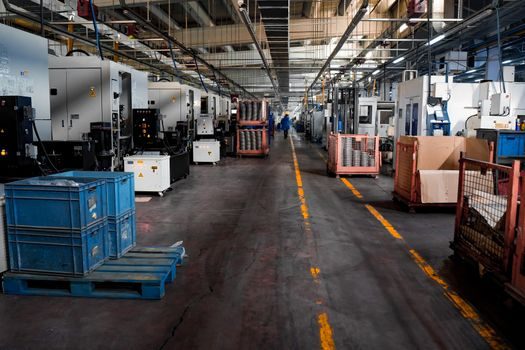
The 2026 sourcing market for die casting equipment shows clear FOB bands by tonnage class: 25-ton mini aluminum units list at USD 10,000-11,000 per set, 80-ton aluminum cold-chamber machines at USD 17,500-20,000, 180-ton high-pressure aluminum units at USD 28,000-32,000, and 280-ton aluminum injection units at USD 43,500-50,000 per set [S1]. Hot-chamber zinc and lead units of 38-40 ton capacity sit at USD 17,500-20,000, and 90-ton brass-copper-zinc presses at USD 18,000-20,000 [S1].
These prices are necessary but not sufficient for a TCO comparison. A larger tonnage machine draws more kVA, requires a bigger furnace, and consumes more die lubricant per shot, so two machines with similar FOB prices can differ by 40-60% in 10-year energy and consumable cost depending on cycle-time, scrap rate, and uptime. The aluminum die casting machine class in particular is energy-dense because the cold-chamber process forces a full melt-and-hold cycle, whereas the zinc die casting machine class in hot-chamber form is intrinsically more efficient on short cycles.
Comparing Machine Classes Against TCO Criteria
Side-by-side on four decision criteria, the three principal die casting machine classes diverge sharply. Acquisition cost is lowest for hot-chamber zinc in the 16-180 ton range and highest for cold-chamber aluminum in the 180-280 ton range [S1]. Energy intensity per shot is lowest for hot-chamber zinc (lower melt temperature, no shot sleeve loss) and highest for cold-chamber aluminum; magnesium sits between but adds inert-gas or SF6 cover-gas cost to the consumables line.
Maintenance burden is highest for hot-chamber zinc and lead because the gooseneck, plunger, and nozzle are continuously immersed in molten metal and suffer creep, soldering, and thermal-fatigue failures. Cold-chamber aluminum has heavier dies and shot-end hydraulics but lower molten-metal attack on the machine. Consumable sensitivity is highest for the vacuum die casting machine class because seal integrity, leak-down rate, and vacuum-pump oil all enter the cost stack. The gravity die casting machine is the outlier with the lowest energy and consumable cost but the highest direct-labor cost per shot.
For buyers deciding between a USD 11,000 25-ton aluminum mini-press and a USD 50,000 280-ton cold-chamber unit, the 10-year energy bill alone can equal the smaller machine's full acquisition cost in a high-tariff region, which is why TCO modeling is mandatory rather than optional [S2].
Energy, Maintenance, and the Use-Phase Black Hole
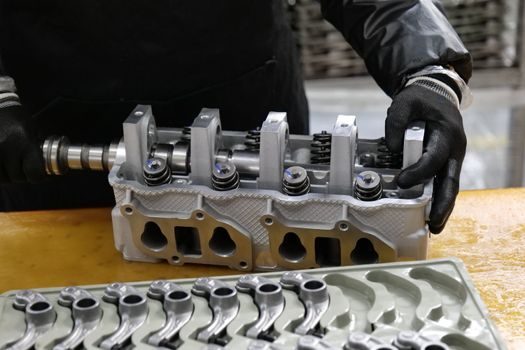
Energy and maintenance are described in the production-machinery TCO literature as "essential shares of the TCO" that "cannot be determined by static calculations" and must instead be modeled dynamically across individual machine characteristics, behavior, and uncertainties [S2]. For a die casting machine, the practical energy model is built from kVA nameplate, measured load profile over a representative shift, idle-state draw, and shot-cycle kWh, then multiplied by tariff and shift count.
Maintenance modeling requires a failure-mode list, mean time between failures (MTBF) for each subsystem (hydraulic, electrical, die, shot end, furnace), planned-service intervals, and a maintenance strategy that balances preventive cost against corrective cost [S2]. The same framework calls out that "maintenance offers the opportunity to strongly influence the TCO through different strategies by balancing failure and preventive maintenance costs," which is precisely the lever a die casting plant uses when choosing between calendar-based service and condition-based service on critical shot-end components.
Downtime, Consumables, and the Hidden 15-25%
Downtime and consumables are the two TCO lines most often under-counted in a die casting TCO. A single unscheduled die-correction event on a high-pressure magnesium die casting machine can cost more in lost shot value than six months of preventive service, and release-agent, plunger lubricant, and hydraulic oil together typically run 4-8% of annual operating cost on a cold-chamber cell. [S1]
For comparison, similar hidden-cost analysis on adjacent equipment classes such as overhead conveyors, oxygen detectors, and release-agent systems shows the same pattern: the lines a buyer's spreadsheet ignores typically account for 15-25% of the real 10-year bill, as documented in the overhead conveyor TCO breakdown and the release agent TCO four-line model. Die casting equipment behaves the same way; the magnesium and zinc consumable streams in particular are easy to overlook because they sit in the monthly MRO budget rather than the capex line.
End-of-Life and Disposal: The Cost Line Buyers Skip
End-of-life disposal is the TCO line that almost no 2026 die casting buyer prices in, and yet for a 10-ton cold-chamber press it is non-trivial. Hydraulic-oil drain, refrigerant recovery, electrical scrap, and shot-end steel recycling each carry a handling cost, and a contaminated cell with refractory dust or lead residue triggers hazardous-waste handling fees. Across a 10-year horizon these disposal costs are typically 1-3% of TCO, small but real, and the framework explicitly includes disposal in the cost envelope to "avoid problem shifting decisions" between phases [S2].
Who TCO Modeling Is For, and When It Is Overkill
Full dynamic TCO modeling is justified for any cell that will run more than two shifts, produce more than 100,000 shots per year, or hold a tolerance class that makes scrap rate a first-order cost driver [S2]. It is overkill for a job shop buying a single 25-ton hot-chamber zinc press for prototype runs, where the acquisition decision is dominated by FOB price and delivery lead time. A useful cutoff rule of thumb: if the machine is expected to deliver more than USD 500,000 of annual revenue or run more than 4,000 hours per year, the energy and maintenance cost lines are large enough to change the buy-versus-spec decision.
For a magnesium high-pressure cell, where inert-gas or SF6 cover-gas is a continuous consumable, the magnesium die casting machine TCO model must add a cover-gas line that an aluminum-only model omits; this is a frequent source of under-counted cost in cross-alloy TCO comparisons. The vacuum die casting machine TCO must add vacuum-pump kWh and seal-replacement hours, which the standard atmospheric cell does not carry.
Building the Model: Inputs a 2026 Buyer Can Actually Source
The minimum viable TCO model for a 2026 die casting machine purchase is a spreadsheet with eight columns and 10 rows: acquisition, installation, annual energy, annual maintenance, annual consumables, annual labor, annual downtime cost, and disposal, with each annual line escalated at the energy-tariff and labor-inflation rates the buyer's finance team already uses. The framework's caution that energy and maintenance cost factors are "highly dynamic and are depending on the actual state of technical products and the interaction with its components" is the reason a single point estimate is unsafe; the model should run a low-, mid-, and high-case energy tariff [S2].
For a buyer evaluating a Ningbo-origin 80-ton cold-chamber aluminum press at USD 17,500-20,000 FOB against a domestic-supplier equivalent, the installation line (rigging, foundation pad, utility drops) is typically 8-15% of acquisition, and annual energy at two-shift operation is a multiple of acquisition over a 10-year horizon in most 2026 tariff regimes. The same logic applies whether the unit is destined for an automotive structural-parts cell or a small consumer-electronics enclosure line.
The next trackable signal is the 2026-07-14 release of the updated TCO reference page for die casting machinery on SourceBySpec, which will publish worked examples for 80-ton, 180-ton, and 280-ton cold-chamber cells at three energy-tariff scenarios. A second trackable signal is the post-2026-Q3 update cycle on OEM published MTBF and preventive-service interval data, which feeds directly into the maintenance cost line and is the single input most often absent from buyer-side TCO models today.