
Spare-parts planning for a hot chamber die casting machine centers on six wear items: gooseneck, plunger tip, shot sleeve, nozzle, die set, and hydraulic seals, with the gooseneck, nozzle, and plunger being the highest-frequency replacements because they sit submerged in molten zinc or magnesium [S1][S4].
On integrated-pot hot chamber cells, the metal bath lives inside the machine frame, so consumables have to survive continuous immersion at 380 to 420 degrees Celsius for zinc alloys (Zamak 3, 5, 7) and 580 to 640 degrees Celsius for magnesium AZ91D, which is why goosenecks are routinely specified as cast or forged steel with a replaceable cylindrical liner [S4][S5].
Consumable families and where they sit in the machine
Hot chamber consumables split into three groups by location: molten-metal-path items (gooseneck, nozzle, shot sleeve, plunger tip, plunger rod), die-stack items (die halves, ejector pins, core pins, sprue bushing), and ancillary items (release agent, die lubricant, hydraulic fluid, thermocouples, heaters) [S1][S2][S5]. The gooseneck is unique to hot chamber machines; it links the injection cylinder to the feed line and is submerged in the bath, so it is normally quoted as a replaceable assembly rather than a welded repair [S5].
Consumable suppliers typically list sleeves, piston tips, nozzles, and gooseneck assemblies as separate line items so a maintenance planner can stock them against a shot count rather than a calendar interval [S1]. Dynacast's process notes for hot chamber cells highlight fast cycle times and lower porosity, which directly increases the number of injection events the consumable sees per shift compared with cold chamber [S3].
Material and grade selection for the wear parts
Goosenecks are commonly cast or forged steel with a high-chromium or nitrided liner to resist zinc attack; the liner is the field-replaceable element, not the full gooseneck body [S5]. Plunger tips for zinc work are often H13 tool steel or nitrided alloy steel, while magnesium service tips shift to higher-temperature tool steels or tungsten-alloyed grades because of the 200+ degree Celsius jump in bath temperature.
Shot sleeves (where used) and nozzles follow the same logic: a hardened, low-iron-dissolution grade is preferred to limit iron pickup into the melt, since iron content above roughly 0.05 percent in a zinc bath accelerates bottom-buildup and sludge [S4]. Die halves for hot chamber work are typically H13 tool steel, pre-hardened to 44 to 48 HRC, with through-hardened ejector pins at 58 to 62 HRC for wear life; copper-beryllium or aluminum-bronze inserts are used in high-wear areas where thermal conductivity helps eject thin-wall zinc parts cleanly [S5].
Spec comparison: hot chamber vs. cold chamber consumable load
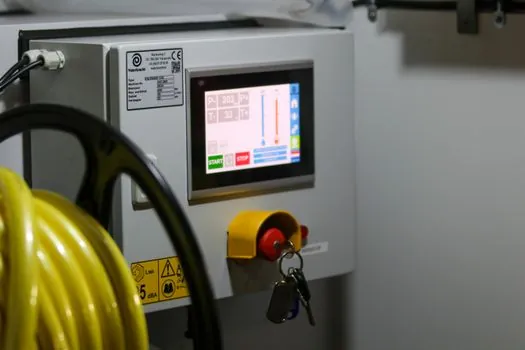
Hot chamber consumables see a different duty cycle than cold chamber parts. Hot chamber machines run the gooseneck, nozzle, and plunger tip hot at all times, so those three items dominate the spares budget; cold chamber machines shift the wear burden to the shot sleeve, the ladle, and the separate furnace crucible, because metal only enters the machine for the injection stroke [S3][S4][S6].
On a zinc hot chamber cell, typical replacement intervals look like: gooseneck liner 80,000 to 200,000 shots, plunger tip 20,000 to 60,000 shots, nozzle 40,000 to 120,000 shots, die set 100,000 to 500,000 shots depending on alloy, geometry, and cooling-circuit condition. A cold chamber aluminum cell sees longer die life in absolute shots but higher per-shot cost because the cold chamber sleeve and ladle refractories sit in the same maintenance window [S3][S4].
Selection criteria for sourcing spares
Engineers should match spares to three criteria: alloy to be run, machine clamping tonnage, and shot-weight window. A zinc-only hot chamber machine at 50 to 400 tonnes clamping force will use a different plunger diameter and gooseneck bore than a magnesium-capable unit, even when the frame size is identical, because magnesium operation typically requires a sealed, gas-protected pot rather than an open zinc bath [S3][S5].
Second, verify that the spare matches the OEM's shot sleeve and plunger tolerances; a 0.05 to 0.10 mm clearance band between plunger and sleeve is typical for zinc, and going outside that band causes either pressure loss or accelerated soldering [S5]. Third, confirm the consumable is rated for the same maximum injection pressure as the machine, commonly 20 to 70 MPa for hot chamber cells, before approving a third-party equivalent [S6].
Failure modes and field signals to watch

Common failure signatures include: zinc buildup at the nozzle tip (signal: short-shot streaks and rising cycle-time variation), plunger-tip soldering (signal: rising injection pressure and metal wash on the shot end), gooseneck liner cracking (signal: bath-level drop and iron in the alloy rising above 0.05 percent), and die soldering on ejector pins (signal: parts sticking and rising release-agent use) [S4][S5].
Release-agent and lubricant choice also drives consumable life. Water-based graphite or silicon emulsions are typical for zinc; switching to a dry-film or wax-based agent for magnesium reduces hydrogen porosity but can shorten nozzle life if not paired with the correct nozzle pre-heat protocol. The Essentra piece notes that "the mold design is paramount in meeting the demands of quality and speed," which translates into consumables that match the cooling-circuit layout rather than buying generic spares [S4].
Standards, sourcing, and lifecycle signals
There is no single ISO or ASTM standard that fixes hot chamber consumable dimensions; spare-parts fit is governed by the OEM's machine-specific parts list, and cross-referencing to a generic table is a common source of unplanned downtime [S1][S8]. For traceability, look for suppliers who list the OEM model code, shot-weight range, and alloy compatibility on the part data sheet, as Tojin's HISHINUMA spares catalogue and Longhua's accessories list both do [S1][S2].
For shops that standardize on multi-slide hot chamber aluminum, Dynacast cites cycle rates up to 10 cycles per minute, which means consumables see roughly 6,000 shots per single 10-hour shift; that is the operating envelope a maintenance planner should set parts stock against [S3]. Readers comparing long-term ownership can cross-check the hot chamber die casting machine lifespan and replacement guide for frame-level rebuild intervals that sit above the consumable layer.
Trackable signals for the next planning cycle: OEM-published gooseneck-liner shot ratings, magnesium-capable hot chamber retrofits, and the shift from open zinc pots to sealed, SF6-free protective-gas pots, all of which will redraw the consumable list within the next 12 to 24 months.
Component reference pages worth checking: die casting machine, and aluminum die casting machine.