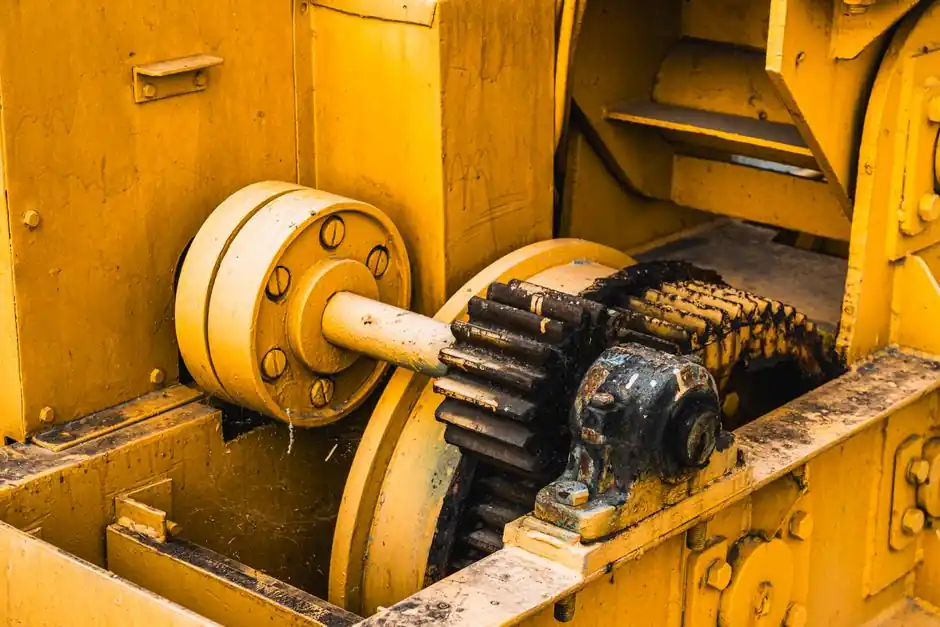
Hot chamber die casting machines built for zinc (Zamak) and magnesium programs typically run 10–20 years under prescribed preventive maintenance, and a third of that life is decided by the gooseneck, plunger, and shot-end assemblies rather than the frame [S1].
The relevant decision is not "when a machine is old" but "when shot-end wear, hydraulic drift, and PLC obsolescence outpace rebuild economics" [S1][S3]. Hot chamber units cycle at 60–600 shots per hour on production lines, so internal wear compounds faster than on cold chamber presses that see fewer daily cycles [S2][S4].
Why a hot chamber machine ages the way it does
The hot chamber machine is engineered around an internal melting pot, an integrated gooseneck, and a submerged plunger that drives molten metal into the die at high velocity [S2][S4]. Because the metal reservoir sits inside the machine and stays molten between shots, the gooseneck, plunger tip, and nozzle are continuously exposed to attack from zinc, magnesium, or low-melting aluminum alloys [S2][S3].
That continuous thermal and chemical exposure is the dominant wear mechanism, and the machine manual states that "proper maintenance, as detailed in the manual, significantly extends the operational life" of the unit [S1]. Modern OEM literature further describes the platform as "engineered for long service life with minimal maintenance requirements," meaning that the rated life is contingent on a published PM cadence, not on the hardware alone [S3].
Lifespan drivers: what actually ends a machine's service life
For a hot chamber die casting machine, the practical life ceiling is set by four interacting drivers: shot-end wear, hydraulic and clamp tonnage drift, thermal fatigue of the platen and tie bars, and control-system obsolescence [S1][S3].
Shot-end components (gooseneck, plunger, nozzle, rings) are consumable-class parts with published replacement intervals; cycle count, alloy chemistry, and injection profile govern how fast they erode [S1]. Frame-level components (platens, tie bars, shot cylinder housing) fatigue at far lower rates but, once they crack or stretch, the cost to repair approaches 60–70% of a new machine value, which is the textbook threshold for an economic replacement decision [S1]. Control retrofits (PLC, HMI, servo valves) can extend life by 5–8 years, but only when the mechanical envelope is still serviceable [S1].
Replacement triggers: hard signals versus soft signals
A useful replacement decision compares four criteria side by side, and the table below frames them against the two main machine classes for context. [S4]
Hot chamber (Zamak / Mg, integrated pot, up to ~6 slides, fast cycles, internal melting) versus cold chamber (Al / Cu, external furnace, higher tonnage, longer cycle) [S2][S6]. The comparison matters because hot chamber machines typically run more cycles per shift, so shot-end wear is a stronger signal than for a cold chamber die casting machine on the same line.
Decision criteria across the two main machine types:
1) Shot-end wear rate (cycles between gooseneck/plunger rebuilds): hot chamber short (high cycle count, alloy attack); cold chamber long (fewer cycles, separate furnace). 2) Hydraulic / clamp tonnage drift over service life: hot chamber modest (lower clamp tonnage); cold chamber significant (higher clamp tonnage on Al parts). 3) PLC / servo obsolescence interval: hot chamber 10–15 years; cold chamber 10–15 years. 4) Typical rebuild-to-replace cost ratio threshold: hot chamber around 50–60% of new; cold chamber around 60–70% of new [S1].
Hard signals that force a replacement conversation: visible platen or tie-bar cracking, shot-end rebuild intervals shorter than every 6 months, hydraulic drift above 5% of set tonnage, or PLC/HMI spares that are no longer stocked [S1][S3]. Soft signals that justify a rebuild instead: rising scrap from flash or short shots, longer cycle times creeping above the rated shots-per-minute, and rising energy per shot without a change in part mix [S1].
Preventive maintenance cadence that actually moves the life curve
The OEM service literature groups PM into daily, weekly, quarterly, and annual blocks, and adherence to that cadence is the single largest controllable variable on service life [S1]. Daily tasks center on lubrication, hydraulic level, and die-area cleanliness; weekly tasks on shot-end inspection, thermocouple checks, and tie-bar tension verification; quarterly on hydraulic oil analysis, servo-valve diagnostics, and PLC backup; annual on platen parallelism, shot cylinder seal replacement, and full electrical re-certification [S1][S3].
OEM framing for the platform is unambiguous: hot chamber machines are "engineered for long service life with minimal maintenance requirements," and the marketing claim is paired with documented high-speed automation, energy-efficient hydraulic design, and user-friendly digital control interfaces intended to reduce both unplanned downtime and PM labor [S3].
Market context: why replacement timing matters in 2026

The hot chamber die casting machine market is valued at USD 75.8 billion in 2026 and is forecast to reach USD 123.5 billion by 2036, a CAGR of 5.0% [S7]. That growth profile means 2026–2030 vintage machines are entering a fleet that is expanding, not contracting, so individual replacement decisions will be benchmarked against the cost of adding incremental capacity on a new press rather than only against the rebuild cost of the existing unit [S7].
Process intensity is the other macro signal. Multi-slide hot chamber aluminum lines are documented at up to 10 cycles per minute, and conventional hot chamber lines routinely exceed 60 shots per hour, so a 15-year-old machine that ran two shifts will have absorbed on the order of 15–25 million shots, well past the point where the gooseneck and plunger have been rebuilt multiple times and the frame is the next constraint [S2][S3].
Selection: who a hot chamber machine is for, and who it is not for
A hot chamber machine is the right fit for high-volume production of small, intricate zinc, magnesium, or low-melt aluminum parts where cycle time, tight tolerance, and minimal post-machining dominate the cost model; published benefits include reduced porosity, longer die life, faster process, lower tool cost, tighter tolerance, and thin-wall capability [S2][S4]. Tolerances on zinc die castings are typically held to ±0.0005 in, against ±0.002 in on aluminum, so the process is well suited to hardware, fasteners, and consumer-electronics housings [S5].
It is the wrong fit for high-melting aluminum structural components, large-format parts, or programs that require very high injection pressure on a separate furnace feed, where a cold chamber machine or a gravity die casting machine is the appropriate reference [S2][S6]. For corrosion- or pressure-sensitive programs that need a closed, low-porosity cavity, a vacuum die casting machine variant is the relevant baseline, and for light-weighting programs that still want closed-loop melt handling, the magnesium die casting machine class is the natural fit [S2].
Limits and failure modes to plan around

The first failure mode is shot-end erosion: gooseneck and plunger wear accelerate with magnesium and with aluminum hot-chamber programs, and rebuild intervals below 6 months signal that the alloy mix or injection profile is out of the machine's design envelope [S1][S2]. The second is hydraulic drift on clamp and shot cylinders, which manifests as flash, short shots, and dimensional drift, and is often misread as a die problem rather than a machine problem [S1].
The third is platen and tie-bar fatigue, where crack growth rates rise sharply once surface defects are visible; ultrasonic inspection on the annual PM is the standard detection method and should be treated as a hard gate on continued service [S1]. The fourth is control obsolescence: legacy PLCs and HMI panels lose spares support on 8–12 year cycles, and a retrofit only pays back when the mechanical envelope is still within tolerance, otherwise it pushes the operator toward a full press replacement [S1][S3].
Sourcing and standards to anchor a replacement decision
OEM documentation from major hot chamber builders consistently states that prescribed maintenance is the dominant variable on service life, and rebuild-versus-replace math is judged against 50–70% of new-machine cost, with the higher end of that range typical for aluminum die casting machine cold-chamber classes and the lower end for hot-chamber zinc lines [S1][S3]. Buyers should request the OEM's published PM schedule, shot-end rebuild records, and the last hydraulic-oil analysis report before committing to either path [S1].
Trackable signals worth monitoring through 2026: the 5.0% CAGR forecast on the USD 75.8 billion 2026 base, OEM rollout of high-speed automation packages for retrofit onto existing hot chamber frames, and the cadence of PLC/HMI obsolescence notices from the major European and Japanese builders [S3][S7].
Related analysis: 5G Industrial Module Production Line: 2026 Design Specs and Build-Out.