
Die casting machine downtime traces back to two distinct layers: machine-side hydraulic and electrical faults (oil pump no-start, thermal relay trips, loss of total pressure, loss of automatic cycle) and die-side failure modes (thermal fatigue cracking, soldering, erosion, corrosion, gross fracture) [S1][S5].
Industry field statistics on aluminum-alloy die-casting dies rank the common failure forms as cracking, heat checking, erosion, soldering (adhesion), and deformation, with the die itself typically machined from AISI H13 hot-work tool steel [S5][S7]. For process engineers, the practical split is roughly 80/20: most stoppages originate in the hydraulic and control loop, while most scrap and most tooling cost live on the die side.
Hydraulic and Electrical Failure Modes on the Machine Side
The "oil pump cannot start" fault tree starts at the motor thermal relay: a tripped or damaged thermal relay, an open power circuit, a start/stop contact failure, or a burnt relay coil will keep the relay from pulling in even when the start button is pressed [S1][S3]. If the relay does close but the pump still does not turn, the next suspects are a stuck or damaged oil pump, a broken wiring run from relay to motor, and a coupling that has been over-assembled; the reference installation calls for a coupling that turns freely by hand with 3-5 mm of axial float [S1][S3].
When pressing the start button immediately trips the thermal relay, the root cause is asymmetric current draw: damaged or under-set thermal relay, low or unbalanced three-phase supply voltage, unbalanced motor winding resistance, system pressure adjusted too high (single- or double-pump stage), or a tight/damaged pump dragging the motor into overload [S1][S3].
A "no total pressure" event is split by reading the proportional pressure valve's solenoid ammeter: with current present, the pump is reversed (correct rotation is clockwise when facing the pump shaft), the relief valve is mis-set or stuck, the shut-off valve is closed, or the proportional valve's throttle trim is loose or missing; with no current, suspect the rectifier board, the proportional amplifier board, a controller fault (no output at the total pressure point, often because the safety/back door interlock is open), a broken cable to the solenoid, or a wrong pressure dial code [S1][S3]. Loss of automatic cycle with manual still working almost always points at the safety-door limit switch and downstream interlock chain [S1].
Die-Side Failure Modes: Heat Check, Soldering, Erosion, Corrosion, Fracture
Thermal fatigue cracking (heat checking) is a network of fine surface cracks driven by cyclic heating from molten-metal injection and water/coolant cooling, with the die surface accumulating plastic strain shot after shot; brass die casting is the upper bound, with melt temperatures reaching roughly 970 °C, which is why die steel selection and cooling-channel layout dominate tool life [S4][S5].
Soldering (metal adhesion) is molten alloy chemically bonding to the die surface, leaving a thin metallic skin on the casting; it is driven by chemical interaction between H13 die steel and the casting alloy (aluminum, zinc, or brass), by starved or wrong die lubrication, and by hot spots from uneven cooling [S4][S5].
Erosion is mechanical loss of die material at high-velocity flow zones, especially the gate and runner; in brass die casting the injection velocity window is roughly 1-10 m/s, and solid intermetallic particles in the melt act like sandblasting media on the cavity wall [S5].
Corrosion is chemical dissolution of the die steel into the melt, aggravated by reactive alloying (e.g., leaded brasses) and by oxidation of fresh crack faces each thermal cycle, which then accelerates crack propagation [S5]. Gross fracture is the catastrophic end state: a die section cracks off or the die block splits, usually from excessive clamp tonnage, misaligned die halves, or thermal shock from aggressive water-spray cooling [S5].
Casting Defects That Trace Back to Machine and Die Health

Gas porosity shows up as round or oval voids with bright, smooth walls; it is driven by hydrogen released as solubility drops during solidification, by air entrained during turbulent die fill, and by gas from overheated or over-applied mold release agents, and is mitigated by melting under vacuum or inert cover, clean dry ingots, controlled injection speed, sufficient sprue/runner length, and disciplined release-agent dosing [S2].
Shrinkage porosity forms during solidification as the alloy contracts, and becomes a reject when contraction is uneven enough to distort geometry or leave internal voids, often visible as angular edges and dendritic fractures, and is mitigated by riser design, controlled cooling, and gate placement [S2]. Blisters, drags, cold shuts, and flash round out the canonical 8-defect list (heat check, soldering, porosity, blisters, cold shuts, flash, cold laps, and dimensional drift), and most of them are upstream symptoms of the machine faults and die failure modes above rather than independent events [S4][S8].
Prevention Stack: Steel, Surface Treatment, Process, Maintenance
Material selection sets the ceiling: AISI H13 (and higher-temper-resistance alternatives such as QRO 90 Supreme) is the default hot-work die steel for aluminum and zinc die casting because it holds hardness through the thermal cycles that destroy cheaper tool steels [S5].
Surface treatments (proprietary PVD, nitriding, or vendor systems such as MetaLLife/TherMaLLife-class coatings) reduce stress risers, lower the soldering tendency, and extend intervals between die refurbishments [S5]. Process-side, vacuum-assisted casting is the single most effective lever to cut gas porosity and the associated thermal-stress concentration that drives heat checking [S5]. Design-side, avoiding sharp internal corners removes the stress concentrations that nucleate heat checks and gross cracks, and conformal cooling channels keep the surface temperature swing small enough to slow crack initiation [S5].
Maintenance is where most of the gain actually lives: poorly maintained molds account for roughly 47% of premature die-related downtime, which is why leading shops run scheduled die-cleaning, crack-inspection, and lubrication cycles rather than reactive repairs [S9]. For sourcing the wear parts that keep these cycles running, a structured view of Die Casting Machine Spare Parts and Consumables helps map hydraulic seals, heater elements, plunger tips, and die lubricants to the failure modes that consume them.
Comparison: Five Die Failure Modes Against Four Decision Criteria
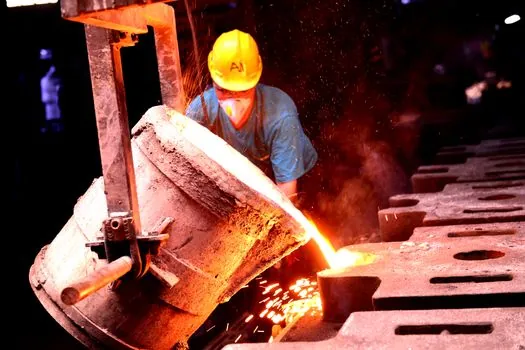
Onset speed, primary driver, typical detection, and cheapest prevention line up differently for each mode, and that matrix is what a maintenance planner should actually work from [S4][S5]. Heat checking is gradual, thermally driven, detected by visual crack network, and cheapest to prevent with balanced cooling and H13 selection. Soldering is gradual, chemically driven, detected by stuck castings and shiny patches, cheapest to prevent with proper lubrication and surface treatment. Erosion is localized, mechanically driven (1-10 m/s fill), detected by dimensional drift at the gate, cheapest to prevent with melt cleanliness and gate redesign. Corrosion is gradual, chemically driven (reactive alloys), detected by surface pitting, cheapest to prevent with alloy selection and vacuum assist. Gross fracture is sudden, mechanically or thermally driven, detected by catastrophic part failure, cheapest to prevent with clamp-force limits and avoidance of sharp corners [S4][S5].
Limitations and What This Stack Cannot Catch
Most of the prevention levers above assume the failure mode is mechanical or thermal; they do not catch controller-level faults such as a wrong pressure dial code, an open safety-door interlock that kills the automatic cycle, or a proportional amplifier board that has drifted out of calibration, which is why the hydraulic-electrical fault tree in the first section still has to be walked before anyone pulls a die [S1][S3]. The process limits are also alloy-dependent: brass at melt temperatures near 970 °C sits at the top of the achievable thermal-cycling range, while zinc (typically handled in hot-chamber machines at much lower melt temperatures) faces a different balance between soldering and heat checking [S5]. And even the best prevention stack does not eliminate porosity entirely, since high-pressure die casting inherently traps some gas, which is the trade-off that pushes premium applications toward vacuum die casting rather than conventional cold-chamber aluminum die casting [S2][S6].
Applicable Standards, Alloys, and Sourcing Anchors
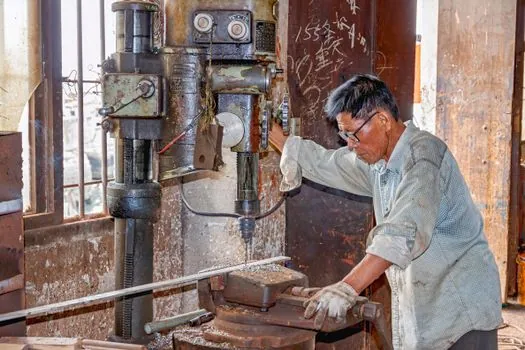
No single ISO or EN standard governs the full failure-mode list above; instead the relevant anchors are the die-steel specification (AISI H13 / QRO 90 Supreme as a hot-work tool steel), the process window for the chosen alloy family (e.g., brass melt near 970 °C, aluminum and zinc at lower temperatures per the aluminum die casting machine and zinc die casting machine process pages), and machine-side electrical practice (multimeter checks on the power circuit, relay coil, and proportional-solenoid loop) [S1][S3][S5]. Foundry-side, induction furnace maintenance protocols cover the melt cleanliness that directly reduces erosion and gas porosity upstream of the machine.
Trackable signals over the next cycle: published uptime benchmarks from the proactive-maintenance camp pushing past the 47% premature-downtime baseline, and any new data on vacuum-assisted magnesium die casting cells closing the residual porosity gap that conventional cold-chamber die casting still shows [S2][S5][S9].
