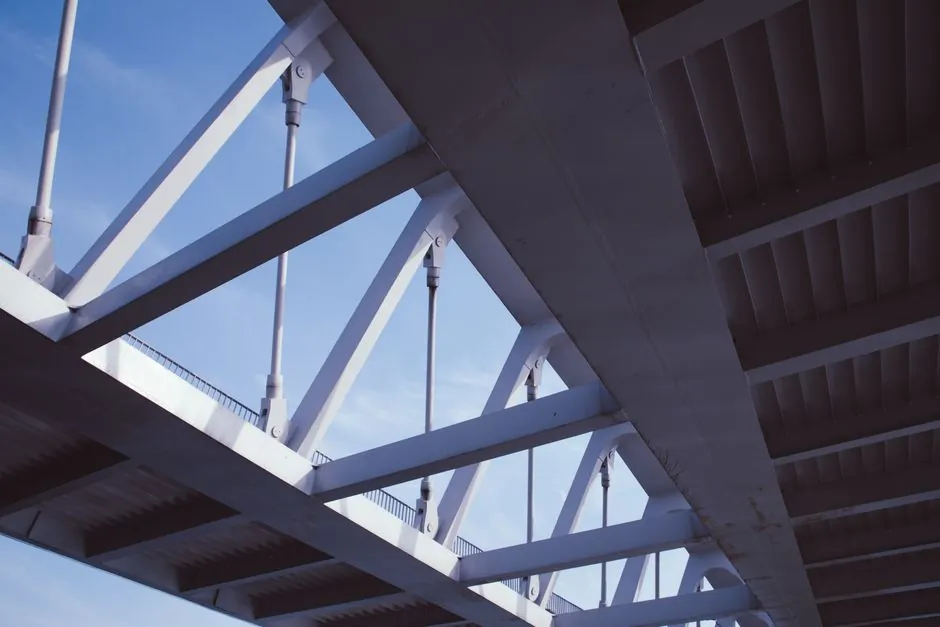
For clear spans above roughly 18-21 m, welded built-up plate girders and fabricated box sections are the structural section that consistently wins on weight and overall cost, while hot-rolled open sections (IPE, HEA, HEB, UB, UC) remain cheaper and faster to procure for short-span and small-to-medium buildings.
The crossover is not a single number: it depends on span, loading, project size, and whether tapered geometry delivers material savings. Below is a spec-driven comparison for long-span decision-making, using European/Indian mill practice and pre-engineered metal building (PEMB) experience as the calibration frame [S1][S2][S5].
Definition and Process Boundary: Why the Two Sections Behave Differently
A hot-rolled section is a single-piece mill product formed in a universal or structural mill at reheat temperatures around 1,280°C, with no splicing or welding; common types are IPE, HEA, HEB, channels and angles, and they are rolled to fixed dimensional tables in grades such as S235, S235JR, S275JR, S355 and S355JR [S2][S4]. The rolled piece leaves the mill as a homogeneous section with a uniform grain flow, and open sections are produced in lengths up to about 25 m before transport limits take over [S4].
A welded built-up section is a fabricated member: cut plates are assembled, welded, straightened and inspected, in the sequence cutting → assembly → welding → shaping → repeated inspection [S1]. Common types are plate girders, built-up I sections and fabricated box sections, normally in plate thicknesses from 5 mm to 200 mm, plate widths up to 3.5 m and plate lengths up to 18.0 m, with 275 MPa and 355 MPa yield-strength plates the workhorses of building construction [S2][S4]. For long-span work, plate is also the most readily available feedstock, which is part of why built-up sections scale where stock lengths do not [S5].
Decision Matrix: Four Criteria That Pick the Section
Use this criteria grid for project decisions, not a unit-price comparison. The two options are [hot-rolled H/I sections] vs [welded built-up I, plate girder, or box section]. [S2]
Criterion 1, Span and geometry. Hot-rolled open sections are economical for short-to-medium spans, including PEMB frames under roughly 50-60 ft (about 15-18 m) clear width; above 60 ft (about 18 m) the cross-section size required for stiffness and strength escalates, and the built-up, often tapered, alternative becomes more material-efficient [S2][S5]. For very long spans where the steel self-weight is the dominant design driver, the built-up plate girder with optimised web and flange thicknesses is the standard answer [S2][S4].
Criterion 2, Weight optimisation. Built-up members can be tapered so flange and web thickness grow only where bending moment and shear demand them, which PEMB designers report lets sections run near 100% capacity along their length; hot-rolled members, by contrast, are uniformly sized and so over-designed at the low-load ends of the column or rafter [S5]. In long-span roofs and crane columns this taper is the single largest source of tonnage saved.
Criterion 3, Cost and lead time. Hot-rolled sections are typically less expensive for small and medium buildings, are in stock at major steel warehouses, and can be on site in days rather than weeks, while built-up sections carry higher fabrication cost (cutting, welding, NDT, paint) that is normally offset by material savings once the span exceeds about 50-60 ft, with the wider the building the larger the offset [S2][S5]. Procurement therefore tracks schedule risk as much as tonnage: a tight programme on a sub-15 m span is a hot-rolled decision; a long-span industrial or warehouse frame is a built-up decision.
Criterion 4, Quality assurance and corrosion exposure. Built-up sections require weld QA, drilled-hole QA and inspection of the connection between flange and web, and the welded interfaces are more corrosion-prone than a solid rolled face, so paint system and inspection budget must be planned in [S1][S5]. Hot-rolled sections need less in-process QA but are limited to the mill's size table, and the designer must confirm local availability before locking the design [S5].
Who It Is For, and Who It Is Not For
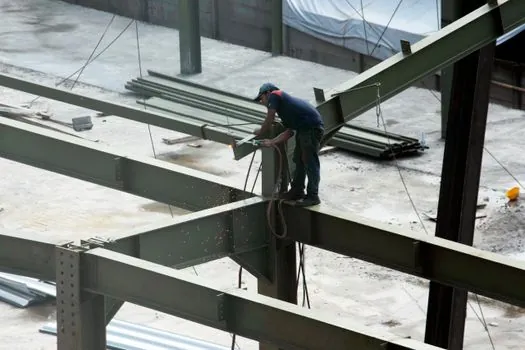
Choose a hot-rolled section when the project is small to medium scale, spans are short (under about 15-18 m clear), schedule pressure is high, and the design is straightforward; this is the path for low-rise commercial frames, light industrial sheds, residential podiums and secondary members such as purlins and girts [S2][S5]. It is the wrong choice for large spans, heavy industrial loads, and cases where standard section properties force a much heavier member than the loads actually require, because the over-design penalty grows faster than the fabrication cost saving [S2][S3].
Choose a welded built-up section when spans are long, loads are heavy (e.g. crane runway columns, long-span truss replacements, heavy-plant mezzanines), weight optimisation matters because the column or rafter runs near full capacity, or standard mill sizes do not fit the geometry; this is the standard answer for warehouses over 60 ft wide, industrial workshops with overhead cranes, and any case where different steel grades are mixed within one member (for example S355JR for the high-stress flange, S275JR or S235JR elsewhere) to push load capacity without overdesign [S2][S5]. A practical compromise that many fabricators adopt is to use hot-rolled columns and built-up main beams, capturing the speed of rolled stock at the supports and the optimisation of plate in the spans that govern the design [S2].
Comparison Pass: Hot-Rolled vs Built-Up Across Four Variables
Availability: hot-rolled is standard and off-the-shelf, with standard open-section lengths up to about 25 m; built-up is custom-made from plate, where plate is itself one of the most readily available mill products [S2][S4][S5].
Design flexibility: hot-rolled is limited to the mill's size table, which can force overdesign at large spans; built-up is very high, since the engineer can vary web depth, flange width, flange thickness and grade along the member, and choose plate girder, built-up I, or box section geometries as required [S2][S3].
Cost efficiency: hot-rolled is the better answer for small and medium projects and for spans under roughly 15-18 m, where unit cost and short lead time dominate; built-up is the better answer for large-span and heavy-duty structures, with the PEMB rule of thumb that material savings offset the higher production cost once the building exceeds about 50-60 ft in clear width, and built-up becomes clearly more economical above 60 ft [S2][S5].
Weight optimisation: hot-rolled is less efficient because the section profile is fixed; built-up is highly optimised, with the typical tapered built-up frame running sections near 100% utilisation along the member length, which is the main reason tonnage falls on long-span frames [S2][S5].
Real Use Cases and Field Notes
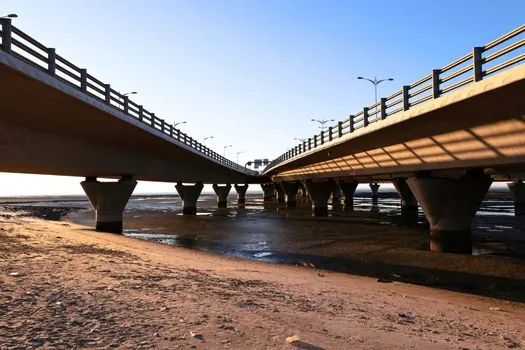
Pre-engineered metal buildings: PEMB frames under 50-60 ft wide are routinely hot-rolled I sections, frames between 50-60 ft are a true cost crossover, and frames over 60 ft almost always shift to built-up, often tapered, members; built-up webs and flanges are also easier to proportion for crane runway loads, which is why PEMB crane buildings default to fabricated sections [S5].
Long-span industrial and commercial roofs: where the rafter is the design-driving member, plate girders or welded I sections in 275 MPa or 355 MPa plate are the normal answer, with plate available from 5 mm to 200 mm thick and widths up to 3.5 m leaving room for almost any web depth and flange width the engineer needs [S4].
Heavy industrial columns with cranes: the column sees large moment at the bracket and small moment at the base, so a uniform hot-rolled section wastes steel at the top of the column, while a built-up tapered section tracks the moment diagram and removes the dead weight that would otherwise have to be carried up the building [S5].
Members over 25 m, where transport or mill limits end: long-span trusses and transfer girders above about 25 m cannot be hot-rolled in one piece; welded fabrication, with the production sequence of cutting, assembly, welding, shaping and repeated inspection, is the only practical route, which is one reason welded built-up H-beams are specified where the geometry or size pushes past the rolling-mill envelope [S1][S4].
Limits, Failure Modes and Standards Watch-Points
Hot-rolled hard limits: maximum mill length for open sections is about 25 m, the section table is fixed, and a designer who specifies a size not stocked locally either pays a premium or has to re-engineer, which is itself a schedule risk that needs to be priced into the decision [S4][S5]. Where hot-rolled is forced into a long-span slot, the result is often a heavier and stiffer but materially inefficient frame, which the fabricator pays for in tonnage and the client pays for in foundation size.
Welded built-up hard limits: fabrication cost is real, lead time is longer, welds introduce heat-affected zones, plate edges and flange-to-web connections are more corrosion-prone than a solid rolled face, and quality assurance on welds and drilled holes is non-optional; these costs are recovered by weight savings on long-span or heavy-load members but are not recovered on small, short-span frames, which is why the crossover is span-driven, not builder-preference-driven [S1][S5].
Material and grade selection: built-up sections can mix grades within one member, for example S355JR/st52 in the high-stress flange and S275JR/st44 or S235JR/st37 in the web and low-stress flange, which is a load-capacity lever that does not exist in a one-piece hot-rolled section; the trade-off is that each grade change needs to be controlled at the cutting and nesting stage, not at the rolling stand [S2].
Process integration reference: for engineers who want a structured side-by-side on related long-span decisions, see the spec-driven approach used in rotary-rig kelly bar selection and in the free-standing vs tied-in tower crane structural support decision, both of which use the same weight-vs-schedule criteria pattern applied here. For background on the rolled product family used on the short-span side of the crossover, the steel section encyclopedia entry and the carbon steel grade reference lay out the S235/S275/S355 grade ladder that the built-up section mixes within a single member.
Sourcing Checklist for Long-Span Built-Up Sections

Verify plate availability for the heaviest flange and the deepest web before locking the design: plate mills commonly stock 5-200 mm thicknesses in widths up to 3.5 m, but 355 MPa normalised plate has to be ordered to the right supply condition (As-Rolled, Normalised or Normalised Rolled) and lead time depends on that call [S4].
Confirm the welding procedure specification, welder qualification, and NDT scope (visual, MT, UT as applicable) at the fabricator before placing the order, because built-up section cost is dominated by QA cost and the inspector schedule, not by the steel itself [S1][S5].
Decide the section type by span band: hot-rolled IPE/HEA/HEB or PFC for spans under about 15 m, hot-rolled UB/UC for PEMB frames up to 50-60 ft, built-up I or plate girder for 18-25 m spans, and built-up plate girder or box section above 25 m or where the rolling-mill length limit is binding; the wider the building, the more the built-up, often tapered, answer dominates the cost equation [S2][S4][S5].
Check the alloy steel and silicon steel encyclopedia entries only if the application actually calls for those grades; for ordinary building frames the structural carbon steel ladder in the carbon steel reference is the relevant material framework.