
Industrial procurement teams entering 2026 budget cycles face a more complex cost stack than at any point since 2022, with hot-rolled coil steel near $1,200 per short ton in late August, Brent crude briefly touching $120 per barrel in March, and Section 232 tariff exposure now extending into finished components [S3][S5].
Raw material pricing has overtaken energy, labor, and logistics as the single largest line item in most discrete-fabrication and packaging bills of materials, forcing purchasing, finance, and engineering to align on a structured budgeting discipline rather than reactive spot buying [S3][S4].
Anchor the Budget to Macro Indicators, Not Last Year's Invoice
The U.S. Federal Reserve's December 2025 Summary of Economic Projections gives industrial buyers a defensible starting baseline: 2.3% real GDP growth, 4.4% unemployment, 2.4% PCE inflation, and a federal funds rate near 3.4% by year-end 2026 [S2]. Buyers should plug those four numbers into a 3-scenario model (base, downside, upside) rather than a single forecast, because commodity relief in 2026 is uneven: broad indices may soften while category-specific volatility, climate risk, and trade policy keep procurement strategy front and center [S2].
The practical move is to rebuild cost-of-goods-sold worksheets around direct material cost as a percent of revenue, with a separate line for tariff exposure, freight surcharge risk, and currency-adjusted metal premiums, instead of rolling forward 2025 averages that no longer reflect the 50% range of price movement seen in steel between 2025 and 2026 [S3][S4].
Build Material-Specific Cost Cases Instead of One Number
There is no single "metal market" in 2026. Carbon steel, stainless steel, aluminum alloys, copper, plastic resin, and fiber-based packaging each have independent supply-demand drivers that can move in opposite directions within the same quarter, so a unified material inflation factor will understate risk on the lines that matter most [S3][S5]. Hot-rolled coil steel traded near $1,200 per short ton in late August and early September 2026, substantially above the roughly $800-per-ton range seen during parts of 2025, while U.S. raw steel capability utilization ran at approximately 79% and finished steel imports fell more than 20% year-to-date through July, leaving imported finished steel at roughly 16% of the U.S. market [S3].
Aluminum is a different exposure profile: the United States remains heavily dependent on imported primary aluminum, so domestic buyers are exposed not only to global base-metal pricing but also to tariffs, regional premiums, transportation costs, and changes in international supply, meaning the same procurement playbook used for steel will misprice an aluminum BOM by 10-20% in some quarters [S3]. Packaging buyers face a parallel structure: plastic resins track oil and gas, paper and fiber packaging require large amounts of electricity and thermal energy, and heavier materials amplify exposure to freight and fuel costs, with global bunker fuel prices surging 30-35% in a matter of weeks during the March 2026 energy spike [S5].
Stress-Test Tariff and Freight Layers Independently of Unit Price
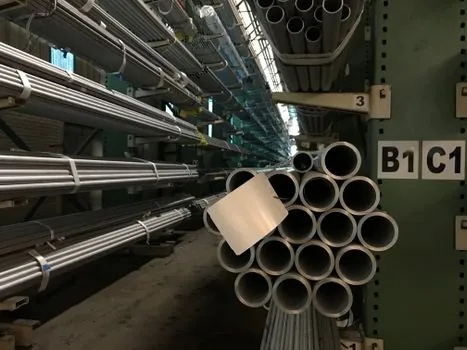
The April 2026 federal revision to Section 232 treatment for steel, aluminum, copper, and certain derivative products expanded how duties are calculated, applying tariffs to the full customs value of certain imported products rather than only their metal content, with additional changes following in June [S3]. That means a 2026 budget cannot treat tariff as a flat percent on declared value; the applicable treatment depends on the exact product classification, country of origin, the amount and origin of U.S. metal content, and whether the product falls into one of several modified categories or trade arrangements, and tariff exposure can exist well beyond raw sheet or plate because imported hardware, purchased components, assemblies, and industrial equipment containing steel or aluminum may also introduce additional cost into a bill of materials [S3].
Freight is now a separate, modelable risk layer rather than a footnote: fuel accounts for roughly 50-60% of a total containership operating cost depending on vessel size and trade lane, and major carriers including Maersk, CMA CGM, and Hapag-Lloyd have introduced emergency fuel surcharges across global trades to recover cost spikes, with those surcharges flowing directly into landed cost especially for bulk, high-volume materials [S5]. The buyer-side response is to add a freight line item that floats with a bunker-fuel index, not a fixed contract rate, and to review it on a monthly cadence rather than annually.
Match Hedging Tool to Lead-Time and Volume Profile
Forward contracts, blanket POs, and safety stock each fit a different buying pattern, and the wrong match is a common budget killer. Proactive purchasing, defined as buying materials well in advance of when they are needed, helps lock in prices and avoid the risk of future price hikes, but only if the buyer's storage cost and obsolescence risk are lower than the price volatility they are hedging against [S1]. For high-volume steel and aluminum lines with 6-12 month design freezes, a 12-month forward contract at a fixed unit price is usually cheaper than carrying the same exposure through spot; for low-volume specialty alloys with short bill-of-material life, shorter blanket POs with price-adjustment clauses tied to a published index work better [S3].
Historical cost data is the foundation that makes any of this work: a detailed, time-series record of direct costs (traced to a specific product), indirect costs (supporting daily operations), fixed costs (unchanged by unit volume), and variable costs (scaling with units produced) lets a buyer run trend analysis and detect gradual margin erosion before it shows up in P&L, because a raw material price is typically a direct variable cost that can swing a single product's contribution margin by several points in a single quarter [S4]. A 2026 budget should reserve at least 8-15% above the quoted unit cost as a contingency line for tariff and freight shifts, and route any unused portion back to gross margin at quarter-end rather than letting it leak into overhead.
Treat Quote Validity and Surcharges as First-Class Budget Inputs

Suppliers are responding to 2026 volatility by shortening quote validity periods and adjusting pricing more frequently, reducing the advantage of delayed purchasing decisions, and historically, when energy-driven inflation enters industrial supply chains, prices tend to stabilize at a higher level rather than revert quickly, particularly during prolonged geopolitical risk, so waiting rarely creates savings and instead increases exposure [S5]. A budget built on a 30-day quote validity assumption will underestimate landed cost the moment a quote window slips; the fix is to require written quote validity terms on every RFQ, model the worst-case 7-day validity, and treat energy as a primary cost driver across plastic, paper, and metal lines rather than a separate line item [S5].
The procurement teams that perform best in this environment are those that plan earlier in the product lifecycle, commit to production timelines sooner, lock materials and logistics windows before additional escalation, and treat every input as part of the product rather than a last-minute procurement task, and this discipline shows up in the budget as tighter variance between forecast and actual material spend, not as a heroic scramble in the last week of each quarter [S5]. For buyers in copper-heavy product lines such as motors, busways, and transformers, the same hedging logic applies, and a side-by-side view of the nine cost dials that drive 2026 motor pricing is laid out in 2026 Electric Motor Pricing: Copper, Steel, and Nine Cost Dials.
Decision Matrix: Hedging Tool by Material and Lead-Time
Match the buying instrument to the material's price volatility, the design freeze window, and storage cost: for high-volume carbon steel on a 6-12 month design freeze, a 12-month forward contract at fixed unit price is the cheapest hedge; for aluminum with import-dependent supply, a blanket PO with a published-index price-adjustment clause protects against regional premium swings; for copper in motors and busways, a 6-9 month forward contract plus a separate freight surcharge clause covers both the LME and bunker-fuel layers; for plastic resin and fiber packaging, the right tool is a 30-90 day fixed quote with explicit energy surcharge pass-through and a renegotiation trigger tied to a published fuel index; and for low-volume specialty alloys, shorter blanket POs with quarterly price reviews beat long-dated contracts because the obsolescence risk is higher than the price risk [S1][S3][S5].
The next 90 days will be a stress test: watch the LME three-month copper and aluminum contracts, U.S. hot-rolled coil and cold-rolled coil spot indices, and the IEA Brent crude monthly print, because a move of more than 10% on any of these in a single month is the trigger to revisit forward-contract coverage and shorten quote validity windows on open RFQs [S3][S5].