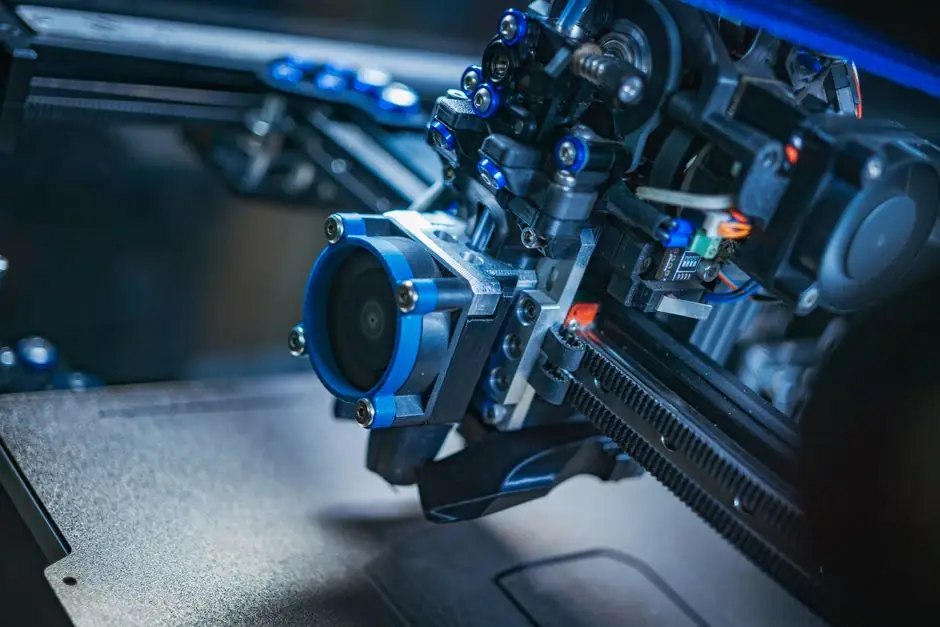
Large-volume metrology projects can involve laser trackers measuring objects across tens of meters, with individual systems listed at measurement ranges up to approximately 160 m [S4][S7].
The purchase price covers only part of the job cost. Accuracy class, target and probe requirements, measurement volume, throughput, software, calibration, on-site operation, and post-processing determine the total budget [S1][S2][S6].
What Drives Laser Tracker Pricing
A laser tracker determines target coordinates by combining laser distance measurement with angular encoders and either interferometry or absolute distance measurement [S4]. The instrument establishes the origin, the target defines the measured point, and the operator moves that target across the workpiece to collect spatial data [S1][S4].
Published performance examples show that a tracker can deliver accuracy of the order of 0.025 mm over several metres [S1]. One industry overview describes measurement volumes up to approximately 160 m, while another explains that trackers can capture thousands of measurement points per second [S4][S7]. Those capabilities explain why premium instruments command more than fixed-coordinate tools, although the research provides no universal price-per-point or price-per-metre formula.
The practical price drivers break into six groups:
For procurement, a tracker specification should therefore be priced as a measurement system rather than as an instrument with one headline accuracy number. Range, uptime, operator time and usable data quality have a direct effect on the cost per accepted feature.
Accuracy and Measurement Volume Set the Hardware Tier
Accuracy and usable range are the primary technical separators between tracker tiers. East Coast Metrology describes accuracy of the order of 0.025 mm over several metres [S1], while The cited source describes laser trackers as using laser distance measurement, angular encoders, and interferometry or Absolute Distance Measurement (ADM) to measure large parts, tooling, fixtures, and assemblies [S4].
The volume requirement changes the comparison directly. Systems described across industry sources can cover tens or hundreds of metres, with approximately 160 m presented as an upper large-volume figure [S4][S7].
A lower purchase price can be a false economy if operators spend extra time repositioning a short-range instrument or if thermal and setup effects reduce usable accuracy. The correct comparison is usable measurement cost across the actual envelope, not catalog accuracy alone.
Software, Probing and Throughput Change the Job Economics

Software is not a minor accessory in a large-volume inspection campaign. East Coast Metrology describes importing measurements into software to plot points and calculate deviation from the correct position [S1]. Verisurf software is described as optimizing laser trackers for complex large-volume inspection and tool-building workflows [S6].
Three connected capabilities affect the quoted price and the final unit cost. First, CAD comparison provides real-time deviation analysis, a feature identified as part of advanced tracker workflows [S4].
Hardware selection, probing and software should be evaluated as one production cell. Operators move a reflector across the object while the tracker continuously records the target’s position in space [S4].
That distinction matters for quotations. A low instrumentation line can become a high labor line if thousands of points must be recorded manually, manually transformed, or checked one feature at a time. Conversely, a more capable scanner can be wasteful when the acceptance criteria require discrete dimensional checks rather than dense surface mapping.
Service Scope Can Exceed the Instrument Price
Large-volume projects often buy an operating capability rather than a standalone device. A technician sets up a laser tracker on a tripod, carries a target to the object, places it against the object, and triggers measurements at selected points [S1]. That scope converts instrument cost into labor, travel, setup, data processing and deliverable risk.
Calibration is another separable cost. ECM provides calibration services for laser trackers of any name brand [S1]. A quote that excludes calibration, consumables, target inventory, software, post-processing and repeat visits is not comparable with a delivered inspection package.
Five cost layers should be separated in a large-volume quotation:
These layers determine total cost of ownership because a rented tracker can avoid capital expenditure, but it may add mobilization and scheduling costs. A purchased tracker can serve multiple internal projects, but it carries calibration, training and utilization obligations. The research offers no defensible numerical price for either route, so the correct quotation should separate them rather than hide them in an undifferentiated daily rate.
Usage Requirements Separate Suitable and Unsuitable Jobs
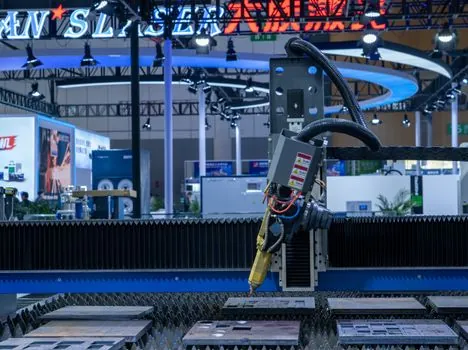
Laser trackers fit large parts, tooling, fixtures and assemblies that require spatial measurements over extended distances [S4]. Their portability allows deployment directly on the shop floor, while their measurement range supports aircraft, turbines, machine tools and other large structures [S1][S4].
They are less suitable when a small feature cluster can be measured faster with a local coordinate system, when the surface cannot provide stable optical reflection, or when the required feature geometry lies outside practical target access. A laser profiler may be more appropriate for rapid dimensional characterization of a defined cross-section, while an articulated-arm CMM can suit smaller components that fit within a controlled arm volume.
The portable arm versus laser tracker versus handheld scanner comparison provides a useful selection framework for these boundaries. For a large-volume campaign, a laser tracker becomes the stronger candidate when the part extends beyond a portable arm’s practical envelope, mobile coordinate-measuring-machine operation is required, and accuracy must remain consistent across a broad measurement volume [S4][S7].
Volume also affects the delivery model. A one-off inspection can be purchased as a service. Repeat production inspection may justify rental during validation, then purchase if utilization supports it. A permanent metrology department may instead favor controlled in-house ownership with calibration and software support. The decision should follow required coverage, annual workload and the value of reduced rework, not a generic preference for ownership.
Obtain Comparable Quotes Using a Common Scope
A comparable quote must specify the measurement envelope, required uncertainty, feature types, point density, CAD or nominal data, reporting format, on-site hours, calibration requirements and acceptance criteria. Without these inputs, two trackers quoted at different prices may be measuring different jobs. [S1]
For example, request a quote for a stated volume of tens of metres, the cited 0.025 mm order-of-accuracy class as one evaluation point, and specified reflector and probing requirements [S1]. Ask each bidder to state whether its proposal uses interferometry or absolute distance measurement, what scanning workflow is included, and whether thousands of points per second is a supported operating condition rather than a maximum headline figure [S4].
Demand a line-item total covering instrument or rental charges, travel, setup, calibration, targets, operator hours, software, post-processing and final reports [S1][S6]. Also define what happens when a feature is inaccessible or a measurement uncertainty is insufficient for acceptance. Those clauses expose whether the quoted price is a fixed inspection deliverable or an open-ended campaign with uncertain labor exposure.
The strongest pricing signal is a quote that converts the metrology plan into accepted features per shift. Published evidence supports accuracy of the order of 0.025 mm over several metres, ranges up to 80 m on a cited Vantage configuration, large-volume coverage approaching 160 m, and acquisition rates reaching thousands of points per second [S1][S4][S7]. Holding those performance requirements and the same scope constant turns laser tracker pricing into a measurable production decision rather than a catalog-price exercise.