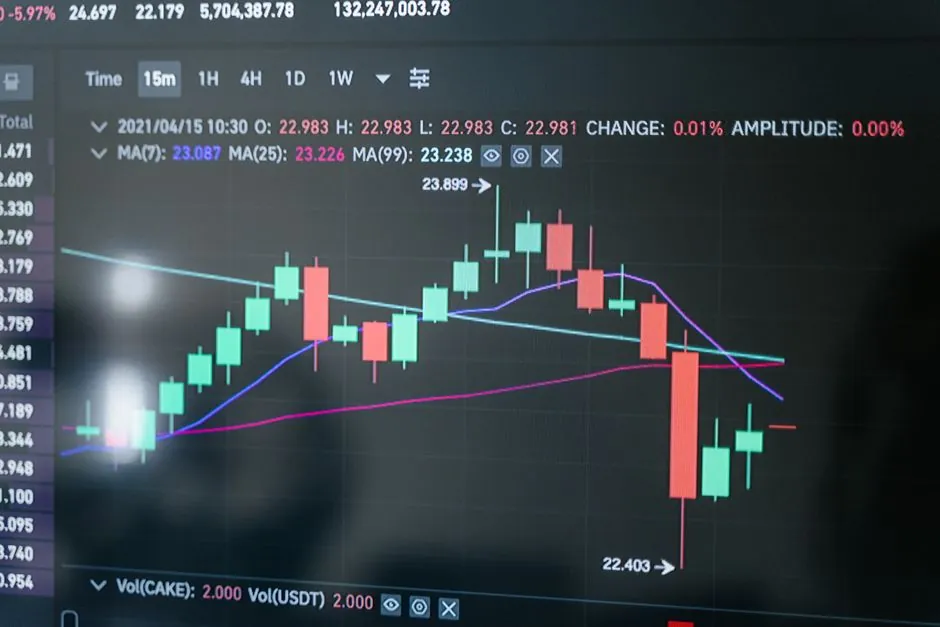
Polysilicon plant shutdowns can raise solar module input costs by tightening the feedstock market, although the U.S. $21/kg minimum import price provides a separate floor for covered polysilicon from December 4, 2026 [S2][S3].
The market is concentrated, with more than 90% of global polysilicon production located in China, while a U.S. production share below 2% in 2024 limits domestic substitution of Chinese plant outages [S1].
Shutdown-to-price transmission mechanism
Each 1,000 metric tons of polysilicon is equivalent to only a fraction of the global module market because module output also depends on ingot and wafer yields, cell throughput, encapsulation capacity, glass, frames, backsheets, and electrical components. A plant shutdown therefore affects module prices through feedstock scarcity, procurement premiums, and inventory drawdown rather than through a simple one-to-one volume conversion. [S2]
Polysilicon is melted into ingots, sliced into wafers, and then processed into cells and modules, so a shortage at the polysilicon stage propagates through every downstream production step [S4]. For buyers, the first observable effect is usually a higher replacement cost for spot or near-term material, followed by repricing of wafers and cells once suppliers exhaust usable inventory.
Three production routes define the supply response. The modified Siemens process heats silicon rods in a deposition reactor to about 1,100°C, using trichlorosilane and hydrogen. Fluidised bed reactors use silicon seed particles and can consume significantly less electricity, while upgraded metallurgical-grade silicon removes impurities physically and generally delivers lower purity than the other routes [S4].
Why US shutdowns do not map cleanly to global prices
A shutdown in Michigan or Tennessee has a much smaller direct effect on global supply than an equivalent outage in China because China accounts for more than 90% of world polysilicon production [S1]. The United States accounted for more than 50% of global output in 2005, but its share had fallen below 2% by 2024 [S1].
US wafer conversion is another constraint. No company made solar ingots or wafers in the United States in 2022, and even after new Hemlock and Q Cells facilities were added, China retained a dominant position [S1]. The practical bottleneck is therefore not limited to raw polysilicon: US module producers need adequate ingot, wafer, and cell capacity to consume imported material.
Cell production is expected to reach the level needed to serve the domestic market in 2027, according to Solar Energy Industries Association data cited in the trade investigation coverage [S1]. Until that conversion capacity exists, a US polysilicon outage can influence procurement costs without replacing the missing output one-for-one.
Import floors versus shortage-driven floors
The policy floor and the market floor answer different questions. A plant shutdown raises prices because less material is physically available, while a minimum import price changes the entry cost regardless of whether global supply is constrained. Beginning at 12:01 a.m. Eastern Time on December 4, 2026, covered polysilicon and derivatives will face minimum import prices enforced through additional specific tariffs [S2].
The announced minimum prices include $21/kg for polysilicon and $0.38/W for covered solar products [S3]. Polysilicon is subject to the minimum import price mechanism, while a separate 15% ad valorem tariff applies to certain derivatives, including ingots, wafers, cells, and modules [S2].
The distinction matters for module buyers. A shutdown can support a global or regional feedstock floor, but it does not prove that the U.S. import floor will be reached. Conversely, the $21/kg policy floor can hold landed feedstock costs above global market pricing even when plants operate normally. An analysis of the Section 232 regime estimated that the policy could add $0.10/W to module prices, although the realized increase depends on contracting structure and exposure to covered products [S5].
Cost drivers and total ownership economics
Module pricing is not a simple silicon-price formula. The main cost drivers are feedstock price, minimum-import-price exposure, tariff treatment, contract timing, volume tier, inventory coverage, and the availability of domestic or non-covered conversion capacity. A buyer holding polysilicon before the December 4 implementation date may avoid a near-term landed-cost increase, while a buyer signing later or using a shorter contract cycle faces greater repricing risk [S2].
Freight, financing, storage, insurance, and inventory carrying costs sit on top of the material benchmark. Installation cost is also affected when module prices change, because higher purchase prices can reduce the project budget available for balance-of-system equipment, labour, inverter work, and interconnection. Maintenance and energy costs do not change directly, but they become a larger share of total project cost when the installed module price rises.
The import structure compounds this arithmetic. Polysilicon under HTSUS 2804.61.0000 must contain at least 99.99% silicon by actual weight to fall within the covered classification, while derivative products are assigned to separate HTSUS subheadings [S2]. Classification and origin must therefore be checked before a buyer treats the $21/kg floor as a universal industry benchmark.
Contracting response and market comparison
Long-term supply contracts can reduce immediate exposure to a shutdown, but only if they include a workable price-reset mechanism, minimum-volume protection, and a clear remedy for missed deliveries. Fixed-price contracts protect the buyer during a shortage but can leave the supplier exposed if tariffs or input costs move sharply after signature. Indexed contracts distribute movements but remain exposed to the gap between a global benchmark and the US landed floor. [S1]
Three sourcing models illustrate the trade-off. Spot purchases provide flexibility and reflect shortage conditions quickly. Indexed contracts reduce basis risk between benchmark and transaction prices. Prepaid or forward physical contracts can protect delivery access, but buyers still face storage, financing, and rejection risk if the market weakens. The same framework applies to other import-controlled commodities, as discussed in Mineral Export Controls Reshape Long-Term Supply Contracts.
Producers are also trying to coordinate a market floor. By October 15, 2026, module-market prices appeared stable at the surface while declining in practice through negotiations, creating a gap between posted pricing and realized commercial terms [S7]. This behavior makes a quoted module price an imperfect measure of the true cost floor.
Limits of the trade-measure response
Price floors can discourage imports below the stated minimum but cannot create polysilicon production capacity. The Section 232 action was motivated partly by declining US polysilicon and semiconductor wafer-fabrication capacity, yet the US solar supply chain also depends on ingots, wafers, cells, and modules [S2].
Industry assessment is cautious. The minimum import prices were described as substantially above global prices, raising the question of whether the measure improves resilience enough to justify higher procurement costs [S6]. More than 90% of global polysilicon production remains in China, and US production had not exceeded 2% as of 2024 [S1].
Solar-grade polysilicon also competes for facilities and technical attention with semiconductor-grade material. Semiconductor production generally operates at lower volumes and higher margins than large-scale solar material, so producers require a clear reason to divert capacity toward solar applications [S1]. Tariffs alone do not resolve that structural margin difference.
Signals for procurement teams
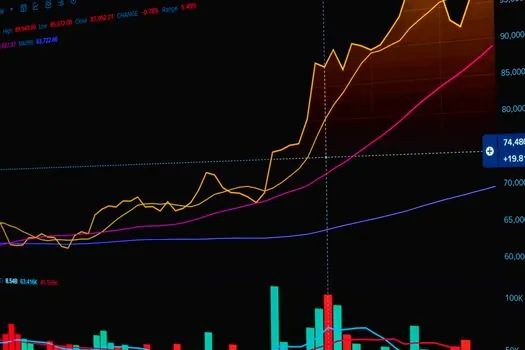
Three indicators will show whether shutdowns are forming a durable module floor: the price of solar-grade polysilicon in USD/kg, wafer and cell quotations in USD/W, and the spread between US landed cost and non-US delivered cost. The announced $21/kg polysilicon floor and $0.38/W derivative floor provide reference points, but actual module pricing will also reflect the $0.10/W policy cost estimate, contract coverage, and the 120-day interval before implementation [S2][S3][S5].
Procurement teams should also track importer entry dates, origin, HTSUS classification, and Department of Commerce monitoring because Commerce was instructed to address stockpiling before December 4, 2026 [S2]. The closing assessment is straightforward: a polysilicon shutdown raises the economic floor only when it removes more usable feedstock than inventories, substitution, and spare conversion capacity can replace.