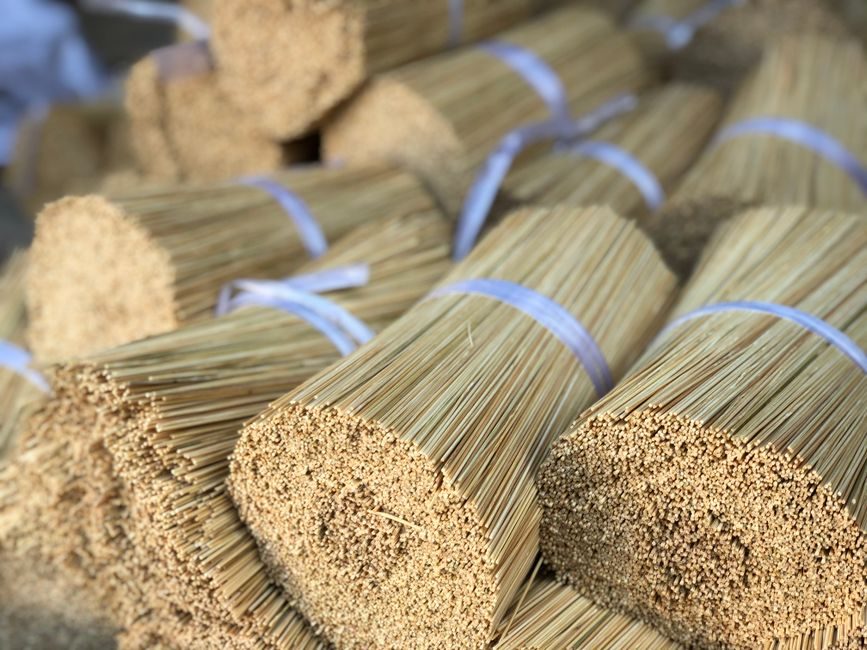
Concrete fiber selection is governed by four engineering targets — plastic-shrinkage crack control (typically 0.3-0.5 mm), post-crack residual strength (R-equivalent at 1.5-3 mm CMOD), fire-spalling mitigation (≥2 kg/m³ polypropylene monofilament) and impact/fatigue — and the fiber type, aspect ratio (l/d) and dosage must be matched to that target, not to a generic "fiber-reinforced" label [S2].
Alkali-resistant glass mesh, E-glass and C-glass woven mesh are commodity A/R-glass products typically supplied in 4×4 mm to 10×10 mm grid formats with acrylic-emulsion coating for surface concrete and EIFS use; they are not a substitute for structural macro-synthetic or steel fiber in slabs [S2]. The rest of this article walks fiber-type vs. spec vs. cost vs. application.
Fiber Types and the Failure Mode Each One Solves
Steel fiber (hooked-end, crimped, flat-ended, or glued-collated) carries structural load and delivers R-equivalent ratings per EN 14889-2; dosages run 20-40 kg/m³ for industrial slabs and 50-80 kg/m³ for tunnel segments and shotcrete linings [S2].
Polypropylene micro-synthetic fiber (monofilament 6-50 mm, 10-32 µm diameter) does not add post-crack strength; its function is plastic-shrinkage crack control at 0.6-1.0 kg/m³, and at ≥2 kg/m³ it prevents explosive spalling in fire by melting and relieving pore pressure — a mandatory layer in many tunnel and high-rise concrete specifications [S2].
Macro-synthetic fiber (polypropylene or polyolefin-based, embossed/indented profile, 30-54 mm length, aspect ratio typically 50-90) is the structural-grade alternative to steel for non-magnetic, corrosion-sensitive applications such as wastewater tanks, sea-defense units and chemical-plant slabs; EN 14889-1 governs the performance classes.
Alkali-resistant glass fiber (AR-glass, ZrO₂ ≥16%) is supplied as chopped strand (6-25 mm) for premix GRC or as woven mesh (4×4 mm to 10×10 mm grid) for surface reinforcement in EIFS, screed and render; E-glass and C-glass meshes are cheaper but fail in high-alkalinity matrix above pH 12.5 and should be limited to non-structural skins [S2].
Carbon fiber (chopped or filament) at 1.5-2.5% by volume gives electrical conductivity for de-icing, EMI shielding and cathodic-protection current distribution, with no corrosion risk; the trade-off is unit cost roughly 8-15× steel fiber and limited supplier base.
Spec Bands You Must Lock Before Sourcing
Aspect ratio l/d is the single most important geometric number: steel fiber 50-100 (hooked 80 is common), macro-synthetic 50-90, micro-synthetic 200-500 (driven by 6-50 mm length × 10-32 µm diameter), glass chopped 50-200. Below 50, pull-out is too easy; above 100 for steel, balling and pumping pressure escalate fast. [S1]
Tensile strength ranges: steel fiber ≥1000 MPa (hooked-end drawn wire), polypropylene ≥350 MPa (some macro grades 550-700 MPa), AR-glass 1500-1700 MPa filament strength (effective in matrix lower), carbon 3000-4000 MPa. These drive dosage-to-strength calculations.
Length vs. aggregate max size: the 3/4 rule — fiber length ≤ 1.5× Dmax of coarse aggregate — prevents balling in the mixer; with 20 mm aggregate cap fiber at ≤30 mm, with 10 mm aggregate you can run 54 mm macro-synthetic without segregation.
Specific gravity drives yield: steel 7.85, AR-glass 2.68, polypropylene 0.91, carbon 1.7-1.9. Same kg/m³ dose, polypropylene fills roughly 8.6× the volume of steel — relevant for mix-water absorption and air-content adjustments. Calibrate the concrete batching plant to weight-mode for fiber, since polypropylene's 0.91 SG will throw off any volume-based recipe.
Decision Matrix: Fiber Type vs. Selection Criteria
For industrial ground-floor slabs with forklift traffic and no aggressive chemicals, hooked-end steel fiber at 25-35 kg/m³ is the default — cheapest residual-strength-per-cubic-meter. [S2]
For tunnel linings, high-rise columns, and any element on the fire-spalling critical list, layer ≥2 kg/m³ polypropylene micro-monofilament (spalling control) with structural steel 30-50 kg/m³ or macro-synthetic 5-8 kg/m³; do not substitute mesh or chopped glass here.
For water/wastewater tanks, coastal splash zones, de-icing salt exposure, or any asset where rebar rust is the dominant deterioration mode, macro-synthetic 5-7 kg/m³ replaces steel and eliminates "ghost" rust stains on cover surfaces.
For screeds, renders, EIFS, and secondary surface reinforcement, AR-glass woven mesh (4×4 mm to 10×10 mm grid, 60-160 g/m² fabric weight) is the right answer; E-glass/C-glass mesh is acceptable only where the cementitious matrix pH stays below 11.5 — a condition screeds on cement board can sometimes meet, but structural concrete cannot [S2].
For de-icing slabs, EMI-shielded enclosures, or smart-structure cathodic current distribution, carbon fiber 1.5-2.5% by volume is a niche-but-proven call, with conductivity band 0.1-1 S/m achievable at 2% dosage.
Who Fiber Is FOR, and Who It Is NOT For
Fiber-reinforced concrete is FOR: ground-bearing slabs (joints can be opened up 30-50%), shotcrete linings, precast tunnel segments, composite metal decks, screeds, patch repair and any element where rebar congestion is a placement risk. [S3]
Fiber is NOT a substitute for primary structural rebar in moment frames, deep beams, or any element where code-listed design relies on discrete bar reinforcement and development length — EN 1992-1-1 and ACI 318 still require bar reinforcement for flexural members even when fibers reduce shrinkage reinforcement.
Carbon and AR-glass chopped strand are NOT cost-effective for thick structural sections where steel or macro-synthetic delivers the same post-crack performance at 10-30% the cost — reserve them for thin-section, surface or specialty jobs.
Limits, Failure Modes and What Specifiers Miss
Steel fiber corrosion at the surface produces "hair-rust" staining on uncovered slabs; specify stainless or macro-synthetic where architectural finish matters. Balling in the mixer happens above 80 aspect ratio at >40 kg/m³ — request a mix-design trial pour before signing off. [S1]
Polypropylene loses tensile contribution above 80°C and melts at 160-170°C; its spalling-control value is real but its post-crack contribution disappears in fire — pair it with steel or macro, do not rely on PP alone for tunnel fire cases.
AR-glass degrades in carbonated, high-sulphate, or chloride-laden matrices; matrix alkalinity (pH) drops as carbonation progresses, so the bond itself weakens over decades — design margin accordingly. E-glass rots out in standard OPC paste within 2-5 years in some studies [S2].
Macro-synthetic creeps under sustained load; the long-term residual strength at 1.5 mm CMOD is 30-50% lower than the 24-hour reading. Specify residual, not first-peak, in design calculations.
Sourcing Levers: MOQ, Lead Time and Quality Clues
Commodity AR-glass/E-glass mesh sits at MOQ 5,000 g/m² and supply capability 4,000,000 g/m²/month at port Tianjin under TT or LC terms — a fast, low-friction sourcing lane for non-structural mesh [S2].
Steel fiber lead time is 4-6 weeks for standard hooked-end from Chinese mills, 8-12 weeks for stainless or brass-coated grades; macro-synthetic from European makers runs 6-10 weeks and is the constrained bottleneck in 2026.
Quality clues: request EN 14889-1/-2 test reports (length, diameter, tensile, l/d, R-equivalent), a sample of the actual production batch, and a mill audit if the order exceeds 50 t. Reject lots with >5% collated bundle breakage, >0.5% oil residue, or aspect-ratio drift ±10%.
For projects with batching-plant integration, Concrete Vibrator Suppliers 2026 covers the consolidation-vibration window that determines fiber distribution uniformity, and the concrete admixture sizing guide maps the HRWR viscosity window that prevents fiber balling during pumping.
For deeper material-property reference, the concrete fiber encyclopedia entry cross-links aspect ratio, modulus and dosage math, and the concrete admixture page covers the viscosity-modifying admixtures often co-specified with macro-synthetic to keep mix stable at 5-7 kg/m³.
Trackable signals for the next quarter: EN 14889-1 residual-strength class harmonization with ASTM C1609, and the second-tier Chinese mill capacity additions for hooked-end steel fiber that pulled lead times back to 4 weeks for Q3 2026 orders.