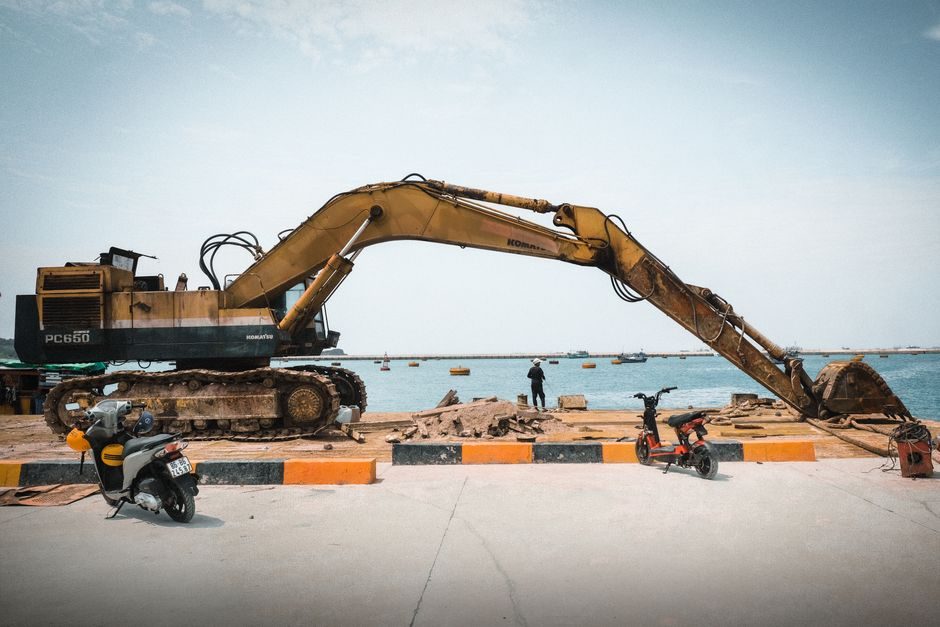
A long-reach excavator is a purpose-built variant of the standard crawler excavator where the boom and stick are lengthened to push maximum dig depth and horizontal reach past 15 m, at the cost of lift capacity and transportability [S1][S3].
The category spans OEM factory long-reach models from Cat and SANY, plus aftermarket boom-and-stick kits from manufacturers such as HAWK that convert an existing excavator into long-reach configuration [S1][S2][S3]. Used market pricing on comparable 25-ton class long-reach units has ranged from roughly $74,985 (2012 Case CX250CLR, 6,621 hours) to $174,000 (2013 Case CX250C LR, 2,225 hours) [S4][S6].
What "Long Reach" Actually Means in Specifications
Long-reach excavators are distinguished from standard models primarily by an extended boom-and-stick geometry that trades lift capacity at full extension for additional horizontal and vertical reach [S1][S3]. Cat markets its long-reach range specifically for dredging and deep trenching duty, where the operator must work past a waterline or below a normal bench elevation [S1]. SANY classifies the long-reach excavator as a distinct product line alongside mini, small, medium, large, mining, and wheel variants, indicating factory-engineered booms rather than field retrofits [S3].
HAWK's aftermarket approach supplies pre-plumbed hydraulics and hose mounts plus long arms for a wide range of excavator models, with the stated goal of letting owners dig deeper and reach further than standard booms allow [S2]. The retrofit route matters because it lets fleets convert existing carrier machines rather than buy a dedicated long-reach chassis, a different cost structure than a factory unit.
Selection Criteria: The Four Gates That Decide Fit
Four numeric gates decide whether a long-reach excavator is the right tool: required maximum reach, required maximum dig depth, carrier operating weight, and the transport envelope on the job route [S1][S2].
Reach and depth are the headline numbers; OEM literature positions long-reach for dredging, deep trenching, pond and canal desilting, and slope finishing where a standard machine cannot physically position the bucket [S1][S5]. The Cavite Province irrigation project in the Philippines deployed a long-reach excavator paired with pontoon equipment specifically for dam desilting, a duty where the boom has to reach down and across a waterline simultaneously [S5]. Operating weight matters because a longer boom shifts the load curve; a 25-ton-class long-reach unit such as the Case CX250D LR or CX250C LR sits in the same carrier class as a standard 25-ton excavator but with re-rated hydraulics and counterweight considerations [S4][S6].
Transport envelope is the gate buyers most often underestimate. Long-reach booms typically exceed standard transport width and length limits, which triggers permit requirements, escort vehicles, and route surveys on public roads; HAWK's resource library includes a dedicated transportation guide for this reason [S2].
Factory Long-Reach vs Aftermarket Boom Conversion: A Side-by-Side
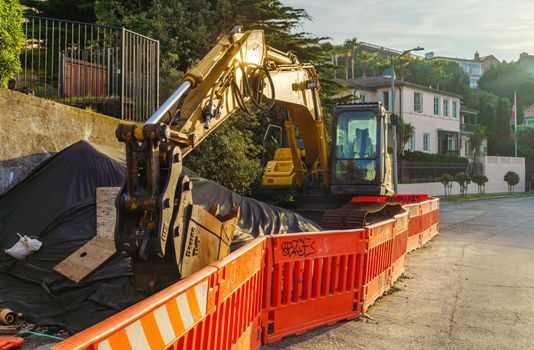
Two realistic options exist for buyers: a factory long-reach model from an OEM such as Cat or SANY, or an aftermarket boom-and-stick conversion kit applied to an existing excavator [S1][S2][S3].
Factory long-reach units from Cat are positioned for dredging and deep trenching with OEM warranty, OEM service network support, and matched hydraulics engineered for the extended boom geometry [S1]. SANY lists long-reach excavators as a dedicated product category on its global site, indicating a factory-engineered variant rather than a field option [S3]. Aftermarket conversions from suppliers such as HAWK provide pre-plumbed hydraulics, hose mounts, and long arms for a wide range of excavator models, letting fleets extend the duty of machines they already own [S2]. The factory route typically delivers tighter integration and documented residual value; the aftermarket route typically delivers lower acquisition cost and faster delivery on a carrier the buyer already operates and maintains.
Used market data points reinforce the cost spread between the two routes: a 2012 Case CX250CLR long-reach with 6,621 hours listed at $74,985 versus a 2013 Case CX250C LR with 2,225 hours at $174,000, both 25-ton-class factory units, with the price gap driven primarily by hours, age, and condition rather than reach spec [S4][S6].
Duty Mapping: Which Applications Fit, Which Do Not
Long-reach excavators are the correct tool for dredging, pond and canal desilting, deep trenching beyond standard boom reach, riverbank and slope finishing, and demolition of low-rise structures where reach is more important than breaker impact energy [S1][S5].
They are the wrong tool for general bulk earthmoving on a tight site, heavy rock excavation, or any duty where the production rate depends on cycle time rather than reach. The longer boom reduces lift capacity at full extension and slows cycle speed, so a long-reach machine moved onto a standard digging job will under-produce a comparably sized standard excavator by a wide margin. Buyers should match the tool to the duty rather than buying long-reach on speculation of future dredging work. A wheeled excavator selection map covers the trade-off when mobility between urban sites is the priority instead of reach.
Options and Add-Ons That Change the Spec Sheet
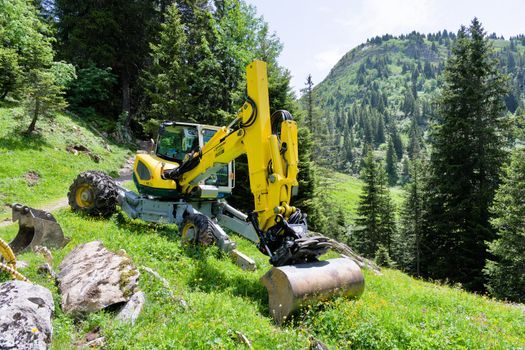
Three categories of add-on materially change a long-reach excavator's spec sheet: amphibious undercarriages, RTK GPS positioning systems, and modular sectional barges [S2].
Amphibious undercarriages from HAWK cover excavators from 7 to 130 tons and convert a long-reach machine into a marsh or shallow-water unit, which is the configuration used in desilting projects such as the Cavite Province deployment [S2][S5]. RTK GPS positioning systems such as HAWK Vision give the operator real-time bucket or pump position relative to the waterline, addressing the over-dig and under-dig risk that comes with working at the limit of a long boom [S2]. Modular sectional barges extend the working platform on water and are designed for easy on-site assembly and disassembly [S2]. Buyers specifying a long-reach excavator for water-based dredging should price these three add-on categories into the total cost of ownership rather than evaluating the bare machine price alone.
Who Should Not Buy a Long-Reach Excavator
Buyers whose work is dominated by general earthmoving, trenching in normal-depth utilities, or tight urban sites should not specify a long-reach excavator [S1][S2]. The longer boom and stick add weight, raise the transport envelope, reduce lift at full extension, and slow cycle times compared with a standard configuration on the same carrier. A standard 20- to 30-ton crawler excavator will out-produce a long-reach unit of the same operating weight on any duty that does not require the extra reach.
Fleets with infrequent dredging or deep-trenching work are typically better served by renting a long-reach unit for the specific project or hiring a subcontractor that already owns one, rather than absorbing the transport, storage, and under-utilisation cost of a dedicated machine [S1][S2].
Sourcing, Standards, and Practical Next Steps

Long-reach excavators fall under general construction-equipment safety and transport regulations rather than a dedicated long-reach product standard; transport width, height, and length limits on public roads are the binding regulatory constraint [S2].
Verify the reach and dig-depth numbers on the manufacturer's current data sheet against the specific job requirement, confirm transport dimensions against the planned route, and price amphibious undercarriage, RTK GPS, or modular barge add-ons as separate line items if the duty involves water [S1][S2][S3]. For broader machine-class trade-offs, the wheeled vs crawler excavator spec map lays out when mobility beats stability and vice versa. Trackable signals to watch are OEM long-reach model refreshes on Cat and SANY global product pages, plus used-market price movement on 25-ton-class long-reach units such as the Case CX250D LR and CX250C LR [S1][S3][S4].
Detailed specification references: reach truck, and pressure transmitter.