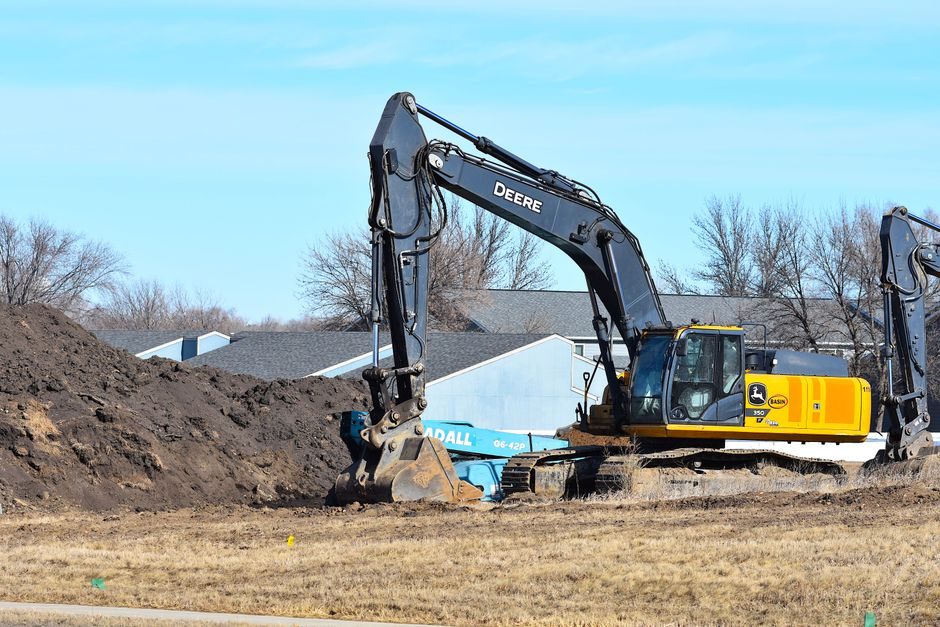
A crawler excavator is an excavator on steel or rubber tracks rather than wheels, and the tracked undercarriage is the single spec that decides whether the machine fits a given jobsite, per the DirectIndustry 2026-05-29 OEM index [S1].
The same index lists 539 crawler excavator models from 54 manufacturers, split into medium (232), mini (186), large (115), midi (20), and micro (10) size classes — 528 diesel, 11 electric, and 1 hybrid power variant [S1].
Definition and Scope: What Makes a Crawler Excavator Different
A crawler excavator — Chinese term 履带挖掘机 — is defined by its undercarriage: two endless tracks that spread machine mass across a large contact patch, lowering ground pressure and giving the unit traction on mud, sand, slope, and soft subgrade where wheeled units bog down [S2]. The DirectIndustry buying guide states the track spacing and width govern machine stability, with the tracks acting as the structural base for the upperstructure and house [S1].
By contrast, the broader excavator category includes wheeled, truck-mounted, amphibious, road-rail, and walking variants, each tuned to a different mobility profile. The 2026-07-25 DirectIndustry crawler index flags 361 construction, 60 mining-and-quarrying, 19 forestry, 16 landfill, and 9 tunnel crawler models — confirming that "crawler" is a mobility subtype, not a duty class [S1]. Related reference: see the excavator encyclopedia entry for the full mobility spectrum.
Size Classes and Operating-Weight Bands
Real published examples on 2026-07-25 sourcing channels confirm the bands: a 2.5-ton mini unit (SWE25UF) at US$19,900–23,900, a 5.7-ton compact (HX60) at US$25,000–27,000, a 21-ton class (SWE210) mid-range pricing, and a 36-ton heavy unit (SC360) with 33,600 kg operating weight, 1.6–1.8 m³ bucket, 194 kW @ 2,200 rpm Cummins 6CTA8.3, and 3,418 mm tail swing radius [S3][S5][S7]. A 6-ton XE75 lists at US$12,000 with optional attachments, and a 7.5-ton XE75GA at US$23,000–25,000 with 0.33 m³ bucket [S3]. For the broader operating-weight and engine spec map, see the mini excavator selection guide.
Engine, Drive, and Power-Source Selection
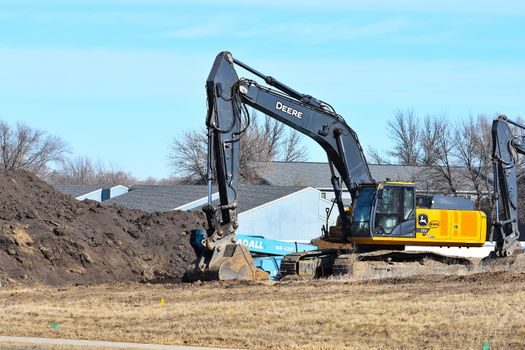
Tier-4 Final / Stage V emissions compliance is the de-facto spec for OEM units shipped into the EU and North America, and Chinese OEM listings such as the SWE25UF carry CE and EPA certification marks alongside their 2.5-ton rating [S3].
Application Fit: Crawler vs Wheeled vs Specialty Excavators
Crawler excavators dominate soft-ground, slope, and rough-terrain duty: 361 construction, 60 mining-and-quarrying, 19 forestry, 16 landfill, and 9 tunnel catalog entries on DirectIndustry [S1]. Wheeled excavators (not in the crawler index) are chosen only for hard, paved surfaces where road speed between digs matters and ground pressure is not a constraint. Amphibious (11), road-rail (2), truck-mounted (1), and walking (1) crawler variants exist for niche duty [S1].
For urban demolition and street work, short-tail-swing (38) and zero-tail-swing (37) crawler models together account for ≈14% of the 2026 catalog — they trade some reach for the ability to work inside one lane of traffic [S1]. For long-reach work (canal cleaning, deep trenching), 21 long-reach crawler variants are catalogued, and 32 demolition variants are configured for breaker and shear tools rather than digging buckets [S1]. Crawler-class fit and application bands are mapped in detail at the crawler excavator classes and spec ranges article.
Selection Criteria: A 2026 Comparison Matrix
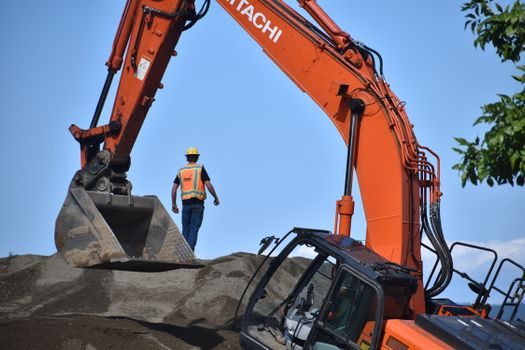
Four decision criteria separate crawler from wheeled and from specialty excavators: (1) ground pressure, where tracked units typically deliver 30–50 kPa vs 150–250 kPa for a wheeled unit of equal mass; (2) jobsite mobility, where wheeled units road at 30–40 km/h and tracked units must be hauled; (3) cost band, with 2026-07 sourcing showing mini crawlers at US$9,000–25,000 and 21–36-ton crawlers at US$40,000–146,300 [S3]; (4) duty life, where steel-track undercarriage wear dominates operating cost on abrasive sites. A 21-ton class listing (SWE210) and a 33-ton class listing (HX340HD at US$126,800–146,300) bracket the heavy end of the 2026 market [S3][S7].
Recommended fit: spec a crawler excavator for soft, uneven, or sloped ground, for demolition, and for any site where track-driven traction outweighs the cost of low-speed transit. Spec a wheeled excavator only when the work zone is paved, fenced, and the operator must move between multiple small digs per shift. A full 2026 spec-first walk-through — including bucket capacity, engine brand, hydraulic pressure, and tail-swing gates — is published in the crawler excavator 2026 selection map.
Limitations, Failure Modes, and Sourcing Constraints
The dominant operating-cost line on a crawler excavator is undercarriage wear: pins, bushings, sprockets, and track shoes carry the abrasive load and dictate 2,000–5,000-hour overhaul intervals on mining-class units. Sourcing data on 2026-07-18 also shows catalogue gaps — the Made-in-China compact-crawler-truck page returned zero matches on 2026-07-18, meaning compact crawler models are not bundled with truck chassis in current supply [S6].
Other limits flagged on 2026-07 sourcing: aftermarket parts lead-time for legacy models (CAT 305.5, year 2008) runs through used-equipment channels rather than OEM stock [S4]; the HKTDC sourcing index logs standalone crawler-excavator listings separate from full industrial-machinery catalogs, indicating a fragmented mid-tier supply [S8]; the 1 hybrid-power crawler in the 2026-05 DirectIndustry index is an outlier, and buyers should not treat hybrid as a 2026 volume option [S1].
Standards, Sourcing Notes, and What to Verify Before Purchase
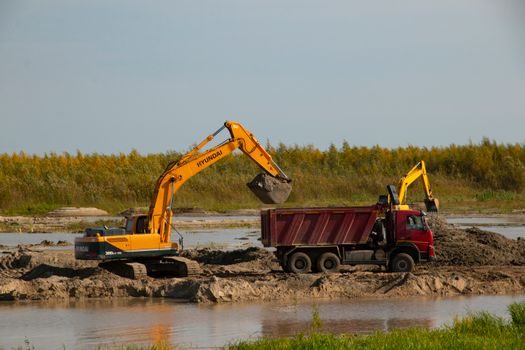
CE marking (EU) and EPA Tier 4 Final (US) are the baseline compliance marks seen on 2026-07 crawler listings such as the SWE25UF and the Yuchai YC08 [S3]. For mining and quarrying duty, confirm the undercarriage is heavy-duty sealed-and-lubricated (SALT) and that the engine meets the dust-tier filtration spec for the site, as 60 of 539 catalog models are flagged for mining-and-quarrying duty [S1].
For demolition spec, verify that the carrier's hydraulic-flow and pressure match the breaker or shear tool — the SC360 datasheet at 194 kW / 2,200 rpm and high-pressure hydraulics is a benchmark for matching 1.6–1.8 m³ buckets and 5–8-ton class attachments [S5]. Track-construction machine sister products (crawler cranes) follow a different duty and load-chart logic; see the crawler crane encyclopedia entry for comparison.
Spec-level background on the components involved: pressure transmitter.