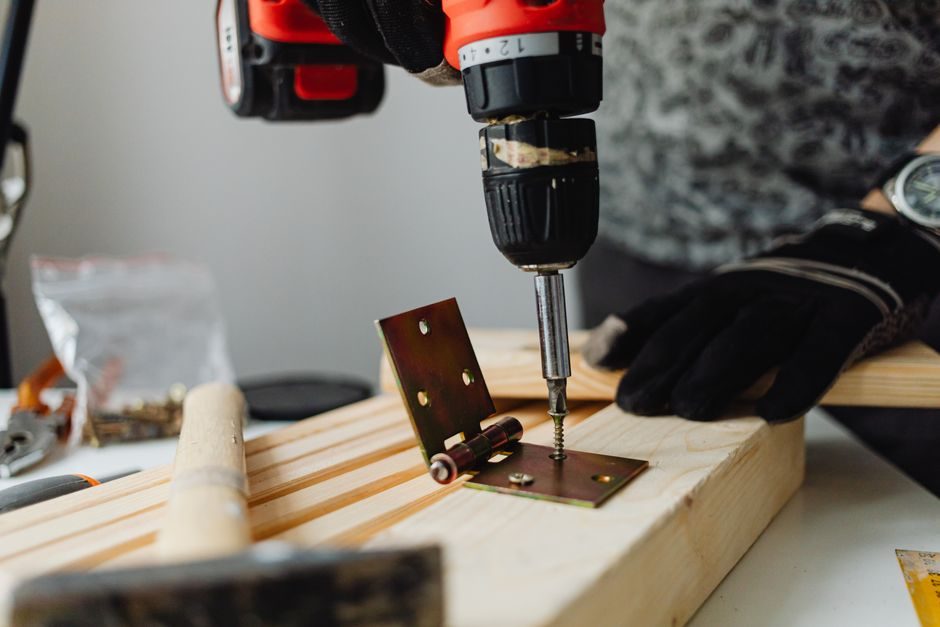
A pneumatic nail gun is a fastener-driving tool powered by compressed air delivered through a hose from an external compressor, distinct from cordless battery or fuel-cell nailers. The matching step that decides whether a tool earns its place on a jobsite is the fastener collation — 21° plastic-strip framing, 15° coil, 18-gauge brad, or straight strip — paired to the nail-length envelope the magazine accepts [S1][S2][S4].
Three reference points frame the buying decision: a Paslode F350-21 framing nailer takes 2 in to 4 in nails at up to 6 shots per second, weighing 8.1 lb [S1]; a SENCO F-18XP pneumatic-style cordless tool targets finishing nails with no ramp-up delay [S2]; a VEVOR CN70 coil nailer drives 15° fasteners up to 2-3/4 in [S6]. On a comparable manufacturing-cost basis, OEM China sourcing for staple/nail combinations runs US$61 to US$295 at 4 to 50 piece MOQ from Toolpro Trading and EBIC Tools [S3].
Match Collation and Magazine Angle to the Application
Framing nailers in the 20-22° plastic-strip class carry the load for structural wood, sheathing and sub-floor work because the angled strip lets the magazine sit low and reach inside stud corners [S1][S4]. Coil nailers running 15° wire-wound collation hold roughly 200-300 fasteners per coil, which suits continuous nailing on pallet, crating, siding and shingle work where re-loading downtime dominates the cycle [S6].
Finishing nailers commonly use 18-gauge brads or 16-gauge straight strips so the smaller head can be puttied flush on trim, crown and door casings [S2][S4]. For trim and cabinetry where a hose and compressor are impractical, a cordless pneumatic-feel platform such as the SENCO F-18XP series gives bump or sequential firing without a fuel cell or ramp-up lag [S2]. Buyers working inside occupied interiors should evaluate noise, exhaust and trip-firing modes at this collation step because switching collation later forces a second tool, not just a second fastener [S4].
Size the Tool to the Nail-Length Envelope and Air Demand
The first mechanical gate on any pneumatic nailer is the nail-length range the magazine and driver channel can cycle, and the published spec is the only honest number. Paslode publishes 2 in minimum to 4 in maximum for the F350-21 framing platform [S1]; VEVOR publishes a 2-3/4 in maximum fastener length for the CN70 coil head [S6]. A tool rated below the longest fastener in your bill of materials will either short-drive or stall, and a tool rated well above it wastes energy, jams more often and accelerates wear.
Air demand tracks fastener length and shot rate: framing tools at 6 shots/sec on 3-1/2 in nails typically want 5-6 CFM at 90 psi, while brad nailers in the 18-gauge finishing class run on 2-3 CFM. Buyers should also weigh tool weight against daily cycle count: the Paslode F350-21 platform is published at 8.1 lb, a critical number for framers driving 4 in nails overhead all day [S1]. For detailed ergonomic matching, comparing specs alongside other handheld pneumatic platforms — for example, the pneumatic actuator and pneumatic cylinder reference pages — gives a sense of how air-tool weight, air-line diameter and duty rating interact across the broader tool family.
Firing Mode, Jam Control and Cycle Speed
Pneumatic nailers ship with two firing modes, and the right one is dictated by the work surface, not by the operator's preference. Sequential (single-shot, contact-trip disabled) requires a deliberate trigger pull after the nose is pressed into the wood, which is the safe default for framing, flooring and any overhead work where a second nail through the same trigger pull would be dangerous [S4]. Bump (contact-trip) lets the operator keep the trigger pulled and swing the nose across the workpiece for high-volume placement on flat nailing surfaces such as sheathing and sub-floor [S2].
Cycle speed and jam tolerance are published as separate numbers on a credible spec sheet. Paslode markets the F350-21 framing nailer at 6 nails per second with reduced jam and misfire incidence versus prior generation, and the tool weighs 8.1 lb [S1]. The SENCO F-18XP platform markets "jam reduction intelligence" plus a no-ramp-up pneumatic response on its cordless pneumatic-feel drive [S2]. For procurement, request the OEM-published cycle rate, the magazine capacity and the recommended air pressure, and reject any listing that quotes cycle rate only as "fast" or "high speed" without a numeric firing interval [S1][S2][S4].
Air Supply, Hose, Fittings and Exhaust Management
The pneumatic platform is only as good as the air supply behind it, and three sub-components are usually undersized on first-time buyers: the compressor CFM at 90 psi, the hose inner diameter and the pneumatic fitting type at the tool inlet. A framing nailer pulling 5-6 CFM at 90 psi through a 1/4 in hose of more than 50 ft will pressure-starve and slow the cycle; 3/8 in hose is the common remediation. Quick-connect couplers should match the tool inlet — many framing tools use a 1/4 in NPT male plug, while most brad and finish nailers use a 1/4 in industrial or European-style plug. [S1]
Exhaust management matters on indoor trim work. Most finishing nailers route exhaust through a rear port that can be plumbed with a deflector or capture hose, and the tool should be chosen with the deflector port orientation matching the work angle. Buyers specifying the tool for high-cycle production lines should also evaluate a pneumatic silencer on the exhaust port to keep shop noise below the 85 dBA action level common to indoor assembly lines, and a pneumatic conveyor upstream of the workstation if nails are bulk-fed.
Compare the Three Main Collation Classes Side by Side

The decision matrix below lines up the three dominant pneumatic-nailer platforms against the four spec gates that drive 80% of industrial and trade purchases: collation and angle, nail-length envelope, published cycle rate, and approximate price band. [S2]
21° plastic-strip framing (Paslode F350-21): nails 2 in to 4 in, 6 shots/sec, 8.1 lb; price band varies by region and bundle, but industrial-grade framing tools of this class typically sit above US$200 [S1]. 15° wire-coil siding and pallet (VEVOR CN70): nails up to 2-3/4 in, large per-load fastener count, retail band around US$120 [S6]. 18-gauge cordless pneumatic-feel finishing (SENCO F-18XP): brad-length finishing, no ramp-up, no hose, jam-reduction logic, retail positioned as a premium cordless platform [S2]. For OEM China sourcing, a pneumatic nail gun at US$61 to US$295 from audited suppliers EBIC Tools and Toolpro Trading covers the same three collation classes with published 4 to 50 piece MOQs [S3].
Safety, Compliance and Jobsite Constraints
Pneumatic nailers are a top-five source of occupational impact and puncture injury in framing carpentry, and the selection step is where most of the safety margin is built. US OSHA 29 CFR 1926.302(c) and the parallel ANSI SNT-101 standard require a contact-trip or full sequential mechanism, a nose that prevents firing unless pressed, and a disabling lockout for hose disconnection — these are the spec lines to verify on the OEM data sheet, not on the marketing brochure [S4]. Buyers should also confirm that the tool's exhaust port can be redirected away from the operator and any co-workers on the same elevation.
Trigger discipline and PPE round out the constraint set: ANSI Z87.1 eye protection, ANSI Z89.1 head protection on framing sites, and hearing protection above 85 dBA continuous exposure. Tool weight published at 8.1 lb on the F350-21 is a real number, not a marketing line, and it directly drives operator fatigue on overhead nailing [S1][S4]. For deeper spec sourcing discipline, the tool and die steel selection guide and the pneumatic fitting reference page cover the upstream material and air-line decisions that keep a nailer performing at its published cycle rate over its service life.
Sourcing Reality: OEM China, Brand Distribution and Lead Time
Industrial buyers in 2026 face a three-tier pneumatic-nailer market. Tier 1 is the brand-distribution channel — Paslode, SENCO, Hitachi/Max, DeWALT, Bostitch — with the strongest published safety compliance, the longest spare-parts tail and the highest unit price [S1][S2]. Tier 2 is the OEM/ODM China cluster: Fujian- and Jiangsu-based audited suppliers such as Toolpro Trading, EBIC Tools and the Charmbo/Qiangbao Tools group offer pneumatic nail guns and staplers at US$61 to US$295 list with 4 to 50 piece MOQs and full pneumatic-tool customization [S3][S7].
Tier 3 is the refurb and parallel-import channel, which is where the outliers live: a coil nailer listed on eBay at US$232.20 with European-currency equivalents around EUR 215.92 illustrates the floor pricing that flows from non-authorized channels [S5]. For volume procurement, request the OEM cycle-rate, the magazine capacity, the recommended CFM at 90 psi, the trigger-mode list, and the warranty tail; cross-check those against the OEM China data sheet before signing a P/O. Two trackable signals for the next 90 days: the release of any 2026-vintage Paslode or SENCO framing platform with a published cycle rate above 6 shots/sec, and any 2026 EU noise-emission rule change affecting indoor finishing nailers above the current 85 dBA workshop floor.