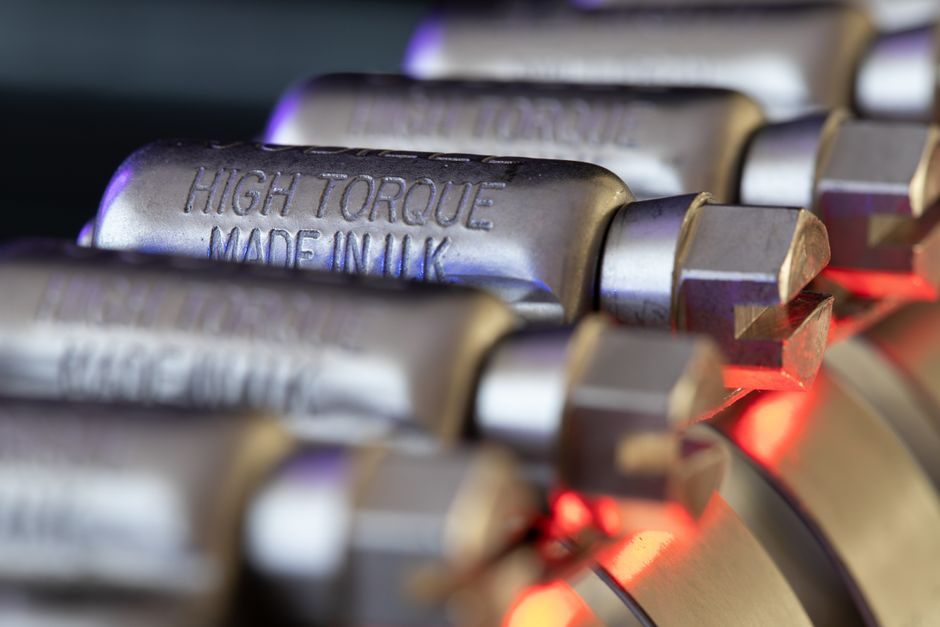
Tool and die steel specification is a four-axis decision: required working hardness in HRC, wear mechanism (abrasive vs adhesive vs impact), dimensional-change tolerance through heat treatment, and machinability in the as-supplied condition [S1].
North American full-service shops (e.g. Jonesboro Tool & Die) and Asian mill-trading exporters (e.g. Kunshan Benchi Special Steel, 2003-established) both publish the same grade families — D2, H13, O1, A2, S7, 1.2311/P20 — confirming these designations as the de-facto catalog baseline for stamping, plastic-mold, and cutting-die work [S1][S2].
Cold-work tool steels: O1, A2, D2 by working hardness and wear
Oil-hardening O1 (1.2510) typically reaches 57–62 HRC after quench-and-temper, with minimal dimensional change (±0.0005 in/in is commonly published for small sections), and remains the shop default for short-run blanking, forming, and trim dies where machining volume is high and section size is moderate [S1].
Air-hardening A2 (1.2363) hits 57–62 HRC with markedly better dimensional stability than O1 on thicker sections because the air quench suppresses the transformation stresses that distort oil-quenched parts — a meaningful advantage when sinker-EDM dimensions must hold without a second straightening op [S1].
High-carbon, high-chrome D2 (1.2379, ~12% Cr, ~1.5% C, ~1% Mo) hardens to 58–62 HRC and is the workhorse for long-run cold-work dies, slitters, and punches requiring abrasive-wear resistance; the trade-off is grinding-only machinability in the hardened state, so EDM and profile grinding become required finishing routes [S1].
A practical cold-work selection rule: O1 for prototype/short-run where machinability dominates, A2 for moderate runs where size change must stay tight, D2 for long runs where abrasive wear dominates and EDM finishing is acceptable [S1].
Hot-work and shock-resistant: H13, S7, H11 selection map
H13 (1.2344, ~5% Cr, ~1.5% Mo, ~1% V) is specified for die-casting die, extrusion tooling, and forging dies operating at 540–595 °C die-surface temperatures, typically tempered to 44–52 HRC for aluminum and magnesium die casting to balance hot-wear resistance against gross cracking [S1].
Shock-resistant S7 (~0.5% C, ~3.25% Cr, ~1.4% Mo) is hardened to 54–58 HRC and is the go-to grade for punches, driver blades, shear blades, and forming tools subjected to high-impact or shock loading; the lower carbon and higher toughness distinguish it from D2 and H13 [S1].
For shop classification, hot-work H-series (H10–H19, H21–H26, H41–H43) covers die-casting and forging; the S-series (S1, S2, S5, S7) covers shock; the D-series is cold-work high-chrome. Mixing categories — running D2 in a hot-work die or S7 in an abrasive-wear slitter — is a common spec error and a leading cause of premature die failure.
Plastic-mold steels: P20, 1.2311, 1.2738 and the pre-hardened route
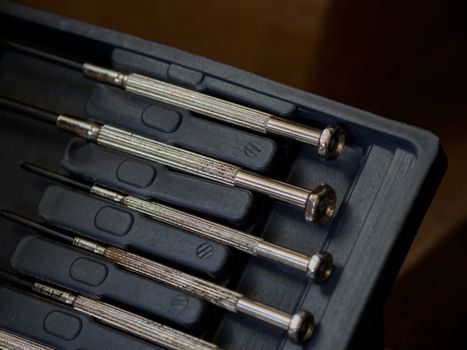
P20 (1.2311, ~0.35% C, ~1.7% Cr, ~0.4% Mo) and the higher-purity variant 1.2738 (P20+Ni, ~1.0% Ni) are routinely supplied pre-hardened to 28–34 HRC (approximately 280–320 HBW) directly from the mill, eliminating the post-machining heat-treat step and the associated distortion risk for large plastic-injection molds [S1][S2].
For abrasive glass-filled or mineral-filled resins, molders step up to a through-hardened grade such as A2 or D2 at 58–60 HRC for cavity and core surfaces, accepting the extra EDM and grinding cost in exchange for the wear life.
For die-casting dies — aluminum, zinc, magnesium — H13 is the industry-default cavity steel, and the spec is normally written as "H13, pre-hardened to 44–48 HRC, then nitrided for surface hardness" with the nitrided case typically 0.3–0.6 mm deep at 900–1000 HV0.3 [S1]. For a deeper dive on the aluminum die-casting machine side, see the cold-chamber die-casting machine selection spec cut and the oil-and-gas die-casting sourcing map.
Stocked sizes, mill forms and sourcing channels
Standard mill forms in the tool-steel catalog are round bar (most common OD range Ø10–Ø500 mm), flat bar (thickness 10–300 mm, width up to 1000 mm), plate, and pre-machined block; Chinese trading exporters such as Kunshan Benchi quote per-piece MOQs of 500 pieces for alloy round bar (e.g. 30CrMnSi) and "negotiable" on tool-steel items, with main markets listed as North America, South America and Eastern Europe [S2].
US full-service shops typically source from domestic mills (Crucible, Carpenter, Bohler-Uddeholm, Finkl) and from import distributors for cost-driven grades; for non-critical or prototype work, A2 and O1 are commonly available in 1/4 in. increments from warehouse stock, while D2 and H13 in large cross-section (>150 mm) often carry mill lead times of 4–8 weeks [S1].
For procurement signals, watch three: (a) whether the supplier publishes a works certificate with heat-number, chemistry, and hardenability data per heat; (b) whether the mill hardness is reported in HRC or HBW with both being convertible (≈10× difference in the 30–60 range is a common error — always confirm the scale); (c) whether dimensional tolerance is to ASTM A681 or to a tighter shop-specific protocol [S1][S2].
Heat-treatment and dimensional-control checkpoints
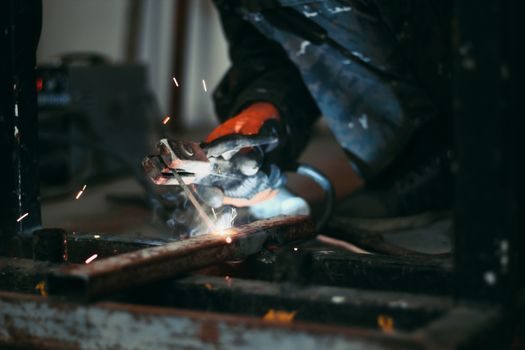
A typical tool-steel thermal cycle is pre-heat (550 °C / 850 °C soak), austenitize (per grade: ~760 °C for O1, ~970 °C for A2, ~1010 °C for D2, ~1020 °C for H13, ~925 °C for S7), quench (oil, air, or pressurized gas per grade), then temper immediately at 150–200 °C for O1, 200–540 °C for A2/D2, and 540–650 °C for H13 to hit the target HRC [S1].
Dimensional change through hardening depends on grade and section: O1 shows the largest movement (±0.001–0.002 in/in typical for small parts), D2 less (±0.0005 in/in), H13 intermediate, and maraging or air-hardening grades the least — which is why CAD dimensions on O1 tooling must allocate a finish-grind stock of 0.005–0.015 in. per side [S1].
For shock-loaded tooling, double-temper (two tempers at the same soak) is mandatory for H13, S7 and other secondary-hardening grades to convert retained austenite; skipping the second temper on H13 dies is a documented cause of dimensional drift in service.
Grade-vs-application comparison matrix
Selection criteria ranked against the dominant options: working hardness (HRC), wear resistance (qualitative), impact toughness (qualitative), dimensional change on hardening, machinability as-supplied. [S1]
O1 — HRC 57–62, wear medium, impact medium, dimensional change high, machinability high (prototype/short-run blanking and forming).
A2 — HRC 57–62, wear medium-high, impact medium, dimensional change low, machinability high (medium-run blanking, gauges, plastic-mold cavities needing air-harden stability).
D2 — HRC 58–62, wear high, impact low-medium, dimensional change low, machinability low (long-run slitting, drawing, fineblanking, abrasive-wear tooling).
H13 — HRC 44–52 (tempered for hot-work), wear medium-high (hot), impact high, dimensional change low-medium, machinability medium (die-casting, forging, extrusion; see die-casting machine sizing for tonnage bands; reference tool & die steel for the broader grade tree).
S7 — HRC 54–58, wear medium, impact very high, dimensional change medium, machinability high (punches, chisels, driver blades, shear).
Common failure modes and the spec mistakes behind them
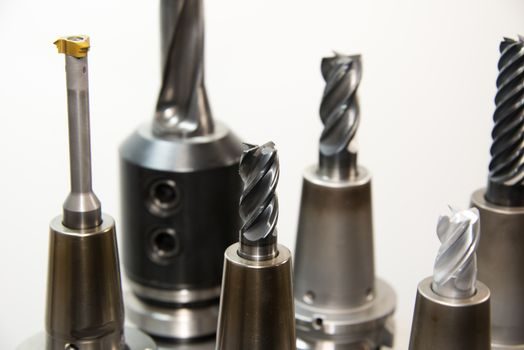
Premature die failure in cold-work tooling is most often traced to (a) specifying D2 where shock or impact loading is present — D2 is brittle and chips at the corner; (b) specifying O1 in a thick section where air-hardening A2 would have distorted less; (c) under-tempering, which leaves retained austenite and causes in-service dimensional shift [S1].
Premature failure in hot-work dies is most often traced to (a) under-tempering H13 below 540 °C, which sacrifices hot-toughness; (b) skipping nitriding when the application is aluminum die casting, leaving the cavity surface vulnerable to soldering and heat-checking; (c) gross cracking at waterlines from incorrect waterline placement, not from the steel itself.
For shops specifying large-section (>200 mm) pre-hardened P20 plastic-mold blocks, hardenability is the gating spec — confirm Jominy end-quench distance and through-thickness hardness uniformity, not just the surface reading; a 1.2311 block with 280 HBW at the surface and 220 HBW at the core will machine unevenly and distort unpredictably under injection pressure.
Standards and certification checkpoints
The governing North American standard is ASTM A681 ("Standard Specification for Tool Steels Alloy"), which defines chemical ranges, hardenability limits, and macro-etch requirements for the AISI/SAE lettered families; equivalent European references are DIN EN ISO 4957 for the numeric designations (1.2311, 1.2379, 1.2344, 1.2363, etc.) [S1].
For die-casting tooling, NADCA 207 ("Premium Quality H13") sets tightened chemistry and cleanliness limits above standard H13 for high-pressure die-casting dies; aerospace forging dies are often ordered to ASME or customer-specific specs that restrict trace elements (Cu, Ni, Sn) below A681 minimums to avoid temper-embrittlement.
Mill test certification should at minimum report: heat number, full chemical analysis, austenite-grain size where specified, hardness in the as-supplied condition, ultrasonic soundness class, and a statement of compliance to ASTM A681 (or DIN EN ISO 4957); without these, treat the material as unverified for safety-critical dies [S1].
Decision flow for a new tool steel spec
Step 1 — define the dominant failure mode: abrasive wear, adhesive wear, impact/shock, gross cracking, or heat-checking. The dominant mode drives the family (D-series for abrasive, A-series for mixed, S-series for shock, H-series for hot). [S2]
Step 2 — set the working hardness target in HRC. For cold-work dies the band is typically 58–62 HRC; for plastic-mold cavities 30–34 HRC pre-hardened or 58–60 HRC through-hardened; for aluminum die-casting 44–48 HRC H13 + nitrided case; for forging 40–50 HRC H11/H13 with surface treatment per case.
Step 3 — set the dimensional-change budget. If ±0.0005 in/in is the limit and section is >50 mm, eliminate O1 from the candidate list. If ±0.002 in/in is acceptable and the part is small, O1 stays in play because of its machinability.
Step 4 — select the mill form (round, flat, plate, block) and the dimensional tolerance class (A681 standard, A681 tight, or shop-specific). For EDM-finished dies, A681 standard is usually sufficient; for grinding-only finishing on a critical-fit punch, A681 tight or precision-grind oversize is the better spec.
Step 5 — request a works certificate with heat-traceable chemistry and a Jominy or through-thickness hardness profile; do not accept a generic test report without the heat number.
The sizing decision then moves from grade to geometry: confirm mill can supply the required cross-section in the required tolerance, and that the chosen grade is in the supplier's stocked or short-cycle program — large-section D2 and H13 from mill carry the longest lead times and the largest price premium [S1][S2]. For readers mapping adjacent machine-side sizing, the truck-crane capacity-band selection piece follows the same capacity-vs-section discipline.