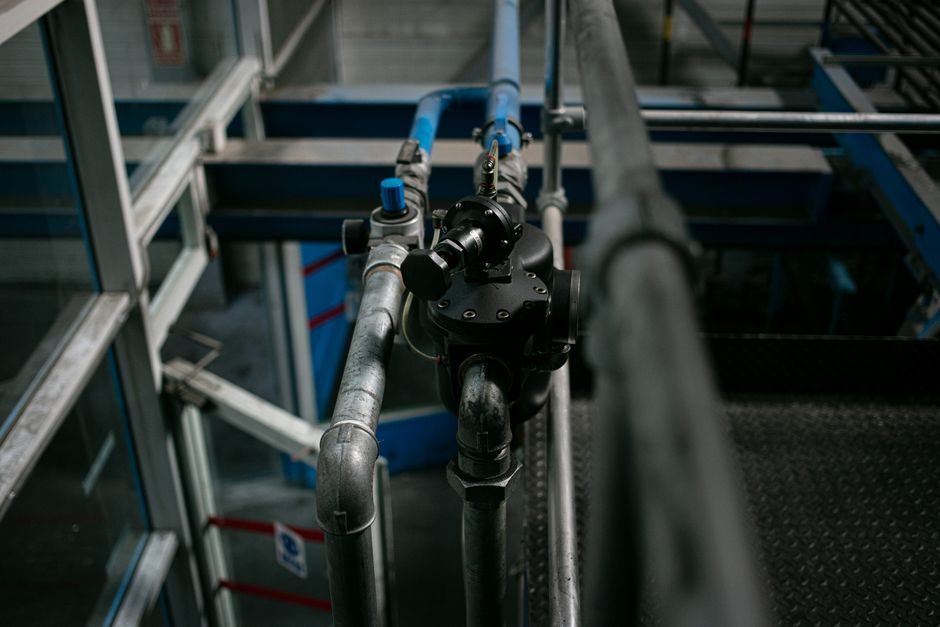
A safety relief valve is a self-actuated pressure guard: a spring-loaded disc held against a nozzle by a calibrated spring, lifting once the inlet pressure exceeds the set point and reseating after pressure falls by a defined blowdown percentage [S2]. For process and utility duty, the four primary spec numbers a buyer must lock in before opening a vendor RFQ are DN (bore), set pressure, required certified capacity, and the fluid (steam, compressed air, gas, water) — everything else (body material, end connection, lift lever) is downstream of those four.
The market for safety / relief valves remains fragmented by media and pressure band: DirectIndustry's 2026-06-12 index lists 18 manufacturers covering 59 water-safety models, with seat pressures spanning 0.3 bar to 70 bar across stainless, bronze, cast-iron, and gunmetal bodies [S1]. That spread is the practical reason a generic "buy a safety valve" RFQ fails — variant choice is dominated by service fluid and set pressure, not brand.
Define Service First: Fluid, Set Pressure vs MAWP, and Required Capacity
Selection starts by locking the design case: the safety relief valve set pressure must sit below (with a defined margin) the vessel or piping Maximum Allowable Working Pressure (MAWP), and the certified discharge capacity must exceed the worst-case blocked-outlet or external fire condition calculated for that vessel [S6]. For compressed-air receivers, directindustry's 2026 product data shows controlled pressures commonly configured at 8.6 bar, 11 bar, and 16 bar set points, with the 16 bar SR1 series offered in 0.25 in to 3 in DN sizes with EPDM sealing and brass body [S1].
Steam service imposes the most prescriptive requirements: a lever must be present for test-lifting while the valve is in service, and the body must be rated for saturated-steam temperatures, which is why gunmetal 652-series valves from Goetze are explicitly marketed for "small blow-off capacities" on steam [S1]. For natural-gas and petroleum, the SF20 series from FLAPCON is advertised for 10 / 11 / 13 / 16 bar set points in DN 25 to DN 100, with a body weight band of 9.8 kg to 48 kg signalling thick-wall steel construction for higher pressure classes [S1].
Size the Orifice: DN, Capacity Letter F–Q, and the API 520 / ISO 4126 Logic
After set pressure, the next spec is the effective orifice area, which on European water-safety valves is communicated as a "capacity orifice F to Q" letter code matched to a 18 mm to 125 mm narrowest flow diameter (d₀) band [S1].
Directindustry's 2026 water-safety data shows DN bands from 20 mm up to 150 mm PN 16 flange per DIN EN 1092 for heating and building-services duty, and 0.5 in to 2 in threaded for low-lift compressed-air valves [S1]. When the calculated required capacity exceeds the largest standard orifice at the chosen set pressure, you must step to a larger DN and re-verify flange class and shell pressure — not chase a higher set pressure, which would push you outside the vessel's MAWP envelope.
Compare the Main Body Variants Against 4 Decision Criteria
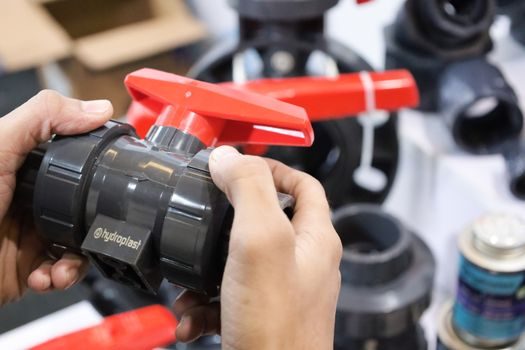
The four realistic options a buyer faces for a 0.5 in to 4 in DN, 1–16 bar safety valve line-up are: cast bronze, gunmetal, stainless CF8/CF8M, and carbon-steel flanged. Cast bronze (Golden Mountain N3 / N3L) is the lowest-cost option for compressed air at 2.8–150 psi, with PTFE soft seat available and a brass trim — but it is not rated for hot steam [S1]. Gunmetal (Goetze 652 series) is the economic steam option for 1–16 bar in 0.5–2 in DN when "only small blow-off capacities" are required, per the manufacturer's own product copy [S1].
Stainless CF8 / CF8M (Golden Mountain N8S / N9S at 4.3–426 psi and 4.3–285 psi respectively) is the corrosion-resistant choice for chemicals and potable water, with metal-to-metal or PTFE seat options and 0.5–2 in DN threading [S1]. Carbon-steel flanged (FLAPCON SF20) takes over above DN 50 and above 10 bar for petroleum, natural gas, and metallurgy duties, weighing 9.8 kg to 48 kg and certified to the higher pressure classes required for hydrocarbon service [S1]. Buyers chasing HVAC-style pressure reduction, not overpressure protection, should pivot to a pressure-reducing valve selection guide — a PRV modulates, it does not lift to full capacity on set-point overshoot.
Blowdown, Seat Tightness, and Why Soft Seat vs Metal Seat Matters
Blowdown is the pressure drop between set pressure and reseat pressure; for compressible fluid service the industry-typical target is 5–10% of set pressure to avoid chattering and seat damage, while saturated-steam valves are normally held to a tighter 3–5%. A soft PTFE seat (offered on the Golden Mountain N3 / N3L and N8S / N9S low-lift lines) improves tightness to the point of virtually zero leakage up to the set pressure, but it limits the valve to lower temperatures and rules out steam [S1].
Metal-to-metal seats (CF8M / CF8 stainless on the same Golden Mountain N8S / N9S, and gunmetal on Goetze 652) tolerate higher temperatures and steam, at the cost of a small steady-state leakage rate that must be accepted by the spec. For steam duty above 120 °C the building-services water-safety band documented in DirectIndustry (DN 20–150, 1–10 bar, PN16 to 120 °C per CE) ends; above that temperature the spec moves into ASME Section I or EN ISO 4126 high-temperature territory, and the 440 / 652-series gunmetal bodies are not the right pick [S1].
Who Should NOT Pick a Generic Low-Cost Bronze Safety Valve
A cast-bronze low-lift valve is the wrong choice in three clear cases: (1) any steam service above 120 °C, where gunmetal or stainless with a metal seat and lever is required; (2) any hydrocarbon or natural-gas service above DN 50 or above 16 bar, where bronze is not a recognised body material and a steel SF20-class flanged body is mandatory [S1]; (3) any chemical or oxidiser service where dezincification or chemical attack on copper-alloy bodies is foreseeable, in which case CF8 / CF8M stainless is the only defensible material.
Spec discipline also means rejecting a "safety valve" that lacks a test lever when one is required by the inspection authority (typical for steam), or a valve without a nameplate carrying the certified set pressure, capacity, and standard reference (ASME Section I / IV, EN ISO 4126-1, or PED 2014/68/EU for EU sale). If the vendor cannot produce that data plate and the supporting capacity certificate, walk away — the safety relief valve's only job is to lift on demand, and that lift must be provable on paper.
Standards, Certification, and Sourcing Bands to Lock in the RFQ
The standards a buyer should reference inside the RFQ are the recognised pressure-vessel codes: ASME Section I (power boilers) and Section IV (heating boilers) for steam and hot-water boilers, ASME Section VIII for unfired pressure vessels, EN ISO 4126-1 for safety devices against excessive pressure, and PED 2014/68/EU for CE-marked product in the EU. For air and water utility duty, DirectIndustry's 2026 supplier index groups the European cluster around Goetze KG, LESER, ZETKAMA, Besa, and TECOFI, with the Asian / Sino-Taiwan cluster (CENS, Golden Mountain, FLAPCON) dominant in the 0.5–2 in threaded low-lift range [S1].
For procurement teams building a multi-vendor map, pressure-reducing valve sourcing bands gives a comparable frame for the modulating cousin of this device.
Shortlist Logic: A 4-Question Gate Before You Open the RFQ
Run these four questions in order — any "no" answer sends the spec back to the drawing board: (1) Is the set pressure below MAWP minus the required margin? (2) Is the calculated required capacity (kg/h steam or Nm³/h air) within the certified curve of the chosen orifice letter at the chosen set pressure? (3) Is the body material compatible with the fluid and the maximum service temperature (≤120 °C cast bronze / gunmetal, ≤+200–+400 °C CF8M, higher = alloy steel)? (4) Does the valve carry a nameplate with set pressure, capacity, fluid, and the governing standard (ASME / EN ISO 4126 / PED)? [S1]
If all four are yes, lock the spec and ship the RFQ with DN, set pressure, capacity at set pressure plus overpressure, fluid, temperature, end connection, body material, seat material, and lift-lever requirement. The vendor's job is then to quote a single matching model; if three different manufacturers each propose a different body or seat for the same envelope, treat that as a data problem, not a negotiation problem, and re-issue with sharper fluid / temperature data. For the field-instrumentation context that sits upstream of the relief event — pressure transmitters, switches, and the safety barrier interface that protects the control loop in hazardous areas — the same discipline of certified-vs-declared ratings applies.
Detailed specification references: safety relief valve, and safety fence.