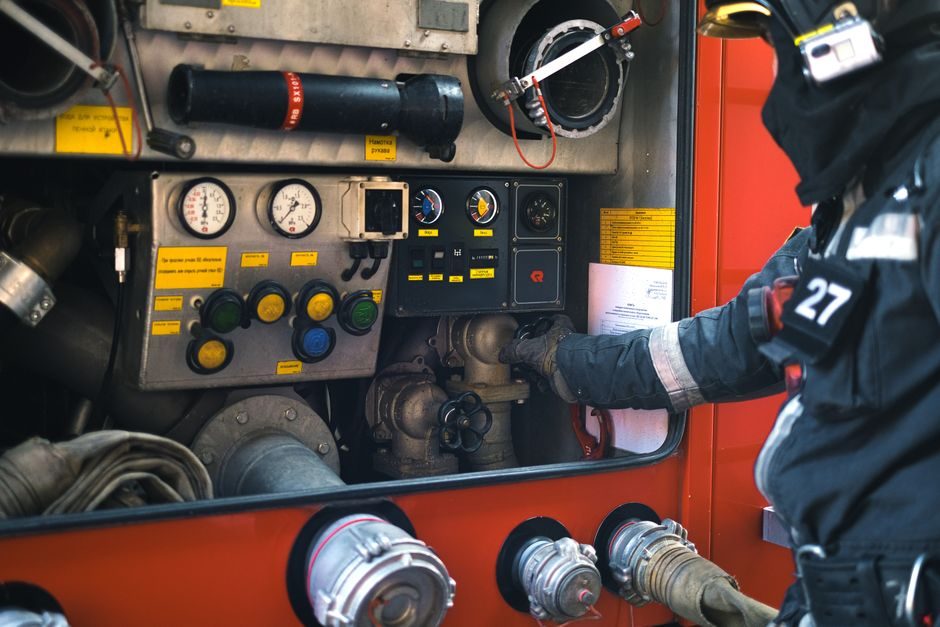
For closed-loop heating and chilled-water HVAC systems, the working choice is a water-side pressure reducing valve sized to the system's nominal pressure class, not the building's pipe diameter. Common commercial offerings span DN20 through DN800 mm at PN1.0-2.5 MPa, with 0-80 °C water service and carbon-steel or cast-steel bodies [S3].
Specifying the wrong class — oversizing on a DN branch that sees only 0.4 MPa — wastes seat life and induces low-flow hunting. The Temprite A-7 illustrates the upper-bound case: 400 psi (≈2.76 MPa) constant-output service for refrigerant oil lines on 920R coalescent separators, not a general HVAC fit [S1]. On the residential and light-commercial heating side, Resideo segments its PRV line explicitly into low, standard, and high variants to match varying static and dynamic heating-circuit pressures [S2].
Pressure Class and Operating Window for HVAC PRVs
The 200X PRV family is engineered for water media at 0-80 °C, PN1.0-2.5 MPa, DN20-800 mm, with carbon-steel and cast-steel as the listed body materials [S3]. Nominal-pressure selection must precede diameter selection: a 1.6 MPa body on a 0.6 MPa system is engineering overkill, while a 1.0 MPa body on a 1.6 MPa sealed system is a documented failure path.
For comparison, the high-pressure residential heating PRVs in the Resideo line are positioned for installations where mains inlet pressure exceeds the boiler's design rating, while low-pressure PRVs are intended for low-static heating circuits [S2]. Within HVAC, the relevant operating envelope is typically 0.8-1.6 MPa sealed hot-water and 0.4-1.0 MPa chilled water, with 80-95 °C upper-limit hot water at the heat-exchanger outlet.
Valve Type Comparison: Pilot-Operated vs Direct-Acting vs Constant-Output
Three PRV architectures show up across HVAC, refrigeration-oil, and hydraulic datasheets. The pilot-operated PRV (200X class) uses line-media energy through a pilot circuit to stroke the main piston or diaphragm, giving stable control across DN20-800 mm at PN1.0-2.5 MPa [S3]. Direct-acting spring-loaded PRVs dominate the small-DN, low-to-medium-pressure branch — Resideo's low/standard/high PRV family falls here, sized for compact and flanged residential and light-commercial heating branches [S2].
Constant-output PRVs like the Temprite A-7 are tuned to a fixed downstream pressure and are common on refrigerant-oil return lines, not on HVAC water circuits; the A-7 sits at 400 psi (≈2.76 MPa) output to feed the 920R coalescent separator's oil-level control [S1]. A reasonable selection grid for HVAC water service:
• Pilot-operated (200X): DN65-800 mm, PN1.0-2.5 MPa, 0-80 °C water, carbon/cast steel — best for plant-room risers and main headers. • Direct-acting (Resideo class): DN15-50 mm, low/standard/high outlet tiers, hot-water heating — best for branch and apartment-level PRV duty. • Constant-output (A-7-type): 400 psi fixed setpoint, oil service — typically NOT a substitute for HVAC water PRVs.
Selection Criteria: Where Each PRV Fits and Where It Does Not
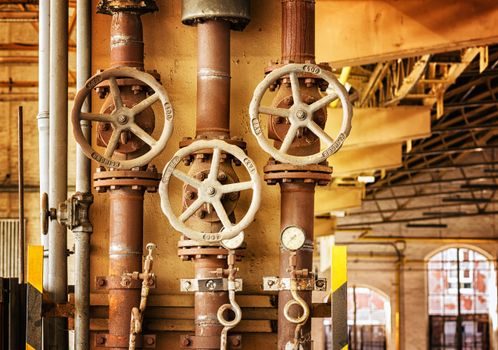
Selection is driven by four numbers: nominal pressure (PN), diameter (DN), medium, and temperature. The 200X spec window — PN1.0-2.5 MPa, DN20-800 mm, water, 0-80 °C — covers the bulk of HVAC plant-room and main-distribution duty [S3]. Outside that envelope, the application is not 200X-class work.
Resideo's PRV segmentation — low, standard, and high variants on a common compact and flanged-body platform — is intended for heating-system outlet pressure control, not for upstream-of-boiler pressure let-down [S2]. The Temprite A-7's 400 psi constant-output behaviour and oil-media rating make it a refrigeration accessory, not a heating-water PRV [S1]. For a process-engineering perspective, the diaphragm valve sizing and selection guide covers the related duty of modulating flow on chemical and water lines, which shares the same DN/Cv logic.
Failure Modes and Operating Constraints in HVAC Service</h3> <p>Three failure paths dominate HVAC PRV service: seat erosion on overspecified valves hunting at low flow, diaphragm fatigue from thermal cycling near the 80 °C upper bound, and set-point drift from particulate fouling in untreated heating water. The 200X is explicitly rated to 80 °C maximum, so a primary loop running 90-110 °C requires a high-temperature PRV with EPDM or FKM soft goods rather than the standard 200X seat stack [S3].</p> <p>On the low-pressure residential side, undersizing a PRV to a smaller DN than the branch line causes pressure recovery and noise; oversizing to a larger DN causes the valve to operate near seat closure, which is the classic low-flow-hunting failure. For the upper bound, a 400 psi constant-output oil PRV like the A-7 should never be installed in water service — its elastomer and seat stack are designed for the oil-return environment of a 920R separator [S1].</p> <h2>Standards, Sourcing, and Specification Anchors
PN ratings quoted as PN1.0-2.5 MPa align with common flange drilling classes used in European HVAC plant rooms, while the DN20-800 mm range covers everything from apartment branches to district-heating headers [S3]. On the residential side, OEM segmentation into low/standard/high PRV tiers maps directly to the static mains-pressure bands seen in European heating systems [S2]. The A-7 datasheet at 400 psi constant output is a published Temprite spec for oil-side PRV duty on 920R coalescent separators [S1].
For controls integration, the pressure gauge and pressure sensor downstream of a PRV are how set-point stability is actually verified in commissioning. Pair the valve spec with a safety relief valve sized to the boiler's safety-valve discharge capacity when the PRV is used on a sealed heating circuit, and consider a pressure switch for low-water-cutoff on the same loop. A related process-instrument view, useful when scaling up to PLC-monitored HVAC plants, is covered in the compact PLC selection guide.
Trackable next signals: (1) the 200X product family continues to be advertised at PN1.0-2.5 MPa / DN20-800 mm / 0-80 °C in vendor catalogues dated through 2026-07 [S3]; (2) the A-7 oil-side constant-output PRV at 400 psi remains the listed Temprite spec for 920R separator oil return [S1]; (3) Resideo's three-tier low/standard/high PRV segmentation for heating systems was live in the UK/Europe product catalogue as of 2026-07-15 [S2].