The right shrink wrapping machine is selected by aligning three product-side numbers (the L x W x H envelope of the pack, the daily volume bracket, and the film family) with the machine architecture (manual, semi-automatic, or fully automatic) and the supporting utilities on your floor [S4][S7].
Shrink systems cover an unusually wide productivity range, from a hand impulse sealer plus heat gun handling under 100 packs per day, through I-bar sealers up to roughly 250 packs per day, to fully automatic shrink wrap machines running beyond 10,000 packs per day in food, beverage, and pharma lines [S3][S5]. Getting the bracket wrong by one tier is the most common cause of either a bottleneck six months after install or a six-figure machine sitting idle.
Match the film family before you match the machine
Three shrink film families dominate industrial spec sheets, and the machine's sealer temperature, tunnel setpoint, and downstream scrap rate all track the film choice [S1][S2].
Polyolefin (POF) is the default for retail packs that need high clarity and is approved for direct food contact; some POF grades shrink at lower tunnel temperatures, which reduces energy use on heat-sensitive products [S1][S5]. Low-density polyethylene (LDPE) shrink film is the workhorse for distribution packs, bundling, and corrugated case applications, where tear strength and cold-temperature toughness matter more than optical clarity [S1]. PVC shrink film remains common for non-food consumer goods and printed overwraps, but its use in food-contact zones has narrowed because of regulatory pressure and odor issues at higher tunnel temperatures [S5].
Film thickness is rated in gauge or mil, and gauge directly sets the minimum tunnel dwell time and the sealer jaw pressure; under-gauge film splits at the seal bar, over-gauge film looks wrinkled and burns at the tunnel exit [S5]. Recycled-content and plant-based films (sugarcane-derived POF, 100% recycled PE) are now commercially available, with suppliers claiming up to 70% carbon-footprint reduction versus virgin PE, though seal-window behavior must be re-validated on the actual machine [S1].
Size the product envelope and the tunnel
Every shrink wrapping machine is constrained by the maximum and minimum L x W x H of the products it can encase, so the second step after film selection is to lock the pack dimensions and product orientation [S2][S5].
Manual and semi-automatic L-sealers are typically limited to a few hundred millimeters of sealable area per cycle; side-seal machines and sleeve wrappers are needed for taller packs. The shrink tunnel length must be sized so the longest dimension of the pack dwells in the heated zone long enough for full shrink recovery, which usually means the tunnel should be at least 1.5 to 2 times the longest pack dimension at the line speed you actually run [S5].
For multi-pack or tray applications (water, canned beverage, corrugated case bundles), the relevant envelope is the bundle, not the single SKU, and a tray-and-shrink or pad-supported layout must be added to the spec to keep bundles square through the tunnel [S1][S3]. If the SKU mix varies in size, specify a machine with powered width, length, and height adjustment on every pack rather than a fixed-frame manual changeover [S6].
Bracket the line by daily volume
Shrink wrap equipment is sold against clear volume bands, and each band has a default architecture, so the volume number drives the budget as much as the spec sheet does [S3][S4].
Under 100 packs per day is the manual band: a hand impulse sealer plus heat gun paired with shrink bags, centerfold film, or shrink tubing; this is the lowest entry cost and the right choice for startups, sample runs, and short promotional batches [S3][S4]. The 100 to 250 packs per day band is the I-bar sealer range, an all-in-one unit with film rack, sealing bar, and heat gun that uses centerfold shrink film and absorbs modest production growth without a full line re-spec [S3].
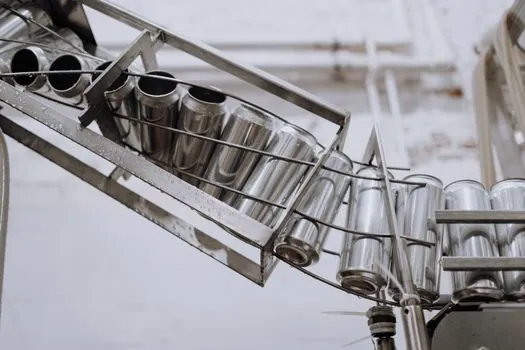
The 250 to 750 packs per day band is where semi-automatic L-sealers and side-sealers enter the conversation, with an operator loading each pack but sealing and shrinking automated [S2][S3]. Above 750 packs per day, the conversation shifts to fully automatic shrink wrap machines with infeed conveyors, automatic film feeding, and integrated heat tunnels, and the 10,000+ packs per day bracket is the territory of high-speed full-auto systems used in beverage, pet food, and pharmaceutical lines [S4][S5].
Compare the three machine classes against decision criteria
The decision between manual, semi-automatic, and fully automatic shrinks down to four criteria: labor per pack, capital cost, changeover time, and footprint on the floor [S2][S3][S4].
Manual systems score best on capital cost and footprint but worst on labor per pack and changeover, since every cycle is hand-wrapped and hand-sealed [S3]. Semi-automatic systems cut labor per pack roughly in half by automating the seal and shrink steps while keeping a human loader, and they accept a wider size range than a manual I-bar, but changeover still requires operator intervention [S2][S4]. Fully automatic shrink wrap machines invert the profile: high capital cost and larger footprint, but labor per pack drops to infeed-only and changeover is handled by recipe recall on the HMI for repeat SKUs [S2][S4].
For a buyer whose volume mix includes many short runs, the semi-automatic class usually wins on total cost of ownership, because a full-auto's changeover overhead only pays back on long, repetitive campaigns. For a buyer running the same SKU in campaigns of tens of thousands of packs, the full-auto class wins on labor and consistent seal quality, especially where the line ties into a case packer sizing workflow downstream. The wrong pick in either direction is the most expensive mistake a packaging buyer makes.
Who should NOT pick the mainstream option

Three profiles are routinely mismatched to a full-automatic shrink wrapping machine and should step down to a lower automation tier [S3][S4][S7].
First, seasonal or contract manufacturers running under 250 packs per day for most of the year cannot recoup a full-auto system, even with attractive finance terms, because the labor savings are smaller than the carrying cost and idle depreciation. Second, R&D labs and pilot lines that change pack format weekly will eat the changeover time a full-auto demands; a semi-automatic L-sealer with a quick-change seal bar keeps engineers moving. Third, very small e-commerce sellers shipping individual parcels are usually better served by a poly mailer or a manual shrink wrapping machine setup with a heat gun, because the throughput math does not justify any powered sealer.
Conversely, a buyer who has picked a manual I-bar to save capex but is actually running 600 packs per day into a national retailer is the classic under-spec case, and the resulting seal failures, wrinkled packs, and rework will cost more than the upgrade within a single quarter [S3][S4].
Utilities, footprint, and integration constraints
Shrink wrap machines look like simple mechanical devices on the catalog page, but the utilities behind them are where most installation surprises originate [S4][S5].
Heat tunnels draw significant electrical load; a small benchtop L-sealer plus tunnel can run on a standard 220 V single-phase outlet, but full-auto systems commonly require three-phase power sized to the total heater wattage, which is in the low double-digit kilowatt range for a medium tunnel. Some machines, especially continuous side-seal wrappers with powered film unwind, also need compressed air at a specified cfm and pressure, and that air supply must be sized before the machine is ordered, not after [S4].
Footprint is more than the catalog "L x W" of the machine itself, because the infeed conveyor, outfeed takeaway, film roll storage, and operator clearance add 1.5 to 2 meters on each end in a typical layout [S5]. Storage conditions for the film also matter: POF and PE films stored in a cold warehouse need to be conditioned to line temperature before use, or the shrink window shifts and seal quality drifts within a shift. For buyers integrating the shrink wrapper into a broader packaging line, the upstream collation or feeding equipment and the downstream case packing machine sizing workflow need to be specified in the same project so cycle times and buffer capacity line up.
Standards, compliance, and what to ask the vendor
Shrink wrapping machinery is not governed by a single global standard in the way pressure equipment is, so the buyer's job is to assemble the right compliance evidence from the vendor rather than ask for a single certificate [S1][S5].
For food and pharma lines, request documentation that all product-contact components (seal bar Teflon, tunnel conveyor belts) meet applicable food-contact regulations, and that the POF film grade is FDA-cleared for direct contact if the pack is a primary food package [S1][S5]. For nutraceutical and pharmaceutical applications, look for machine models that support nested packs, re-orientation, and serialized print registration, because these features are commonly required by the buyer's downstream coding and track-and-trace systems, which is where a coding machine interface usually comes into play [S1].
Ask for the sealer's jaw temperature window, the tunnel's air temperature profile at three points along its length, the maximum and minimum pack dimensions with film weight in gauge or mil, the electrical and pneumatic utilities, and the changeover time measured against two SKUs of different sizes. A vendor that can supply those numbers in writing has usually done the engineering work; a vendor that can only provide throughput in packs per minute without the supporting numbers is quoting the marketing line, not the machine. For buyers standardizing a fleet across multiple plants, locking those spec values into the purchase order as acceptance criteria is the only way to keep a fleet consistent.
The next node after machine selection is validating the film-machine combination on a sample run at the vendor's floor or in your incoming-quality lab, with the actual SKUs and the actual film lot, before signing the acceptance certificate. Track also whether the supplier's lead time on spare seal bars and tunnel heater elements matches your planned maintenance intervals, because a missing 2-cent Teflon strip is a common cause of unplanned downtime on shrink wrap lines.
For component-level specifications, see wrapping machine.