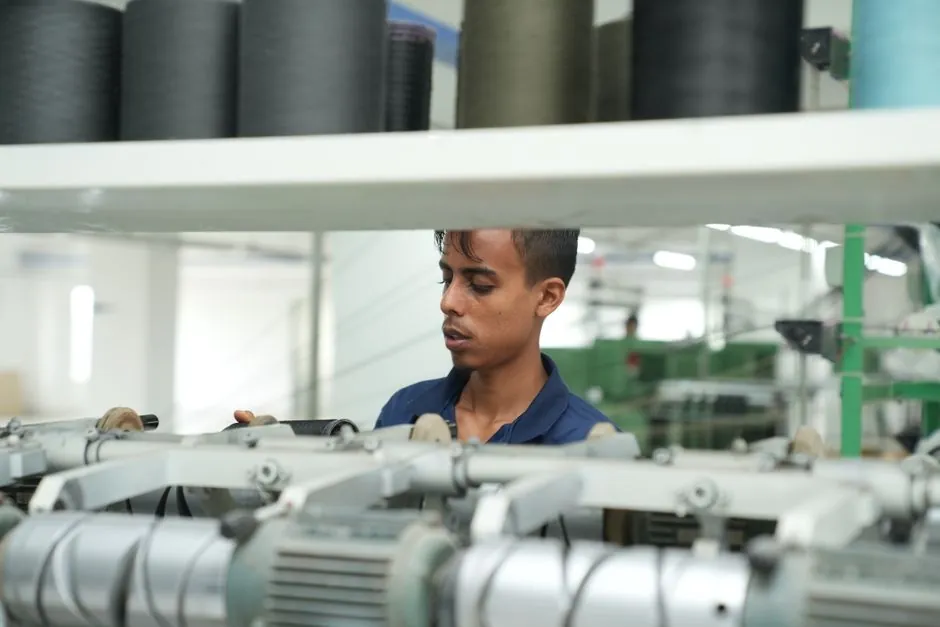
Case packing machine suppliers fall into three functional tiers: OEM manufacturers that engineer and build the equipment, distributor-dealers that bundle multiple brands, and refurbishers that resell reconditioned units. OEM builders in the U.S. market include Combi, Massman Automation, Hamrick Packaging Systems, Pearson Packaging Systems, Brenton, and DMM Packaging, each with distinct loading architectures [S1][S2][S5][S6][S8][S3].
Distributor-dealers such as Crown Packaging carry multiple brands and provide installation, parts, and service contracts alongside new equipment sales; Crown lists Combi and Robopac among its case packer lines [S4]. Refurbished case packers, including the three load styles listed by Combi's rebuilt program (horizontal loading, drop packing, pick-and-place), remain a separate procurement path for plants that need lower capex and accept older controls [S1].
Loading architecture is the first spec to lock
Four mechanical families dominate OEM catalogs, and a buyer should match product fragility and line speed to the loader before evaluating brands. Bottom load case packers are sized for delicate products and use a small footprint, with the product lifted into an erected case from below [S2]. Top load packers use a vacuum gantry pick-and-place to drop product from above, giving higher throughput for rugged SKUs [S2]. End/side load (knockdown) packers use servo-driven pushers to drive product into an RSC-style blank from the case end, and are offered in intermittent and continuous motion variants for multi-shift operation [S2]. Wraparound packers wrap a flat blank around the product group, which lowers cost per blank and raises magazine capacity for high-volume lines [S2].
Massman Automation explicitly states it serves every application range from compact, low-speed units to large high-speed continuous motion case packers, and supports wraparound, RSC knockdown, harness style, and tray blanks [S2]. Buyers comparing case packing machine families should map product weight, drop tolerance, and required cases-per-minute to one of these four architectures before price-shopping.
OEM capability map: what each builder actually offers
Combi markets a full packaging line beyond case packers, with case erectors, tray formers, case sealers, robotic palletizing, stretch wrappers, and strapping tools listed as in-house product categories, and serves markets from agriculture and chemicals to pharmaceuticals and medical devices [S1]. Hamrick Packaging Systems focuses on case packers, tray packers, uncasers, and sealers as a specialized mid-tier builder [S5]. Pearson builds configurable case packers aimed at automating the manual loading step in packaging operations [S6]. Brenton's catalog highlights automatic case packers and case packing equipment targeted at fast, effective line integration [S8].
DMM Packaging, listed in the PMMI ProSource directory as an OEM of tray and case packers, builds low-, medium-, and high-speed machines targeted at high output efficiencies [S3]. The PMMI ProSource directory itself functions as a neutral sourcing filter for buyers who want to compare OEM entries side-by-side [S3]. For buyers needing deeper context on machine sizing, the case packing machine sizing and selection spec guide pairs naturally with this supplier map.
Distributors, dealers, and the multi-brand channel
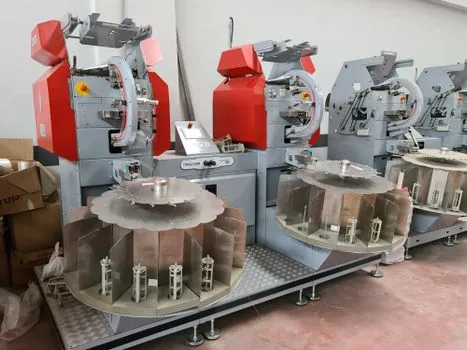
Crown Packaging acts as a multi-brand equipment channel, listing case packers, case formers, case sealers, and tray formers alongside protective packaging, flow wrappers, VFFS, shrink wrap, stretch wrap, strapping, and labeling/coding equipment [S4]. The relevant distinction for a B2B buyer is that a dealer can cross-quote Robopac stretch wrapping, Combi case packing, and a third-party labeler on one PO, but the warranty, service contract, and spare-parts stocking for each line still traces back to the respective OEM [S4].
Buyers specifying pharma- or medical-grade lines should check that the dealer carries the OEM's validated documentation; the pharma case packer spec map lays out the OEM roster (IMA, Syntegon, Marchesini, Serpa, Combi) for that regulated segment. For a broader packaging-line purchase that includes case packing, the labeling machine sizing and selection buyer's guide covers the adjacent coding and marking step that almost always ships with a new case packer.
Refurbished and rebuilt case packers: where the value sits
Combi's rebuilt program supports three distinct load styles, horizontal loading, drop packing, and pick-and-place, which means a refurbished unit can be specified into the same line architecture as a new machine, just with previous-generation controls and a lower purchase price [S1]. Refurbished case packers typically make sense for plants running stable SKUs, with throughput targets under the OEM's newest high-speed platform, and where capex recovery on a full rebuild is not justified.
The risk vectors to audit on a refurbished line are: control platform age (HMI/PLC firmware, obsolete HMI panels), servo drive and motor replacement history, guard interlock compliance to current ANSI B155.1 or ISO 12100 references in the OEM's safety manual, and parts availability through the OEM's 3M replacement parts program or equivalent [S1]. Combi's "Rebuild Program," "3M Replacement Parts," and "Extended Warranty" service lines confirm that spare parts continuity is a contractual offering, not a best-effort promise [S1].
Selection criteria: a four-axis comparison
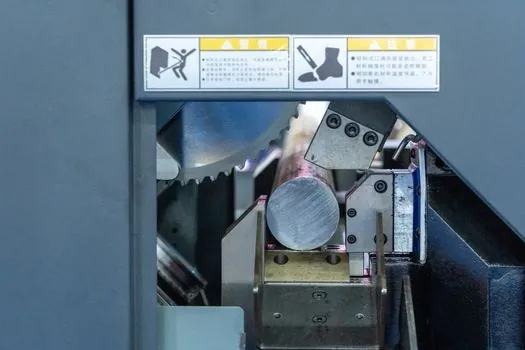
Four axes separate the suppliers cleanly enough to write a specification. First, load architecture: top, bottom, end/side, or wraparound, with the four builders (Combi, Massman, Hamrick, Pearson, Brenton) each offering a mix [S1][S2][S5][S6][S8]. Second, speed class: low-, medium-, and high-speed platforms are explicitly differentiated by DMM Packaging, while Massman Automation spans compact low-speed to continuous motion high-speed in a single product line [S3][S2]. Third, footprint and integration scope: a single-vendor line builder (Combi) can supply erectors, packers, sealers, palletizers, and wrappers from one controls platform, whereas a dealer (Crown) will mix OEMs and require a controls integrator [S1][S4]. Fourth, regulatory and validation scope: food, pharma, and medical lines require OEM-supplied validation documentation and material-contact certifications, which not every dealer can pass through.
Buyers who can hold the spec to load style + speed class + footprint + validation scope will cut the supplier long list by roughly two-thirds before any price discussion, and will avoid the common failure mode of comparing a pharma-validated OEM line against a refurbished commodity packer that simply cannot meet the same audit trail. For adjacent end-of-line selection, construction machinery and equipment and coding machine categories cover equipment that often ships alongside a case packer in a greenfield line.
Standards, safety, and sourcing discipline
Case packers sold in the U.S. market must satisfy OSHA 1910.212 general machine guarding requirements and ANSI B155.1 safety standard for packaging machinery, and any line with robotic loading additionally falls under ANSI/RIA R15.06. CE-marked equipment for European shipment must meet the Machinery Directive 2006/42/EC and EN ISO 12100 risk assessment. Buyers should request the OEM's Declaration of Conformity, risk assessment file, and validated safety circuit documentation before issuing a PO; this is non-negotiable on a refurbished unit where the original chain of custody may be broken. [S1]
For sourcing, the PMMI ProSource directory and the broader packagingmachinerycompanies.com index both function as pre-qualified OEM lists; a shortlist built from those directories will be smaller but more defensible than one built from web search results alone [S3][S9]. Trackable next nodes for buyers: confirm whether the shortlisted OEM holds an active UL 508A panel shop certification for the control enclosure, and whether the distributor dealer's service technicians are factory-trained on the specific model series, since these two items are the most common sources of post-installation downtime.