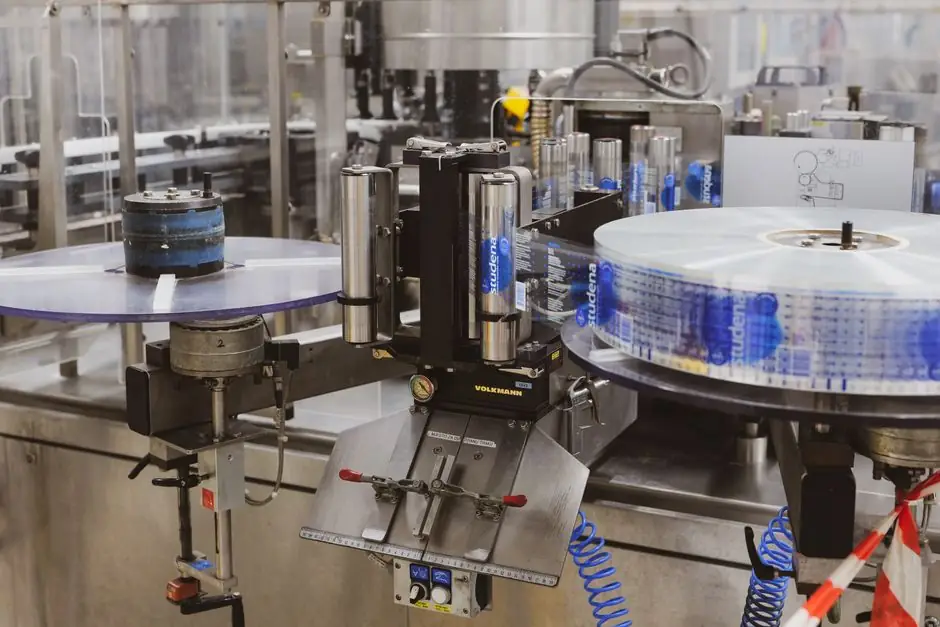
Case packing machines split into four load architectures (top-load, side/end-load, bottom-load, wraparound) and two drive philosophies (mechanical, robotic), and the right choice is set by your SKU count, case style, and target cases-per-minute before any brand shortlist [S1][S4].
For buyers comparing labelers, palletizers, and case packers on the same end-of-line, the labeling machine selection guide covers the upstream coding step that usually sits next to the sealer; the case packer itself only handles the load step in that sequence.
Load Architecture: Where the Product Enters the Case
Top-load case packers drop products vertically into a pre-erected RSC (regular slotted container) case and are the most common format for flexible bags, cartons, bottles, and shrink-wrapped multipacks, with one OEM (Adabot-LV) running up to three pack patterns on a single machine [S3]. Side-load or end-load (knock-down) packers push product horizontally into a knocked-down RSC blank and suit long, rigid items such as bottles, cans, and gable-top cartons, where servo-driven pusher systems keep alignment true at high speed [S2][S3].
Bottom-load case packers place product onto a platform and raise a case around it, which protects delicate or oriented products from drop damage and keeps the footprint small [S2]. Wraparound packers glue a flat corrugated blank around a collation of products, cutting cardboard cost per case by trimming blank area versus an RSC and producing a tighter shipper that lowers freight cost per unit [S2][S4].
For wraparound vs. RSC economics, the wraparound blank typically uses less board for the same internal volume because no double-wall flutes are folded into flaps, and Massman cites "lower cost per blank" and "greater blank magazine capacity" as the main trade [S2]. A buyer running a stable SKU on long campaigns who can hold a 30-case magazine will usually recover the wraparound premium in 12-24 months on board savings alone, against the assumption of stable corrugated pricing.
Mechanical vs. Robotic: Throughput Floor and SKU Volatility
Mechanical case packers (cam-driven, servo-indexed) deliver the lowest cost per case on high-volume, low-SKU-count lines because their changeover is a 30-90 minute recipe swap rather than a tooling change, and they are commonly specified above 30-40 cases per minute [S4]. Robotic packers (articulated arm or delta, often gantry-mounted for top-load) accept quick-change end-of-arm tooling and HMI-driven recipe selection, which collapses changeover to under 10 minutes but adds roughly 15-30% to capital cost versus an equivalent-speed mechanical packer [S4].
The decision rule that holds up on most audits: pick mechanical when you run one or two SKUs per shift on a dedicated line, and pick robotic when the line must handle more than 4-6 SKUs per shift or frequent retail-ready display patterns. The Adabot-LV cited by ProSource runs up to three unique pack patterns on a single robotic top-load, illustrating where robotic flexibility pays back without a full multi-line cost [S3].
Continuous-motion end/side-load packers are the third tier, built for multi-shift conditions and 60+ cases per minute on bottle and can lines; they trade mechanical simplicity for the servo synchronization needed to keep product spacing true at speed [S2].
Throughput Sizing: Cases per Minute, Not Products per Minute
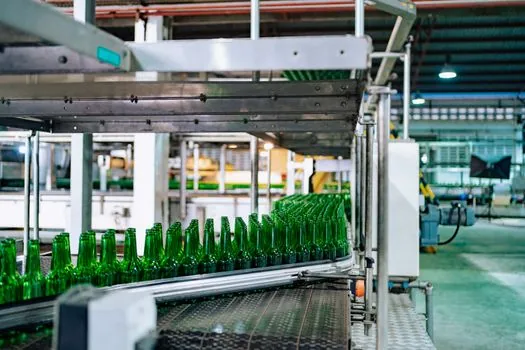
Always spec the case packer in cases per minute (CPM), not products per minute, because the load cycle is bounded by the slowest motion in the machine (case erect, load, seal), not by infeed conveyor speed [S1]. For a top-load packer running 12-bottle multipacks, doubling the bottle count per case does not halve the CPM; it just extends the load time within the same cycle window, so a 30 CPM packer stays a 30 CPM packer regardless of pack count.
For a low-speed, compact-footprint line (under 10 CPM), a hand-pack or semi-automatic station often beats the ROI math of any automatic case packer, and that is a deliberate OEM recommendation rather than a default [S5]. Above 10 CPM, the decision flips: at 20 CPM a single operator can tend 2-3 case packers and the labor savings alone fund the line inside 18-24 months in most North American labor markets.
Sizing rule of thumb from the source material: choose a packer rated 20-30% above your nameplate CPM, so the sealer, taper, and reject stations are not running at 100% utilization where mean time between failures drops sharply [S1][S2].
Product and Case Constraints: What Disqualifies an Architecture
Fragile or oriented products (glass bottles, pharmaceutical vials, electronics) rule out drop-style top-load at speed and push the spec toward bottom-load or robotic top-load with vision-guided placement, where cushioning and gentle handling are non-negotiable [S1][S3]. Very long products (over 600 mm) usually cannot run on a standard side-load pusher because the pusher stroke grows with case length and the frame becomes uneconomical; wraparound or robotic top-load is the fallback.
For washdown or food/beverage duty, specify 316L stainless contact parts and NEMA 4X cabinets, a configuration that the G400 gravity top-load packer from Fallas Automation uses as a baseline for primary and secondary packaging in dairy and beverage plants [S3]. Pharmaceutical and medical-device packers should include in-line reject of damaged units and serialization-ready controls, since regulatory traceability is a hard requirement rather than a feature [S1].
Case style also constrains architecture: knock-down RSC blanks suit side-load, pre-erected RSC suits top-load and bottom-load, and flat wraparound blanks suit wraparound packers only. Mixing a wraparound packer with RSC cases is a common spec error, and it costs the buyer a full blank-stream retrofit [S2][S4].
Integration, Changeover, and the End-of-Line Around the Packer
A case packer is one of four end-of-line stations (erect, load, seal, label) and the load station is rarely the bottleneck once integrated; the upstream case erector and downstream taper or hot-melt sealer usually set the line's true ceiling [S3]. Buyers comparing case packer quotes should request a balanced-line CPM number from the integrator, not a stand-alone packer CPM, because a 50 CPM packer paired with a 30 CPM erector only runs 30 CPM [S1][S4].
For lines that must switch between case sizes multiple times per shift, HMI-stored recipes, servo-driven format parts, and automatic changeover are now standard on vertical packers such as the ESS V30, where "new case sizes can be set up quickly and easily through the HMI" and the case is justified to a zero reference point before opening to keep the case square during loading [S3]. Wraparound packers tend to need longer changeover (5-15 minutes) because the blank magazine and glue pattern must be re-set, which is another reason to spec the wraparound path for low-SKU, high-volume lines [S2].
For a buyer also evaluating the upstream fill or form-fill-seal step that feeds the case packer, the broader case packing machine reference page lays out the upstream/downstream station map; the filling machine page covers the volumetric and mass-flow options that usually sit one station before the packer.
Decision Matrix: When to Pick Which Architecture
Pick a top-load mechanical packer when your line runs 1-3 SKUs, your cases are RSC, and your target is 20-60 CPM with minimal operator skill: this is the lowest capex per CPM of the four [S2][S4]. Pick a side-load (knock-down) packer when products are long, rigid, and high-count per case (bottles, cans, aerosols), and your blank inventory is RSC: servo pusher systems keep alignment true and continuous-motion variants reach the highest CPM in this category [S2][S3].
Pick a bottom-load packer when product orientation, drop height, or scratch-sensitive finishes (glass, polished metal, coated cartons) rule out vertical drop loading, and your volume justifies a 15-30% capex premium over top-load [S2]. Pick a wraparound packer when board cost is a meaningful share of your packaging COGS and you run long campaigns of one collation pattern: lower blank cost, tighter shipper, and smaller magazine footprint outweigh the changeover penalty [S2][S4].
Pick a robotic top-load (gantry or articulated) when SKU count per shift exceeds 4-6, retail-ready display patterns change weekly, or pack patterns must be re-configured without a maintenance team: changeover drops to single-digit minutes and pattern-change capex is limited to end-of-arm tooling [S3][S4]. Skip robotic if your line runs a single SKU above 50 CPM, because the mechanical packer will outrun the robot and cost less [S4].
Vendor Shortlist Signals Worth Tracking
Three signals separate a credible case packer shortlist from a brochure-driven one: a published balanced-line CPM (not stand-alone packer CPM), a documented changeover time per case-size delta with measured OEE, and reference lines running in your product category (bottles, bags, cartons) at your target CPM for at least 12 months [S1][S4]. Ask each bidder for the failure-mode list on the slowest station (erect vs. load vs. seal) and the mean time to restore, because the slowest station sets uptime, not the packer itself.
For a buyer cross-shopping end-of-line equipment categories, the labeling machine selection: container, throughput, label tech, environment guide covers the station that immediately follows the sealer, and the cutting machine reference covers blank conversion upstream of the case erector. Track these three numbers per bidder before price: balanced-line CPM, mean changeover minutes per SKU delta, and 12-month OEE on a reference line in your category.