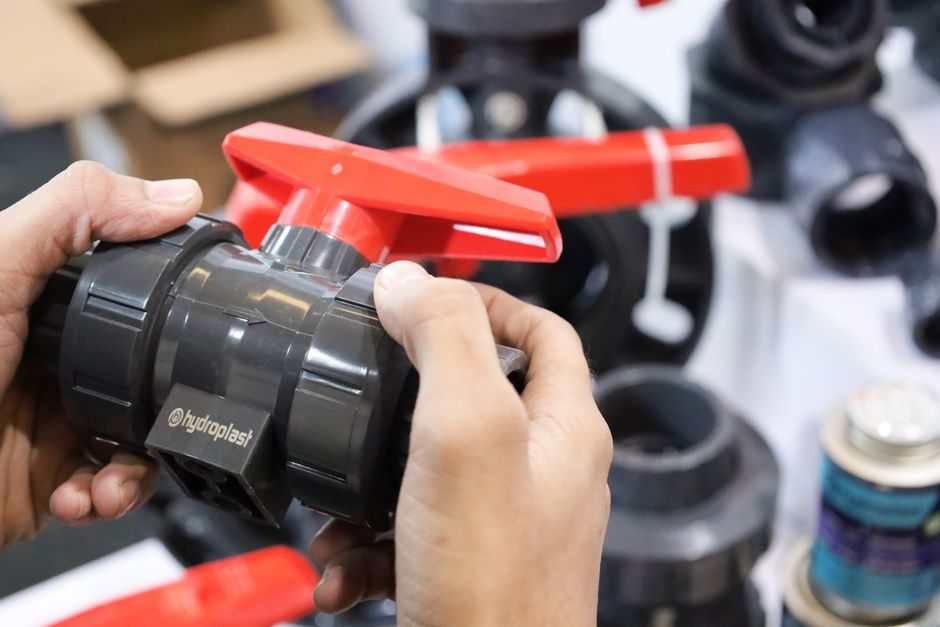
Selection of a solenoid valve is a four-parameter decision tree: media compatibility (chemistry, temperature, viscosity, solids content), port configuration (2/2, 3/2, 4/2, 5/2, 5/3), actuation mode (direct-acting vs pilot-operated vs proportional), and pressure/Cv envelope relative to the line class [S1][S2]. Get any one of those four wrong and the valve will either fail to open, leak by, or burn its coil within weeks — coil voltage is almost never the failure root cause.
The DirectIndustry industrial catalog now indexes 1,591 solenoid-valve products across 190 manufacturers, with brass and stainless-steel bodies dominating the media-contact parts and a wide envelope from DN 0 mm miniature units to DN 10,000 mm process valves, voltage spans 1.5–2,000 V, and pressure classes from vacuum to 210 bar [S1]. That spread is the single best argument for treating selection as a constraint-elimination problem rather than a brand-comparison problem.
Step 1: Lock the Media and Material Before Anything Else
Solenoid valves are designed for media without solid particles — water, oil, petroleum products, steam, compressed air, and heat-transfer fluids are the canonical fluid set, and any entrained solids above the strainer rating will pilot-pin a pilot-operated solenoid valve within hours [S1]. For potable water, fuel, air, and inert gas the default body material is brass; for aggressive chemicals, food/pharma CIP, steam above ~180 °C, or offshore service, 316 stainless is the baseline, and alloys (Hastelloy, PTFE-lined) enter the spec when the chemistry justifies the cost [S1][S5].
Elastomer choice is the silent killer: NBR covers roughly -10 °C to 90 °C and most oils/air/water, EPDM handles hot water and steam but not petroleum, FKM (Viton-class) covers fuels and most chemicals up to ~200 °C, FFKM/FFKP for the >200 °C or aggressive-chemistry tail, and PTFE/EPDM bonded diaphragms for the high-cycle steam set [S5]. Vacuum service below ~1 mbar absolute typically requires a media-separated diaphragm or bellows design to keep the solenoid's armature out of the process — see vacuum solenoid valves for the duty-specific guidance [S4].
Step 2: Pick Actuation Mode by Pressure and Orifice, Not by Habit
Direct-acting valves move the plunger directly against the line pressure with no pressure differential required, which makes them the only choice at zero differential pressure, on vacuum service, and on small orifices (typically DN ≤ 2–3 mm) where pilot orifices would not develop enough flow [S5][S6]. The trade-off is Cv: at the same coil size, a pilot-operated valve of the same port size delivers several times the flow because the pilot only has to crack a small bleed path, then line pressure does the heavy lifting on the main diaphragm or piston.
Pilot-operated valves need a minimum pressure differential — typically ≥ 0.3–0.5 bar across the valve — to function, and they will not open at all on a dead-zero or vacuum-differential duty [S1][S5]. For the mid-range sweet spot (DN 4–25 mm, 1–10 bar differential, water/air/oil), pilot-operated brass-bodied 2/2 NC valves are the workhorse and account for the majority of installed units. The Rotork BXS(mech) indirect-action example in the DirectIndustry index is rated 10 bar max working pressure with Cv 0.73 and a 1,000,000-cycle design life, which is a fair benchmark for the mid-pressure pneumatic class [S1].
A third lane is the proportional solenoid valve, which modulates a control variable (pressure or flow) rather than simply open/close. SMC's ITV1030/ITV1050/ITV2030/ITV2050 electro-pneumatic proportional series sits in the supply-chain listings at roughly $108–$190 per unit in 2026, regulating downstream pressure to a setpoint rather than dumping full line pressure, and is the standard pick for tension-control, laser-assist gas regulation, and any closed-loop pneumatic trim duty [S3]. If the application only needs on/off, a proportional valve is overkill; if it needs a setpoint, an on/off valve is the wrong tool.
Step 3: Port Count, Function, and the 3/2 vs 5/2 Decision

Port count sets how many flow paths the valve carries: 2/2 (one inlet, one outlet, on/off — the workhorse for water, steam, fuel, compressed air shutoff), 3/2 (one inlet, two outlets, or two inlets, one outlet — used for single-acting cylinders, diverting, or exhausting a pilot), 4/2 (two ports on each side, used to drive a double-acting cylinder with a single coil), 5/2 and 5/3 (the canonical double-acting cylinder drives, with 5/3 adding a closed-centre or vented-centre mid-position for load-holding) [S1][S5]. A common 2026 mistake is specifying a 2/2 for a single-acting pneumatic cylinder; the right part is a 3/2, and the wrong pick will not exhaust the spring side of the cylinder.
For the high-pressure gas duty (natural gas, hydrogen blend, instrument gas) the spec frequently goes to direct-acting or indirect-acting high-pressure bodies in the DN 2–5 mm range, 0–210 bar envelope — the Rotork Bifold FP02G–FP05G series is a representative OEM offering in this class [S1]. Power Pinch / pinch-style valves isolate the media from the mechanism entirely by squeezing a flexible elastomer sleeve, which makes them a clean fit for slurries, sterile fluids, and aggressive chemicals where any metal contact would corrode or contaminate [S1].
Step 4: Duty Cycle, Cycle Life, and Coil Class
Cycle life is the hidden spec: a cheap unbranded 2/2 NC valve may quote 100,000 cycles on the data sheet but start leaking internally at 30,000, whereas a properly engineered pilot-operated valve such as the BXS(mech) at 1,000,000 cycles changes the maintenance interval from months to years [S1]. For high-cycle packaging, paint, and textile machinery, a continuous-duty-rated coil (100 % ED, Class F or H insulation) is mandatory; intermittent-duty coils (e.g. 30 % ED) overheat and fail if held energised for long periods, even though the holding current is below the nameplate [S5].
Coil voltage and connector standard are the easiest part of the spec and the most over-discussed: 24 V DC is now the dominant control-panel standard, 110–230 V AC remains common on plant mains, and lower-power 12 V DC and 1.5 V miniature variants exist for OEM embedded and battery-driven equipment [S1]. IP65 is the floor for washdown and outdoor service, IP67/IP68 for submerged or high-pressure hose-down, and ATEX/IECEx-rated Ex d or Ex e coils are mandatory in Zone 1/2 hazardous areas; pairing an ATEX coil with a non-ATEX body is a common audit failure.
Who Should NOT Pick the Mainstream 2/2 Pilot-Operated Brass Valve
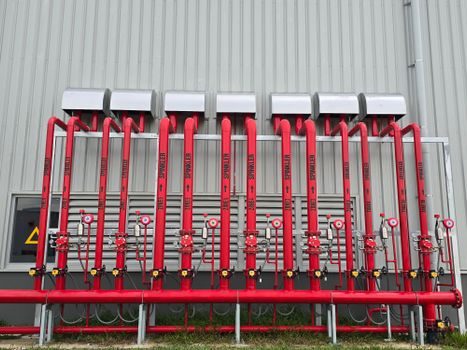
The default 2/2 NC pilot-operated brass valve, 1/2 in, 10 bar, 24 VDC, is the right answer for roughly half of all fluid shutoff duties — but it is the wrong answer in four specific cases. First, vacuum service below ~100 mbar absolute, where a direct-acting bellows-sealed valve is required because a pilot-operated valve has no pressure differential to act against [S4]. Second, steam above ~180 °C saturated, where brass dezincifies and EPDM/NBR diaphragms fail; the spec must move to stainless body and PTFE/FKM seats. Third, any media with particles above the strainer rating, including unfiltered well water, glycol with scale, and slurries, which will pilot-pin within days regardless of body material [S1]. Fourth, proportional or closed-loop control — an on/off 2/2 cannot regulate; an air solenoid valve proportional variant such as the ITV-series is the correct pick [S3].
Process-engineer perspective: it is often cheaper to upsize the valve and accept a higher Cv than to chase a perfect match, because an oversized valve that still opens fully is far less risky than an undersized valve that chokes the line and overheats its coil. Cv should be sized with a 1.2–1.5× safety factor against the calculated required Cv, and line pressure drop should stay below 10–15 % of upstream pressure at design flow — guidance that mirrors the control valve selection process at the process-control level [S1].
Failure Modes and Field Telltales
Coil burn-out is the most visible failure but rarely the root cause: the underlying trigger is usually a valve that fails to open (stuck pilot, clogged strainer, undersized pressure differential), so the coil sits energised against a stalled armature and overheats [S5][S6]. Internal leakage on a pilot-operated valve in the closed state is almost always seat damage from particulate, water hammer, or a missed elastomer temperature rating, not a coil problem. External leakage at the body-to-coil interface is typically a failed O-ring on the armature tube, a five-minute repair if the valve is serviceable, a full replacement if the body is crimped shut.
For process safety, solenoid valves on fuel-gas and combustion-air lines should be specified with a closed-position-fail-safe (spring-return NC) and, where the code demands, two valves in series with a leak-test port between them — a Class A single-valve install on a gas train is a common non-conformance during audits and overlaps with the control valve sizing and selection discipline on the trim side.
Shortlist Logic and 2026 Sourcing Signals
Lock the spec in this order: media + material + elastomer, port count + function (2/2 NC, 3/2, 5/2, 5/3), actuation mode (direct vs pilot vs proportional) chosen by orifice and differential pressure, then Cv + pressure class, then coil voltage and certification (IP65+ for outdoor, ATEX/IECEx for hazardous). The DirectIndustry 2026 index lists 1,591 SKUs across 190 manufacturers with verified technical sheets, and a like-for-like comparison on the four constraints above is the fastest path to a defensible shortlist of two or three candidates [S1]. Trackable signals to watch in 2026: pricing pressure on Chinese OEM proportional valves in the $100–$200 band (SMC ITV-class equivalents), and tighter ATEX/IECEx documentation on mid-price imports as EU hazardous-area compliance tightens [S1][S3].