
A control valve is built from two assemblies — a body assembly and an actuator assembly — and the common industrial catalog splits the body side into four series: single-seat, double-seat, cage, and self-actuated [S3]. The selection sequence is process conditions → flow characteristic → size (Cv) → actuator sizing; skipping steps produces a valve that hunts, chokes, or starves the loop at one end of the travel.
Body style and trim material lock in the controllable Cv range, leakage class, and temperature ceiling. Actuator class (spring-return pneumatic, electric, or hydraulic) then determines whether the assembled package can stroke the valve against the design shut-off differential pressure across the full 0–100% input signal, which is the gate most failed loops actually trip on.
Four Body Series and What Each One Is For
Single-seat control valves carry one plug-and-seat sealing pair, so leakage rates are tight and the geometry is simple to predict [S3]. They are the default for clean service where tight shutoff matters and where the calculated required Cv is low to moderate — small chemical dosing, instrument air, and clean utility lines.
Double-seat valves stack two plugs, which balances hydrostatic forces and lets a smaller actuator push a higher-pressure drop. The trade is leakage class: two seats rarely both seal, so double-seat is used where some seat leakage is acceptable, typically in larger line sizes or higher-pressure-drop service where a single-seat would need an oversized actuator [S3].
Cage (or sleeve-guided) valves place a contoured cage around the plug; the cage window shape sets the inherent flow characteristic and gives you a replaceable trim part, which is the option of choice for erosive or high-temperature service where you want to swap the cage without pulling the body [S3]. Self-actuated series valves use the process medium itself to generate the positioning force, with no external actuator, and are typically specified for self-contained pressure or temperature regulation where loop accuracy is non-critical [S3].
Selection Workflow: Process Conditions to Final Cv
The four-step workflow published for control valve selection starts with structure form and material selection driven by process conditions, then flow characteristic selection driven by the process object's dynamics, then valve size selection driven by operating parameters, and finally actuator and accessories selection [S3]. Pressure-class, end-connection, and body-material decisions all sit inside step 1, not after it — picking a globe-style carbon-steel body for a 316°C superheated steam run with a 1.4408 stainless trim is a different spec than a soft-seated PVC-bodied unit on a 25°C water skid.
Flow characteristic is the most under-specified variable. The same equal-percentage trim that protects loop stability on a heat exchanger will over-control and wear prematurely on a recirculation line that needs near-linear response.
Valve sizing follows from the calculated Cv (flow coefficient) against the required flow at the design pressure drop. Undersizing shows up as a valve pinned near the seat at design load, unable to deliver turndown; oversizing shows up as the loop operating in the bottom 10–20% of stroke, where most equal-percentage trims are nearly closed and the loop loses effective gain. The Cv calculation itself depends on the service (liquid, gas, steam, two-phase) and the chosen characteristic, which is why the size step is downstream of characteristic selection, not independent of it.
Inherent vs Installed Characteristic and Why Trim Geometry Matters
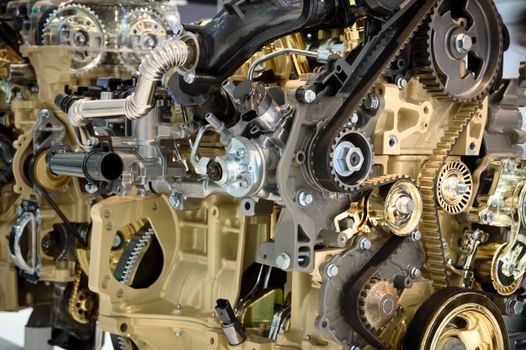
Inherent flow characteristic is what the manufacturer measures on a constant-pressure-drop test rig; installed characteristic is what the same trim delivers in a real piping system where the pressure drop is split between the valve and the rest of the loop. The two diverge sharply when the valve's pressure drop falls below roughly 30–40% of the total system drop at design flow, which is the default failure mode in oversized retrofits. [S1]
Cage-style valves solve part of this by offering cage-window profiles (linear, equal-percentage, modified parabolic) that change the inherent characteristic without changing the body [S3]. For high-turndown heat-exchanger loops, a modified equal-percentage cage keeps the installed characteristic usable even when the available valve ΔP is only 25% of the loop ΔP. For a balancing valve duty on an HVAC chilled-water branch, the same selection logic points toward a linear characteristic and a hand-adjustable throttling device rather than a modulating control valve, because the controlled variable is flow rate, not pressure or temperature.
Actuator and Accessory Sizing: Where the Loop Actually Fails
Actuator class — spring-return pneumatic, double-acting pneumatic, electric, hydraulic — is selected after the body is fixed, because actuator force must overcome the valve's seating friction and the shut-off differential pressure at the worst operating condition. A spring-return pneumatic actuator on a single-seat globe rated PN40 with a design shut-off ΔP of 24 bar needs an air supply of around 4 bar minimum plus margin; undersized air supply is the most common reason a pneumatic control valve fails to seat tightly during ESD. [S1]
Positioner, I/P transducer, air-set, limit switches, and hand-override selection sit in the same step as actuator sizing [S3]. A control valve delivered with a positioner calibrated for 0.2–1.0 bar input but driven by a 4–20 mA HART signal with a current-to-pressure (I/P) converter is a different commissioning path than the same valve driven directly by a Foundation Fieldbus digital positioner, and the wrong accessory pairing is what generates the "valve hunts around setpoint" complaints during SAT.
Who Should and Should Not Pick a Globe-Style Control Valve
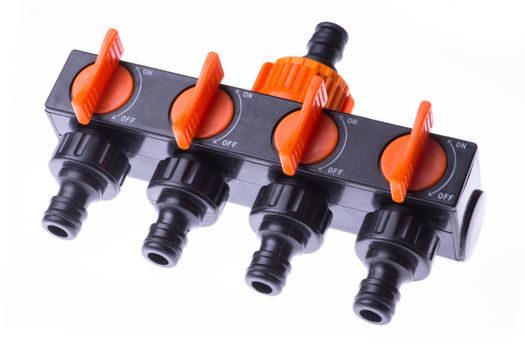
Globe-style control valves (single-seat, double-seat, cage) are the right default for modulating flow or pressure control on clean process fluids where leakage class IV–VI is acceptable and the body size is DN15–DN400 [S3]. They are not the right default for slurry service, where erosion eats the seat in weeks; for on-off isolation, where a ball or gate valve gives tighter shutoff at lower cost; or for very high-pressure drop let-down, where multi-stage cage or angle bodies are the engineered choice.
If the application is on-off isolation rather than modulation, the answer is a different product class entirely — for that duty the spec map in Best Check Valve for Automotive Use: 2026 Spec-First Buyer's Map shows how isolation-only and modulating valves diverge on leakage class, cycle life, and seat material. The same rule applies to firewater and ESD isolation, where a fire alarm control panel initiates a trip and the downstream valve must close, not modulate.
Comparison of Main Body Options on Decision Criteria
On the four decision criteria that drive most project buys — shutoff tightness, maximum Cv-to-actuator force ratio, replaceable trim, and suitability for high-temperature service — the four body series line up as follows. Single-seat: tightest shutoff, lower Cv per unit actuator force, trim not typically field-replaceable, upper temperature limited by seat material. Double-seat: looser shutoff, highest Cv per unit actuator force, trim field-replaceable on most designs, high-temperature variants available. Cage: leakage class II–IV standard (Class V–VI optional), good Cv-to-force ratio, cage is field-replaceable, well suited to high-temperature and erosive service [S3]. Self-actuated: leakage depends on seat design, lower force and Cv, limited trim replacement, used for low-accuracy pressure/temperature regulation only.
Material pairing is its own decision line. Stainless 316/1.4408 or alloy body+trim is required for sour service per NACE MR0175 and for chloride-bearing process streams; carbon-steel bodies are the cost-default for clean hydrocarbons and steam up to ~425°C where the seat material is the soft-seal limit, not the body. Forged bodies enter the spec when the line class is above ASME CL600 or the temperature swings more than ~200°C between ambient and operating.
Operational Failure Modes and Limits
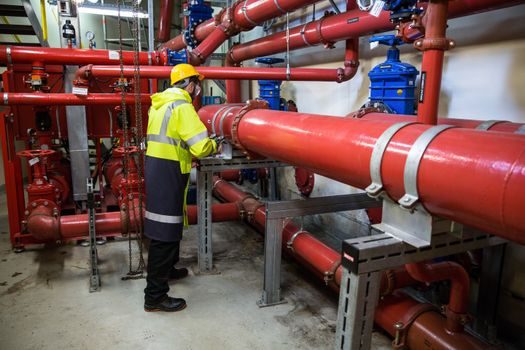
Three failure modes dominate the field-failure log: (1) cavitation on high-ΔP liquid let-down, mitigated by cage geometry, hardened trim, or a multi-stage anti-cavitation body; (2) flashing and erosion on hot hydrocarbon let-down, mitigated by hard-faced trim (Stellite 6 or tungsten carbide) and downstream flashing-resistant seat geometry; (3) actuator stall or seat loading loss due to air-supply underpressure on spring-return pneumatic actuators. Each has a recognisable signature in the positioner trend and a corresponding fix at the spec stage, not the maintenance stage.
Cycle life is bounded by the seat material and the inherent characteristic. Soft-seated valves (PTFE, PEEK, UHMWPE) are typically rated for 100,000–500,000 cycles; metal-seated versions reach 1,000,000+ cycles but at a higher inherent leakage class. Specifying a soft-seated Class VI shutoff on a loop that swings across 80% of stroke every minute is a fast path to seat wear and rising leakage class within one turnaround.
Sourcing, Standards, and Where to Verify the Spec
Project specifications for control valves reference a layered set of standards: ASME B16.34 for valve body design and pressure-temperature ratings, ISA-75 standards for Cv calculation and face-to-face dimensions, IEC 60534 for the control-valve terminology and test methods family, API 6D for pipeline isolation valves (not modulating), and NACE MR0175 for sour-service material restrictions. End connections, testing, and material certificates (EN 10204 3.1) are separate purchase-spec lines and should not be left to defaults. [S1]
Where this connects to adjacent process-instrumentation buys: a control cable run to a control valve and a two-hand control station on a press line are different cable and accessory classes, but both go through the same instrumentation cable spec. For access control and interlock logic around the valve skid — limit-switch feedback, solenoid lock-out, ESD tagging — the relevant reference is access control as a system layer rather than as a single device.
The single most reliable verification step before issuing a PO is a documented Cv calculation at minimum, design, and maximum flow for each valve, with the assumed pressure drop at each condition and the resulting predicted opening at design load. If the predicted opening at design is outside 30–70% of stroke, the trim or the line size is wrong, and no amount of positioner tuning will rescue the loop. Watch for the next control-valve release from a major actuator-OEM line and a project-side update of plant-side Cv calculation templates as the two near-term signals worth tracking.