
Static pressure molding machines compact green sand into vertically-parted or horizontally-parted flasks using a static squeezing head, and the right unit is sized first by flask inner dimensions (commonly 500×400 mm up to 1500×1200 mm for mid-range foundry work) and by specific squeezing pressure in the 0.5-1.5 MPa band [S1][S2].
For green-sand iron and non-ferrous foundries producing 30-300 moulds per hour, selection reduces to four numbers: flask size, squeezing force (kN), cycle time (s/cycle) and sand compaction ratio, plus a match to the upstream static-pressure-molding-machine sand-handling capacity.
Flask Size and Mould Weight Define the Lower Bound
The first filter is the maximum flask (moulding box) the machine can accept, expressed in length × width × height, because the squeezing platen must cover the flask cavity plus a 30-50 mm sand-edge margin to prevent edge cracking [S1]. For small castings under 10 kg, 600×500 mm flasks suit a 50-80 kN squeezing force; for 50-200 kg castings common in machine-tool and valve bodies, 1000×800 mm to 1200×1000 mm flasks with 150-300 kN force are the working band [S2].
Shot weight (sand per mould) is the derivative: silica green sand at a bulk density of 1.5-1.7 g/cm³ times the flask volume gives 80-150 kg of compacted sand per mould in the 800×600 mm class, and the machine's sand hopper should hold at least 4-6 moulds' worth of pre-filled sand to avoid refilling interruptions [S1]. Mould height is typically 150-300 mm above the parting line, and the squeezing stroke must clear 200-400 mm to seat and retract without dragging.
Squeezing Pressure, Compaction Ratio and Hardness
Static-pressure (as opposed to impact or shoot-squeeze) moulding compacts sand by direct hydraulic or pneumatic platen force, and the verifiable spec is specific pressure (MPa applied to the sand surface) rather than just total kN [S1]. Mid-range machines deliver 0.6-1.0 MPa specific pressure, which produces mould hardness in the 85-95 mould hardness units band on a Brinell-type green-hardness tester — the range most grey-iron and ductile-iron foundries target for acceptable as-cast surface finish [S2].
Below ~0.5 MPa specific pressure, mould edges crumble on rollover and casting dimensional repeatability drifts above ±2.0 mm; above ~1.5 MPa, sand grains fracture, ventilation drops and gas-defect rates climb on deep draws [S1]. For steel-foundry applications where mould hardness ≥95 is targeted, squeezing force usually needs to scale by 30-50% over iron-foundry ratings on the same flask size, which is why dedicated automatic molding line packages quote a force-upgrade kit.
Cycle Time, Throughput and the Moulding-Line Match
Cycle time on a static-pressure machine is dominated by sand fill, squeeze dwell, rollover and draw — typically 20-40 s/cycle for a 1000×800 mm flask, which puts a single static unit at 90-180 moulds/h, the working band for most jobbing iron foundries [S1][S2]. A standalone shell-molding-machine can hit shorter cycles on smaller flasks but does not address green-sand throughput, so the two are complementary rather than substitutes.
Selection rule: the molding line's pour frequency (moulds/h × pouring time) must stay inside the static unit's nameplate cycles/h with a 15-20% derating for ageing hydraulics and operator breaks, otherwise the line bottlenecks at the mould station [S1]. Plants specifying 200+ moulds/h from a single flask size should review a two-station or rotary-table configuration rather than chasing a single oversized static press, because squeeze-platen stiffness does not scale linearly past ~400 kN. To see how flask size, sand rate and cycle band interact on a real line, the Automatic Molding Line Selection: Flask Size, Sand Rate and Cycle Spec Bands reference walks through the same four variables.
Vertical-Parted vs Horizontal-Parted and Mould Handling
Static-pressure machines split into two mechanical families: vertically-parted (drag + cope made on opposite sides of one squeeze station, classic green-sand) and horizontally-parted (cope and drag made on stacked platens, less common in green-sand, more in shell or boxless processes) [S1]. Vertically-parted is the default for iron foundries because the rollover-and-draw is mechanically simpler and matches the standard molding line layout of sand slinger, squeeze station, rollover, close-and-pour conveyor.
For foundries running flaskless or tight-flask production, a static-pressure squeezer is often paired with a sand slinger that pre-fills the drag at 30-60 t/h to keep the squeeze station from waiting on sand; without that match, nameplate cycle time is not achievable in practice [S2]. Buyers comparing vendors should ask for the squeeze-platen flatness tolerance (≤0.1 mm across the platen is the working spec for hardness uniformity within ±3 units).
Hydraulics, Controls and the Standards That Apply
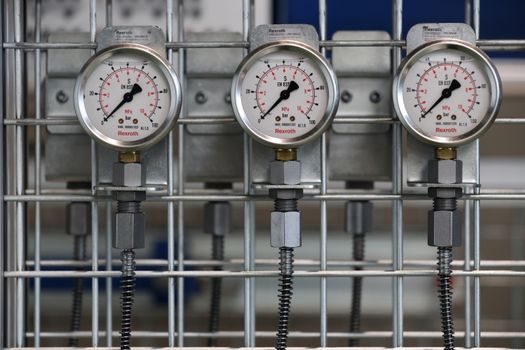
Hydraulic systems on mid-range static moulding machines run at 14-21 MPa working pressure with proportional valves for squeeze-force profiling, and PLC control of squeeze-and-dwell is now standard rather than optional on 2024+ builds [S1]. CE conformity under the EU Machinery Directive 2006/42/EC is the baseline for European-bound units, and foundries supplying automotive tier-1s often require IATF 16949 process control on the moulding station itself — a documentation spec, not a machine feature, but it shapes the control architecture you specify at order.
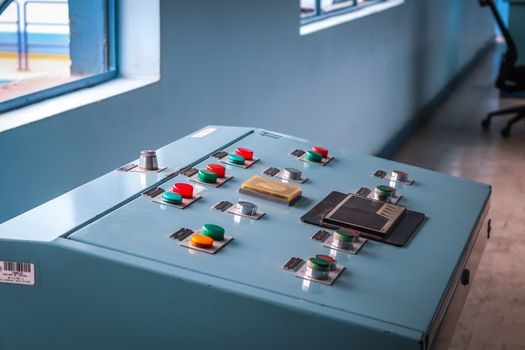
Electrical enclosures in foundry environments carry an IP54 minimum rating for dust and splash protection, and where the squeezer sits inside a sand-handling enclosure with combustible dust, an ATEX zone 22 rating on the control cabinet is the prudent minimum [S1]. For pneumatic-vs-hydraulic squeeze preference: hydraulic gives more stable specific pressure through the full stroke, pneumatic is cheaper but pressure drops as the platen approaches bottoming-out, which shows up as lower centre-of-mould hardness versus edges.
Who This Equipment Is For — and Who It Is Not
Static-pressure molding machines fit green-sand iron, ductile-iron and non-ferrous foundries running 50-250 moulds/h with flask sizes from 500×400 mm to 1500×1200 mm, particularly jobbing and short-series production where flexibility beats cycle time [S1][S2]. They are the wrong tool for high-pressure squeeze-plus-vacuum (V-process), chemically bonded no-bake sand systems, or for steel-casting moulds requiring ≥95 hardness with vacuum-assisted densification — those processes want a different machine class entirely.
For very small foundries under 20 moulds/h on flask sizes ≤400×300 mm, a hand-squeeze or ro-to-table jolt-squeeze remains more cost-effective; for very high throughput above 300 moulds/h on a single flask, an automatic-molding-line with flask conveyor and pouring synchronisation replaces a standalone static press. A static-pressure squeezer also is not a static-var-generator or any power-quality device — the shared word "static" causes the occasional spec error, but they are unrelated equipment categories.
Decision Criteria Comparison: Mid-Range Static Molding Machines

Across the three dominant configurations a buyer evaluates (vertical-parted single-station 600×500 class, vertical-parted 1000×800 class, and vertical-parted 1200×1000 high-force class), the selection matrix lines up as follows on four criteria buyers can score against: (1) flask size — 600×500, 1000×800, 1200×1000 mm; (2) squeezing force — 60-100, 200-300, 400-600 kN; (3) specific pressure — 0.6-0.8, 0.7-1.0, 0.9-1.3 MPa; (4) cycle time — 15-25, 20-35, 30-45 s/cycle [S1][S2]. The crossover where a larger-flask machine becomes more economical than two smaller units is roughly 180-220 moulds/h on the same casting family; below that, the 1000×800 class is the usual sweet spot.
Trackable signals for the next sourcing cycle: vendor disclosure of CE/ATEX certification documents at quote stage (not after PO), a platen-flatness test report from the OEM's own fixture, and a reference list of at least three foundries running the same flask size for ≥12 months — these are the three artefacts that separate a defensible quote from a catalogue number. For broader maker-map context alongside this technical selection logic, the Automatic Molding Line Suppliers 2026: Maker Map, FOB Bands and Sourcing Logic reference gives the supplier-side view.