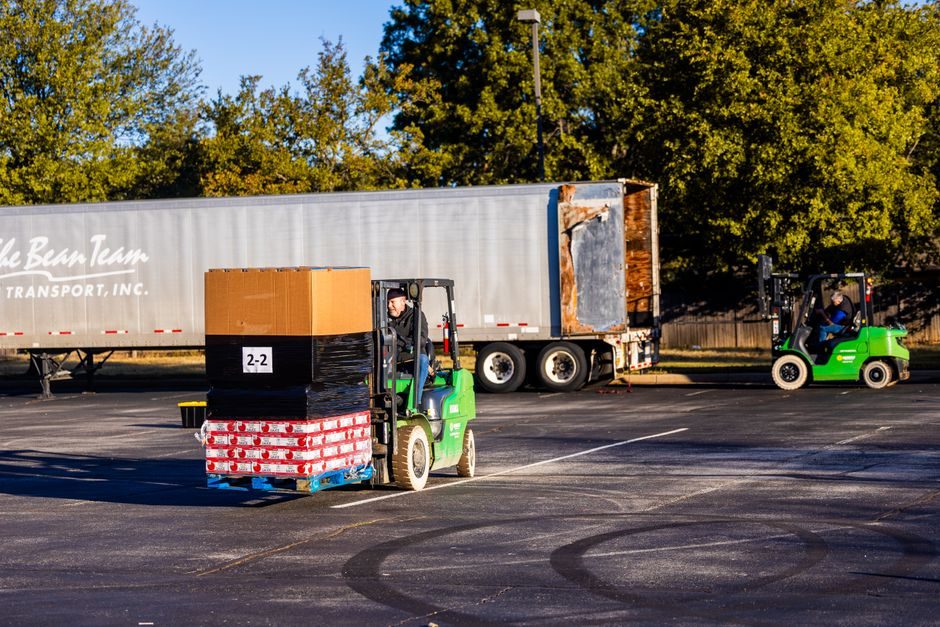
Electric forklifts in the 1.5-3.5 tonne class are now the default indoor specification, with 2026 export pricing from Chinese OEMs clustering between US$ 2,299 and US$ 6,000 per set on a 1-set MOQ [S1]. For a single-truck buyer, the cheapest unit is rarely the cheapest unit over a 5-year window — battery chemistry, charger spec, and mast type swing the total cost of ownership more than the sticker.
A standard electric counterbalance forklift pairs a 48 V or 80 V lead-acid or Li-ion battery pack with a Curtis or similar AC controller, lifting 1,500-3,500 kg to 3,000-6,000 mm on a 2- or 3-stage mast. Three decisions drive 80% of the spec sheet: rated load at the load centre, lift height with mast vertical, and minimum aisle width with mast horizontal.
Load Capacity, Load Centre, and Mast Height
Counterbalance electric forklifts are rated at a 500 mm or 600 mm load centre per ISO 5053-1, and derating follows a linear curve: lifting 2,000 kg at 500 mm typically drops to roughly 1,400-1,500 kg once you push the load to 700 mm [S3]. Buyers moving long-length bar stock, paper reels, or 1,200 × 1,000 mm chemical drums should spec a 600 mm load-centre rating and a load backrest extension rather than chase higher tonnage.
Mast selection is the second hard number. A 2-stage limited-free-lift mast clears 3,000-4,500 mm and suits warehouses with door heights below 4 m; a 3-stage full-free-lift mast hits 4,500-6,000 mm and lets the carriage rise before any mast section extends, which is the correct choice for containers, drive-in racking, and inside-truck loading. Lift height over 6 m pushes you into the rough-terrain class — a different machine with a heavier counterweight and pneumatic tyres, not a taller warehouse mast [S3].
Battery Chemistry, Voltage, and Charger Spec
Lead-acid remains the cheapest purchase path but the highest operational cost: a 48 V / 600 Ah pack at 1.5 t adds roughly 1,100-1,300 kg to the truck and needs 8-10 hours of cool-down charging plus equalisation cycles every 1-2 weeks. Lithium iron-phosphate (LFP) packs at 80 V / 202-280 Ah cut that to opportunity charging at any state of charge and last 3-4× the cycle count, at 1.8-2.5× the upfront price for the same kWh class.
Charger sizing is the underrated line item. A 48 V / 100 A HF charger restores a 600 Ah pack in 6-7 hours; a 48 V / 200 A unit halves that. Buyers running two-shift operations should spec 200 A chargers and opportunity-charge during breaks rather than oversize the battery bank. The battery compartment dimensions on the truck must match the vendor's published BCI tray footprint, otherwise the swap-and-go spare-battery plan collapses.
Power, Tyres, and Indoor Air Quality
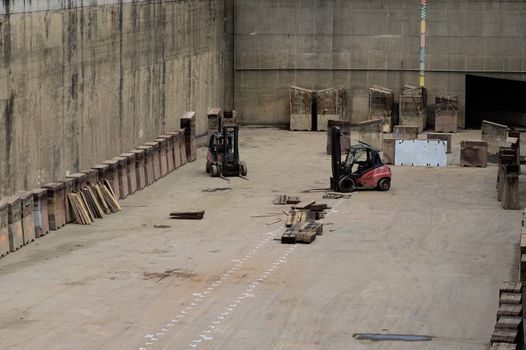
Electric forklifts produce zero tailpipe emissions, which is the only reason they are mandated inside food, pharma, and cold-storage facilities. A 2-3 t electric unit running a typical duty cycle cuts warehouse CO and NOx to undetectable levels compared with an LPG or diesel unit of the same capacity. For cold storage below -20 °C, specify heated Li-ion packs and low-temperature hydraulic oil (ISO VG 32) — standard LFP cells derate sharply below -10 °C without thermal management. [S2]
Tyre choice separates indoor from mixed-duty use. Solid cushion tyres (smooth or traction profile) are correct for flat concrete indoor floors and maximise drive-motor efficiency; pneumatic or solid-pneumatic tyres are required for any outdoor yard work, dock plates, or debris-strewn surfaces. Putting pneumatic tyres on a pure indoor truck costs you 5-8% energy efficiency and 100-150 kg of payload capacity that you paid for but cannot use.
Selection Criteria: Walkie, Pallet Jack, vs Counterbalance
Three machine classes cover roughly 90% of electric-forklift buying decisions, and the wrong class costs the project much more than the wrong brand within a class. The comparison below maps duty to machine.
1) Electric pallet truck (walkie or rider) — 1,500-2,500 kg at 200 mm lift. Best for horizontal pallet moves on flat floors, last-50-metre dock-to-aisle work, and any site where the operator walks alongside. Cheap (US$ 800-2,000 for a walkie), single 24 V battery, but useless for stacking. Many warehouses start their electrification here because the unit economics break even against hand pallet jacks inside 12 months. See the dedicated electric pallet truck spec page for chassis dimensions.
2) Electric counterbalance forklift — 1,500-3,500 kg at 3,000-6,000 mm lift. The general-purpose indoor truck, dominant in FMCG, 3PL, and parts warehouses. AC drive, regenerative braking, Curtis/Inmotion controllers, and 48 V or 80 V packs. This is what most readers asking "how to choose an electric forklift" actually need.
3) Electric reach truck or order picker — 1,000-2,500 kg at 4,500-9,000 mm lift. Narrow-aisle (VNA) specialist for racking taller than 5 m, with a mast that tilts and reaches rather than counterbalancing. Right answer for ASRS-adjacent racking, wrong answer for a general yard.
4) Rough-terrain electric — 2,000-3,500 kg with 4WD, oscillating axle, and pneumatic tyres. The electrification wave has reached this class, but runtime is still 3-5 hours per charge versus 8+ for indoor trucks. Site-survey first; the rough-terrain forklift spec family is the correct reference for that duty profile.
Who Should NOT Buy the Cheapest Electric Forklift
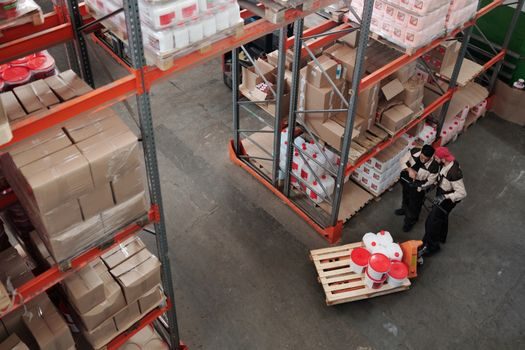
Two buyer profiles get burned by the entry-level US$ 2,299 unit on Made-in-China listings [S1]. First, multi-shift operations: 8-10 hours lead-acid equalisation cycles will not let a single truck cover two shifts, and a second truck plus battery-room ventilation is more expensive than the LFP upgrade on the first. Second, cold-storage operators below -10 °C: standard lead-acid loses 30-50% of usable capacity in the freezer, and the truck will be load-shedding heaters all shift. Both cases pay back the LFP + heated-cab option inside 18-24 months on electricity + maintenance alone.
Buyers moving 1,000+ pallets per shift also do not belong on a single counterbalance — they belong on a pallet-truck + reach-truck fleet. The wrong truck class costs more in operator idle time than any spec difference within the right class. For a fuller decision map on material-handling equipment, the explosion-proof distribution box selection logic shows the same spec-first discipline applied to a different category, and is useful for plant engineers standardising their equipment-buying workflow.
Maintenance, Service Intervals, and Lifespan
Electric forklifts cut scheduled maintenance roughly in half versus ICE: no engine oil, no spark plugs, no fuel filters. The remaining critical intervals are the hydraulic oil and filter every 1,000 hours, the mast chains and lubrication every 500 hours, the drive-axle oil every 2,000 hours, and battery watering (lead-acid only) every 10 charges or weekly, whichever comes first [S2]. Telematics units from major OEMs now stream battery state-of-health, fault codes, and operator-impact events to a dashboard; this is the single highest-ROI add-on for fleets of 5+ trucks because it converts unscheduled downtime into scheduled service windows.
Design life is 10,000-15,000 operating hours for a well-maintained electric counterbalance, versus 6,000-10,000 hours for an LPG unit running the same duty. The structural mast and chassis outlast the drive system by a factor of 2-3; the second-life buyer market is healthy, but always inspect for mast-rail wear, steer-axle bearing play, and battery-state-of-health before bidding on a used unit. Aftermarket service providers like CSC Forklift Repair publish weekly maintenance-checklist content that aligns with the OEM 500-hour service intervals [S2].
Sourcing, Standards, and What to Verify Before Paying
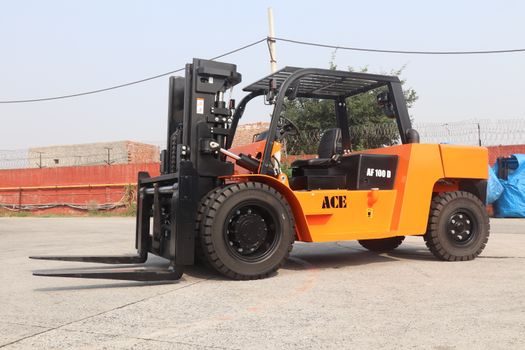
Three documents should land before the deposit clears. CE / UKCA marking plus a DoC for the 2006/42/EC Machinery Directive and EN ISO 3691-1 (industrial truck safety) is the floor for any European-bound unit. For North American sites, UL 558 and ANSI/ITSDF B56.1 are the corresponding safety standards. For hazardous-area sites, ATEX 2014/34/EU or IECEx certification on the electrical enclosure is non-negotiable; standard electric forklifts are not Ex-rated and must not be deployed in Zone 1 or Zone 2 without a converted or purpose-built chassis. Battery handling is governed separately by IEC 62619 (Li-ion) and EN 62485-3 (lead-acid). [S1]
Pre-shipment inspection should cover the truck's serial plate (rated capacity, mast type, battery weight), the OEM warranty in writing (typical 12 months or 2,000 hours), a battery state-of-health printout, and a documented load test at 110% of rated capacity. Pricing for new units in 2026 has firmed at the US$ 2,299-6,000 band for 1.5-3.5 t counterbalance trucks from established Chinese exporters [S1]; a quote 30% below that floor almost always means a thinner controller, unbranded cells, or a smaller-capacity motor than published — verify the spec sheet line by line.
Track these signals over the next two quarters: 80 V LFP pack prices per kWh (the leading indicator for total truck price), IEC 62619 updates affecting shipping classification, and telematics-as-standard rollouts from the top three Chinese exporters. Any of these moving will shift the shortlist logic on the next buying cycle.