
An IE4-rated high-efficiency AC motor on the industrial market covers 0.55 kW to 30 kW at IE4 synchronous topology (Neri Motori IPM series, 6-pole/8-pole, 400 V/380 V) [S1], while a motor grader's drivetrain demands peak traction torques well above the upper end of that band.
Franklin Electric's 10HES 400 series submersible synchronous motor pushes the IE-class envelope to 150-287 kW and 478-796 Nm at 3,000/3,600 rpm with IP68 sealing and a built-in variable frequency drive [S2]. Even that upper bracket sits below the continuous tractive-effort requirement of a 14-25 tonne class motor grader.
Power and Torque Envelope: Where IE4 Lines Stop
IE4 induction-frame lines such as the YE4 series cover 0.37-400 kW, frame 80-355, 380 V, 2/4/6/8 poles, IC411 TEFC cooling, IP55, insulation class F, duty S1 [S5]. Neri Motori's IE4 synchronous IPM line terminates at 30 kW with 95.5 Nm peak torque and 67.2 A current per phase [S1]. Portescap's 16C18 brushed DC high-efficiency unit is a 0.7-0.8 W micro-motor delivering 0.0008-0.0011 Nm at 10,000 rpm in a 16 mm package for dosing and lab-automation duties [S3] - useful as a positioning servo, not a traction prime-mover.
Motor graders in the 165-250 kW engine class typically need drivetrain torque ratings in the 1,200-3,500 Nm range at the wheels, with hydraulic implement pumps adding another 200-600 Nm-equivalent load. The Franklin 10HES 400 reaches 796 Nm at 287 kW [S2], which closes the gap for hybrid-hydraulic sub-systems but still leaves the mechanical-wheel drive short.
Efficiency Class Geometry: Why IE4 Itself Is Not the Selection Gate
IE4 (IEC 60034-30-1) sets minimum efficiency at 50/60 Hz for 4-pole machines between 0.75 kW and 375 kW, roughly 4-7 percentage points above IE2 depending on frame size. Neri Motori markets "up to 7 % improved motor efficiency" with "excellent partial load behaviour" and lower heat rise as the lifecycle payoff of IE4 synchronous PM [S1][S2].
For a motor grader, the selection gate is not efficiency class but duty cycle, ingress protection, and torque density per kg. An IP55 TEFC induction motor at 1,500 rpm [S5] is wrong for a grader axle because the duty is S9 (variable load with overspeed) and the enclosure needs to shed dust, water spray, and thermal cycling, not continuous submersion. A grader traction motor belongs to the IE3/IE4 industrial-frame family only when paired with a VFD and matched to a torque-derating curve - not the submersible IP68 synchronous topology Franklin markets for borehole pumps [S2].
Topology Comparison: Synchronous PM vs Induction TEFC vs Brushed DC
Three IE4-class topologies appear across the source set, and they serve different points on the grader spec map:
The induction YE4 TEFC line (0.37-400 kW, 380 V, IC411, IP55, insulation F, S1) [S5] is the only one of the four that overlaps the grader auxiliary-drive voltage class, but its S1 continuous rating and IP55 enclosure still require derating for S9 mobile duty.
Duty Cycle and Environmental Constraints on a Grader
A motor grader cycles between stall, creep, and 40 km/h road travel within seconds, with ambient dust load, vibration to 10 g RMS on the axle, and oil contamination near hydraulics. IP68 (10HES 400 [S2]) is over-specified and wrong - it assumes submersion, not splash and dust. IP55 with an IP65 sealed conduit entry, as on the YE4 induction frame [S5], is closer to a grader axle requirement, provided the inverter handles the 10:1 constant-torque speed range.
Brushed DC units like the Portescap 16C18 tolerate -30 to +100 °C and survive medical/industrial dispenser duty [S3]. That thermal envelope fits a grader cab environment, but the 16 mm diameter and sub-watt power level belong on a sensor cluster, not a hydraulic pilot stage. For a real pilot valve, an AC motor or hydraulic motor sized to 0.55-2.2 kW at 1,500 rpm is the correct band.
Where IE4 Actually Pays Back on a Grader
IE4 wins on the grader when applied to long-runtime, partial-load auxiliaries: the 380 V hydraulic-fan drive, the 400 V cabin-HVAC compressor, and the 400 V generator-end motor on diesel-electric hybrid prototypes. In those slots, the Franklin 7 % efficiency gain with MPPT and "significant lower motor heat rise (Increased lifetime)" [S2] directly cuts fuel burn. The Neri IPM 0.55-30 kW band [S1] covers most of these loads at 400 V, 1,500-3,000 rpm, with IE4 confirmed.
For traction, the honest spec answer is that a motor grader's wheel motor belongs to a separate IEC 60034-30-1 envelope (typically IE3-rated, liquid-cooled, inverter-fed, with S9 duty derating) - the IE4-class synchronous submersible lines in the source set are not built for that envelope, regardless of their efficiency class. Spec-first rule: do not buy an IE4 motor for a grader by efficiency label; buy it by torque-per-kg, IP rating, and VFD integration.
Selection Gates in One Pass
Use this gate set when an IE4 unit crosses your desk for grader work:
1. Power band: 0.37-30 kW [S1][S5] = auxiliaries; 150-287 kW [S2] = electrified pump skid; sub-watt [S3] = sensor/valve pilot. If the load is wheel traction, none of the four source lines is the right answer.
2. Torque band: 0.0008-1.1 mNm [S3], 3.5-95.5 Nm [S1], 478-796 Nm [S2] - choose the band that sits 1.5-2x above the application's continuous torque, not the peak.
3. IP rating: IP55 with TEFC [S5] for chassis; IP68 [S2] only for sealed submersible skids; IP00 drive + IP68 motor (as in the Franklin package) needs an enclosure redesign before mounting on a grader.
4. Duty cycle: S1 continuous induction [S5] is fine for cabin and fan; S9 with VFD is mandatory for traction. Franklin's MPPT and built-in soft start [S2] shorten integration time on a hybrid skid.
5. Standards traceability: confirm IEC 60034-30-1 efficiency class label and IEC 60034-2-1 test method on the nameplate; both the YE4 and Neri IPM lines declare IE4 explicitly [S1][S5], while the Franklin 10HES 400 is described as "superior efficiency" with the 7 % gain [S2].
Limitations and Watch-Outs
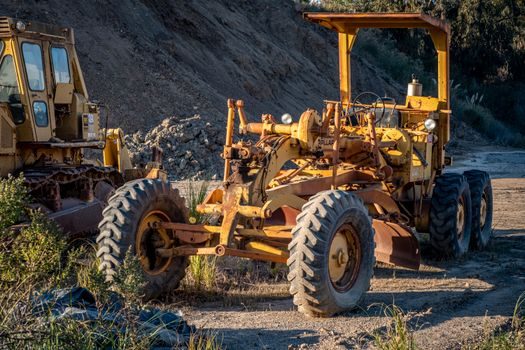
Three traps surface in this comparison. First, the Franklin 10HES 400 system is 400 V / 460 V ±10 %, 50/60 Hz ±2 %, with vertical/horizontal mounting restricted above 250 kW [S2] - a grader chassis will violate that orientation rule the moment the machine tilts on a slope. Second, the Neri IPM line at 30 kW max [S1] tops out well below the power needs of a tandem-drive hydraulic pump, so a second motor in parallel is mandatory, with the synchronisation risk that implies. Third, the Portescap 16C18 [S3] is a precious-metal-commutated brushed DC unit with finite brush life; treat it as a serviceable consumable, not a fit-and-forget IE4 component, and isolate it from vibration above 5 g.
Trackable next nodes: confirm IEC 60034-30-1:2014 amendment status for traction-mobile exclusions, and request from Franklin Electric a horizontal-mount vibration certificate for the 10HES 400 above 250 kW before any grader pilot install. For Portescap-class pilot motors on the cab harness, demand a 10 g RMS vibration sweep and a brush-life curve at the grader's expected duty cycle [S3].
Related analysis: Quartz Material Types and Classifications: Spec Map for Engineers.