
PLC programs can often be changed without stopping the controller because an online edit is validated by the programming software before it is committed, but this is not equivalent to patching the PLC operating system or firmware [S2].
The safe method separates an online program change from a reboot: back up the project, test the modified logic in an offline environment, verify field behavior during a controlled transition, and reserve a planned shutdown for firmware work that requires a restart [S1][S2].
Separate Program Edits from Firmware Patches
An online program edit modifies logic while the PLC continues executing its program, and the development software can validate the change before it is written to the running controller [S2]. This method applies to supported online-change procedures and compatible PLC programming tools, not to every vendor, CPU, or instruction set.
By contrast, an operating-system, firmware, runtime, or network-security patch can require a restart, replacement of an embedded component, or a change that alters controller behavior [S1]. For a live polymerization reactor, continuous crude-distillation unit, or safety-instrumented system, applying a patch solely because a scanner assigned it a critical CVSS score would ignore the production and safety consequences [S1].
The distinction defines the operating envelope: use an online program edit for a validated logic change, and schedule controller reboots for software updates that cannot be safely applied while the machine remains live [S1][S2]. Any safety PLC change must also pass the facility's safety validation and change-control process.
Build a Production-Safe Change Window
OT patch management must be risk-based because many industrial systems cannot be patched on standard IT timelines due to operational constraints, and OT vulnerability remediation can take months to years. An arbitrary Tuesday-night patch window is therefore not a valid OT maintenance strategy.
Plan changes around process state, equipment interlocks, rollback time, and available redundancy.
If the change needs a reboot, confirm that the process can remain in a defined state through the restart and that operators can intervene if the controller does not return to service.
Use Offline Validation Before Online Commitment

Offline validation requires more than compiling modified ladder logic: the project must be checked against the production configuration, IO map, network settings, safety interlocks, and operating procedure [S1]. A program that builds successfully can still contain a changed setpoint, timer constant, alarm limit, or sequence that alters process behavior.
The editing sequence begins by opening the project in an authorized editor, making the change, and using Build to validate the modifications without stopping the PLC [S2].
Compare output sequences against the approved functional description, then obtain operations, controls, cybersecurity, and process-safety approval where the change affects interlocks or safety logic.
Select Redundancy and Cutover by Consequence
Where the process permits it, a parallel controller reduces the risk of a direct cutover.
S3 describes OPC-UA gateways as a legacy PLC modernization option, but it does not state the listed protocols, deployment period, or additional controller lifetime. This improves visibility, but it does not itself patch unsupported PLC firmware.
A full platform cutover requires a planned shutdown, logic conversion, simulation, and validation before switching [S3]. Compare the options by restart requirement, process exposure, implementation duration, and validation effort. An industrial PC or gateway may isolate a new tool from the controller, but it does not remove the need to prove that the process output remains correct.
Protect Production With Compensating Controls
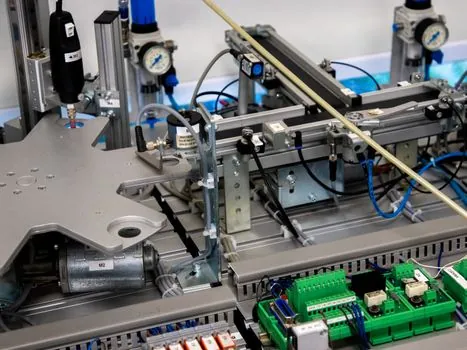
When no vendor patch exists, network segmentation, restricted access, controlled engineering workstations, and monitored remote connections become the primary controls rather than pretending the vulnerability has been remediated [S1]. Legacy systems may include unpatched firmware, no authentication, and no encryption, which makes the controller and its access path part of the same security boundary [S3].
Access controls should distinguish read-only monitoring from logic download, project upload, firmware changes, and administrator actions. An OPC UA gateway can provide a controlled data path while limiting direct exposure of the PLC, but its whitelist, certificate handling, alarm behavior, and failure mode must be tested before connection to production networks.
No patch strategy should change field behavior unexpectedly. For example, adding or removing an input can shift a logic transition, while enabling a new communication service can alter scan or network load [S1]. Treat every change as a controlled engineering release with test evidence, named approvers, and an executable rollback.
Standardize Evidence and Avoid Premature Automation
OT remediation commonly runs for months or years after vulnerability disclosure because operational constraints limit the standard IT patching timeline [S1]. A defensible record should therefore link each vulnerability to the affected PLC model, serial number, firmware version, network exposure, compensating controls, vendor support status, testing evidence, and approved remediation date.
Automation is appropriate for inventory, change initiation, log collection, and notification, but not for automatic downloads to a live controller. Unauthorized patching can also affect support terms.
These figures expose where operations and cybersecurity teams are converging on an enforceable patch window.
The practical answer is not a no-stop patch window for every PLC. It is a controlled procedure: validate program edits online where the manufacturer supports them, isolate unsupported systems with compensating controls, test gateways and parallel controllers before cutover, and reserve shutdowns for firmware changes that require them [S1][S2][S3].