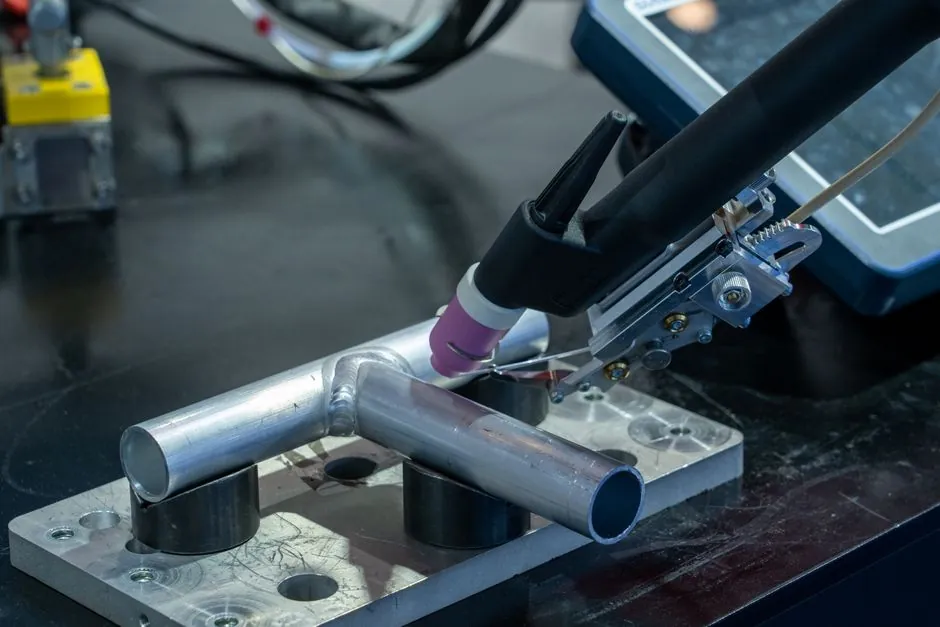
A 1.6 mm tungsten is suited to thin material up to 0.8 mm and amperage below 50 A, while a 2.4 mm electrode covers material from 0.8 to 3.2 mm [S1].
DCEN, DCEP and AC have different current ranges for each tungsten diameter, so the electrode must match both the welding process and the amperage selected for the joint [S3].
Start with the required amperage
The required amperage is the first constraint because a tungsten that is too small will overload the electrode, while an oversized electrode can make arc control less precise at low current. For GTAW, the tungsten carries the welding current without becoming the consumable filler; tungsten has a melting point of 3,410 °C and is selected for its high-temperature resistance and arc-stability characteristics [S5].
For DCEN, the documented ranges are 5–20 A for 0.51 mm, 15–80 A for 1.02 mm, 70–150 A for 1.59 mm, 150–250 A for 2.38 mm, and 250–400 A for 3.18 mm [S3]. For DCEP, the corresponding ranges are much lower: 5–15 A for 0.51 mm, 10–60 A for 1.02 mm, 50–100 A for 1.59 mm, 100–160 A for 2.38 mm, and 150–210 A for 3.18 mm [S3].
These values are not interchangeable. A 2.38 mm electrode rated for 150–250 A in DCEN has a DCEP range of only 15–30 A in the same table [S3]. The weld procedure and the base material determine whether DCEN, DCEP or AC is appropriate before the diameter is chosen.
Use diameter and thickness as a cross-check
Material thickness provides a practical cross-check on the amperage range. ESAB lists a 1.6 mm tungsten for material up to 0.8 mm and below 50 A, and a 2.4 mm tungsten for 0.8–3.2 mm material [S1]. A separate practical example places 3/32 inch, or approximately 2.38 mm, tungsten at 150–200 A for steel up to about 3/16 inch thick [S2].
These selections are consistent because both size and duty matter. The 2.38 mm electrode is substantially larger than the 1.59 mm electrode, and the published DCEN range rises from 70–150 A to 150–250 A [S3]. Thickness alone does not determine the answer, since a thick workpiece may still require a low-current pass, and a thin workpiece may require careful current control to avoid burn-through.
For a mixed fabrication job, use the largest current expected on any pass to check whether the proposed electrode is within its rated range. Then reduce current for thinner sections rather than changing to an electrode with no capacity at the set amperage.
Compare the main electrode sizes
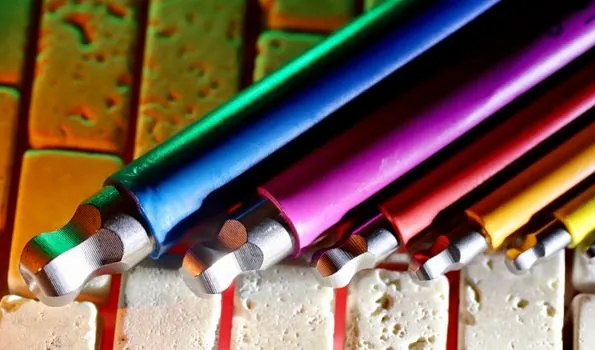
The practical comparison is between 1.59 mm, 2.38 mm, 3.18 mm and larger electrodes. The figures below use the DCEN column because that polarity is commonly relevant to TIG welding of carbon steel, stainless steel, nickel and titanium, subject to the selected electrode type and procedure [S3][S5].
The table also shows why a simple diameter-only rule is inadequate. The 3.18 mm electrode has a 250–400 A DCEN range but a lower DCEP range of 25–40 A, and its unbalanced AC range is 150–325 A [S3]. The correct choice is the smallest diameter that safely carries the selected process and amperage, not automatically the largest available electrode.
Account for polarity and AC waveform
DCEN and DCEP do not heat the tungsten in the same way, which explains their sharply different current limits. At 1/16 inch, or 1.59 mm, the listed DCEN range is 70–150 A, while DCEP is 10–20 A [S3]. At 3/32 inch, or 2.38 mm, DCEN reaches 150–250 A and DCEP reaches only 15–30 A [S3].
AC adds another variable because electrode heating depends on the waveform. For a 2.38 mm electrode, the listed high-frequency unbalanced AC range is 100–235 A, compared with 140–235 A for the EWTh-3 column and 100–235 A for balanced AC [S3]. The balanced-AC values for 1.59 mm are 60–120 A, and for 3.18 mm they are 160–250 A [S3].
AC is especially relevant to aluminum and magnesium. Pure tungsten, classified EWP, forms a clean balled tip and is noted for arc stability with balanced AC, including AC sine-wave welding [S5]. For the correct end preparation, AC amperage appropriate to the electrode diameter is used to form the ball [S5].
Match electrode composition to the application
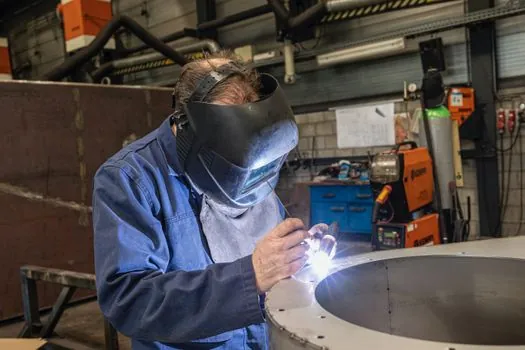
Diameter establishes electrical capacity, but electrode composition establishes arc-start behavior, tip stability and suitable materials. Common classifications include EWP for pure tungsten, EWTh-2 for 2 percent thoriated tungsten, EWCe-2 for 2 percent ceriated tungsten, and additional lanthanated, zirconiated and rare-earth types [S5]. The electrode material must be selected for the base metal, thickness and whether the procedure uses AC or DC [S5].
Pure tungsten contains 99.50 percent tungsten and is generally associated with AC welding, while 2 percent thoriated tungsten contains 1.70–2.20 percent thorium and is used for DC welding as well as specialty AC applications [S5]. Thorium improves electron emission and arc starting, allowing a higher current-carrying capacity and reducing electrode consumption [S5]. Because thorium is radioactive, the manufacturer’s handling instructions and material safety data sheet must be followed [S5].
End preparation is a third control point. Common GTAW preparations are balled, pointed and truncated, and the suitable shape depends on the electrode type, current and application [S5]. A tungsten selected only by diameter can still produce poor starts or unstable fusion if the material and tip preparation are wrong.
Recognize the limits of tabulated ranges
Published current ranges are operating guides, not permission to run any electrode continuously at its upper limit. Procedure current can change with welding position, base metal, filler metal, shielding gas, equipment and other variables [S3]. Tungsten dimensions also vary in both inch and metric form, including 0.010 inch, 0.020 inch, 0.040 inch, 1/16 inch, 3/32 inch, 1/8 inch, 5/32 inch, 3/16 inch and 1/4 inch [S3].
Other failure modes follow from process mismatch. An undersized tungsten may overheat, lose tip geometry or contaminate the weld, while an oversized electrode used at very low current may not provide the same arc-start response as a smaller, more responsive electrode [S5]. Incorrect polarity can exceed the DCEP rating even when the amperage appears adequate for DCEN work [S3].
Preventive maintenance also depends on how the electrode is used. DCEN thoriated and ceriated electrodes are favored for arc starts, but balled tips suit different AC applications, and pointed or truncated preparation may be required for specific work [S5]. Keep amperage within the electrode-type range for the chosen polarity and inspect tip condition rather than assuming that any electrode of the same diameter behaves identically.
A repeatable selection method

A sound selection sequence starts with the weld procedure and base material, followed by the amperage required for that joint. Next, choose a tungsten diameter whose published range contains the operating current for the specified polarity or AC waveform. Thickness is the cross-check, and electrode composition plus tip preparation complete the decision [S1][S3][S5].
For example, a 100 A DCEN requirement rules out a 3.18 mm electrode from the general selection range because its listed minimum is 250 A, while a 1.59 mm electrode falls within its 70–150 A range [S3]. For a 200 A DCEN requirement, a 2.38 mm electrode sits within its 150–250 A range, whereas a 1.59 mm electrode does not [S3]. If the material is 1.0–3.0 mm thick, the 2.4 mm size also aligns with ESAB’s thickness guidance [S1].
Verify the final combination against the electrode manufacturer’s current table and the qualified welding procedure. The key trackable checks are the selected amperage against the polarity-specific range, the diameter against the material thickness, and the electrode classification and tip shape against the base material and power source [S1][S3][S5].