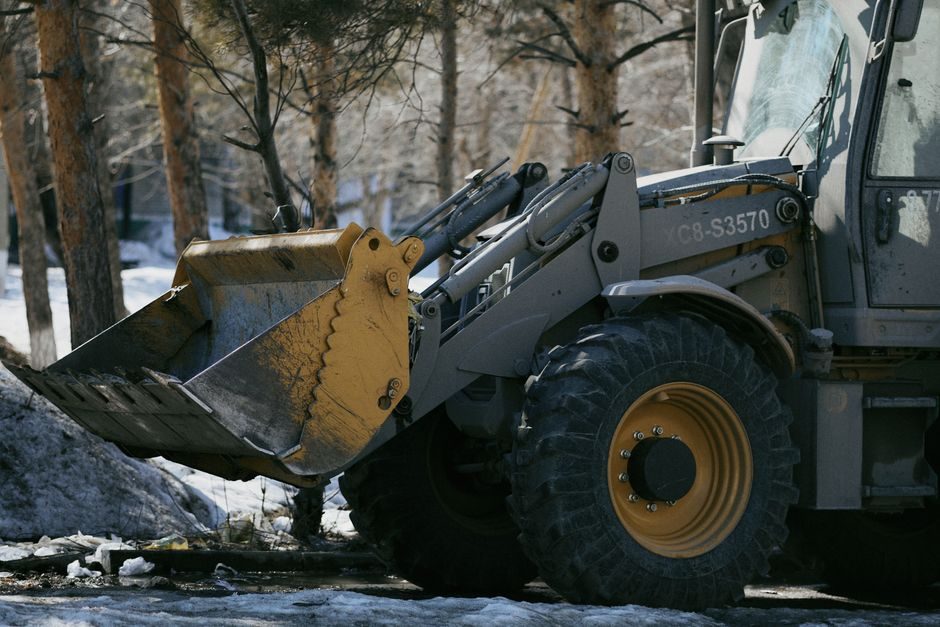
Selecting a cold milling machine comes down to four hard numbers: milling width, maximum milling depth, operating weight and engine power, with the working width window for the global market running roughly 0.35 m up to 2.2 m and engine outputs spanning approximately 80 kW to 640 kW depending on machine class [S1][S2][S3].
The job dictates the class. A 0.35–0.5 m micro mill (often 80–120 kW) handles trench cuts, manhole recesses and patch repairs; a 1.0–1.3 m compact mill (≈150–260 kW) covers urban street resurfacing; a 2.0 m class mill (≈300–470 kW) runs highway mainline work, while 2.0–2.2 m large mills with 470–640 kW engines tackle full-depth removal on motorways and airport aprons [S1][S2].
Milling Width and the Four Size Classes
Cold milling machines are conventionally grouped into micro, small, medium and large classes, with the milling width being the primary sizing axis: micro units cut 0.35–0.5 m, small units 0.5–1.0 m, medium units 1.0–1.5 m and large units 1.5–2.2 m [S1]. Mainline Chinese-spec compact models such as the CLX-1000 are built around a 1.0 m drum for expressway, road, airport, parking-lot and freight-yard surface removal, including oil films, bitumen protrusions and rut tracks [S1].
For a perspective on how machine-class size cascades through the broader construction-equipment catalog, the linear bearing buying guide 2026 walks through a similar load-and-shaft tradeoff pattern that applies when the linear guide rails under the rotor gearboxes have to be specified. Working width also sets the number of cutting teeth and the conveyor geometry; wider drums simply carry more tungsten picks and a longer primary conveyor, both of which scale rotor weight and power draw in step.
Engine Power, Operating Weight and Rotor Drive
Engine output on the current generation of cold milling machines ranges from roughly 80 kW on micro mills to 640 kW on large highway-class machines, with the engine sized so that specific energy stays inside the envelope the rotor can transmit without stalling [S1][S2]. Operating weight rises in step: a sub-0.5 m micro mill typically sits near 6–9 t, a 1.0 m compact class like the CLX-1000 lands in the 13–16 t band, and 2.0 m class machines routinely exceed 30 t with the rotor, conveyor and water tank ballasted for traction [S1][S2].
Rotor drive is the second hard constraint. Mechanical belt drive dominates the small and medium classes, while large-class mills increasingly use a dual-speed hydraulic-mechanical rotor gearbox so the operator can swap between a high-torque/low-rpm mode for deep cuts (up to 300–350 mm on 2.0 m machines) and a high-rpm mode for fine-toothing at 30–50 mm depth [S2]. Track geometry also matters: full-track machines carry higher ground pressure but pull more steadily in deep cuts, while wheeled units are limited to shallow lifts on bound bases.
Cutting Depth, Pick Spacing and Tooling Cost
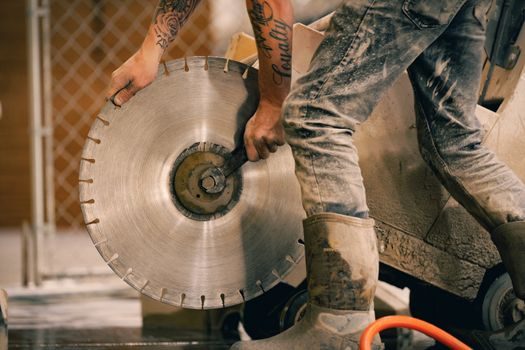
Maximum milling depth is the second selection lever after width, and on the current generation it runs from 100–150 mm on micro mills to 300–350 mm on large highway-class machines, with 200–250 mm being the standard envelope for 1.0–1.3 m compact mills [S1][S2]. Cutting depth directly controls production rate: a 1.0 m mill at 200 mm depth moves roughly 0.20 m² per linear metre of travel, while a 2.0 m mill at 300 mm depth can move 0.60 m²/m, a 3× throughput jump that justifies the larger engine and heavier chassis on long motorway stretches [S1][S2].
Pick spacing on the drum is set by the application: 15 mm spacing for fine milling of thin overlays (typically 30–50 mm deep), 18–20 mm for standard asphalt removal, and 22–25 mm for full-depth cuts into bound base. Tungsten-carbide pick consumption is one of the largest variable costs in milling, typically running 0.5–2 picks per square metre of milled surface depending on aggregate hardness and depth, and should be priced in when comparing machine classes [S1].
Versus Pavers, Recyclers and Reclaimers
Cold milling is one of four common road-rehabilitation processes, the others being hot-mix paving, cold in-place recycling (CIR) and full-depth reclamation (FDR). A cold milling machine removes the existing asphalt surface to a controlled depth and loads the millings onto trucks for off-site recycling, leaving a textured surface that improves bond with the next overlay. CIR mills, by contrast, add emulsified asphalt or foamed bitumen inline and relay the mix in a single pass; FDR pulverises the asphalt and a portion of the underlying base, mixing in stabilising binder in place. [S1]
The decision is depth-driven: millings removed to 50–150 mm go to a paver for re-laying, depths of 100–200 mm with a foamed-bitumen train are the CIR envelope, and depths of 200–400 mm including the unbound base are the FDR envelope. A 0.5–1.0 m mill is also a frequent tool on civil sites beyond roadwork, including the trenching cuts that feed cable and pipeline laying, and the same drum-and-pick design language is shared by cold box core machine tooling in the foundry chain. For thin-wheel pattern work, the pick spacing and drum width maps directly onto the crossed roller guide tolerance band the rotor must hold under load.
Use Cases, Limits and Failure Modes
Cold milling is the right call when the existing surface is rutted, flushed or cracked but the underlying base is sound and the project budget cannot absorb a full-depth reconstruction. Micro mills (0.35–0.5 m) suit utility cuts, manhole frames and small patch repairs; compact 1.0–1.3 m mills cover urban streets, parking lots and airport taxiways; 2.0–2.2 m large mills target highway mainline work where production rate dominates economics [S1][S2].
Cold milling is the wrong tool where the base has failed, where utilities lie shallow in the cut envelope, where dust suppression is critical and water is scarce, or where the surface contains steel reinforcement or mesh that will destroy picks. Failure modes operators should price in: pick seat wear (replaceable holders, but routine), rotor bearing failure under continuous deep cutting, track-chain stretch on tracked machines, conveyor belt splice failures, and water-system nozzle clogging on fine-milling drums.
Sourcing, Standards and Sizing Checklist
The mainline OEM set on the global market still groups around Wirtgen, Caterpillar, Dynapac, XCMG, Shantui and Huatong, with used inventory dominated by Wirtgen W100, W2000 and similar 0.5–2.0 m units that are widely available on equipment-trading platforms at price points well below new [S3][S4]. Chinese-spec 1.0 m class compact mills such as the CLX-1000 sit at the low end of new-machine pricing and are specified for expressway, road, airport, parking-lot and freight-yard surface removal [S1].
A practical sizing checklist for a procurement engineer: (1) define the maximum milling width the project requires; (2) set the maximum milling depth from the asphalt lift thickness plus any bond-breaker; (3) compute the production rate target in m²/day and back-solve for the engine-power class; (4) confirm the available transport weight and width against the machine's operating and shipping dimensions; (5) price pick consumption and conveyor wear parts into the hourly operating cost; (6) verify water-tank capacity and on-site dust-control rules for the drum. Watch the next Wirtgen, XCMG, Shantui and Dynapac model-year releases through 2026 for any step-change in milling depth or rotor-drive efficiency, and track used-platform price spreads for 0.5–2.0 m Wirtgen and Caterpillar units as the leading indicator of fleet-replacement cycles.