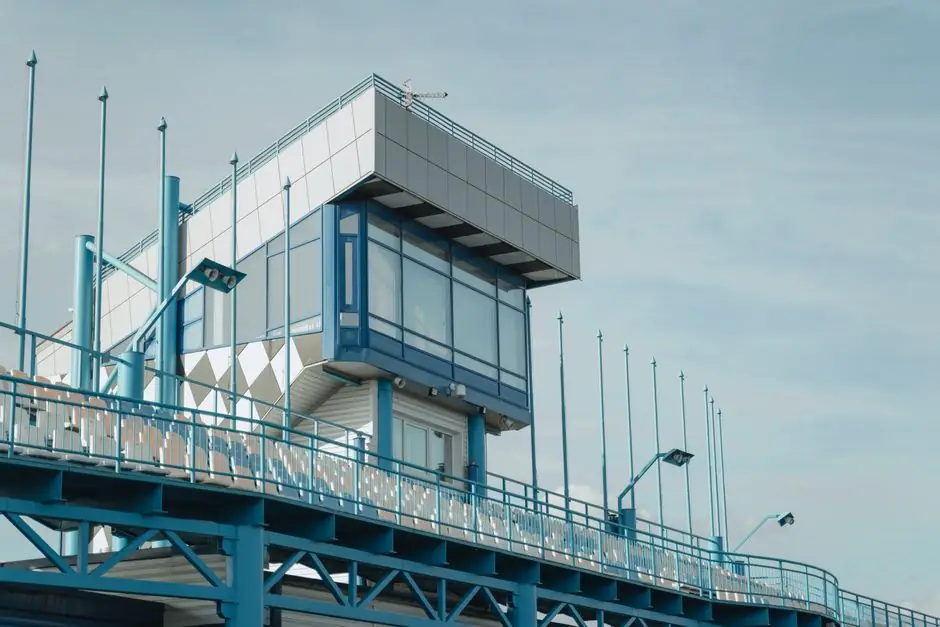
A weather station installed on a structural-fabrication job is certified through three independent evidence chains, not one: instrument performance (WMO No. 8 traceability and ISO 17025 calibration), electrical/safety compliance (IEC 61010-1 and a site-appropriate safety certification mark), and structural adequacy of the mast, base plate, and anchor bolts under ASCE 7 wind and ice loading per AISC 360 [S1][S3].
For a fabrication yard, tower, or process-platform build, a 10 m mast with a cup anemometer, vane, PTU sensor, and a pressure transmitter for barometric reference is the typical configuration; the certification dossier is what the client or insurer audits, not the instrument catalogue sheet.
Scope: what the checklist actually covers
The structural-fabrication weather station checklist covers four blocks, each with its own audit trail: (1) instrument performance and calibration, (2) mast and foundation structural design, (3) electrical safety, surge, and EMC, and (4) installation, commissioning, and sign-off records [S1]. A scaffold-style template is the correct reference for the inspection cadence because it forces footings, standards, ledgers, bracing, and access points to be verified by a qualified person, with re-inspection triggered after adverse weather or structural modification [S1]. The same logic, documented inspection points plus a re-inspection trigger, is what an owner expects to see on a weather station mast.
For a substation-adjacent fabrication job, the checklist must be merged with the engineering substation inspection flow that covers QA/QC, grounding, protection, commissioning, and documentation against current IEEE/NETA standards, because the same grounding electrode, lightning down-conductor, and surge protective device serve both the weather sensor and the substation [S2]. Overlooking this overlap is one of the most common causes of a failed first audit.
Instrument performance and calibration evidence
An anemometer accuracy class per WMO No. 8 (sit the sensor at 10 m ±0.5 m, resolution 0.5 m/s, range 0–75 m/s typical) and a wind vane threshold of ≤0.5 m/s must be evidenced by a calibration certificate from an ISO/IEC 17025-accredited lab, with traceability to a national metrology institute [S1]. Cup linearity and offset are the two numbers an auditor will read first; a generic "factory calibrated" line is rejected.
For the atmospheric reference, the barometric pressure transmitter needs a documented accuracy band (commonly ±0.25 hPa at 20°C or better), a long-term stability spec (≤0.1 hPa/year is a common OEM number for the better industrial units), and a calibration certificate that names the serial number, not just the model. Temperature and relative humidity sensors require the same serial-level traceability; a site acceptance test at three set points (typically 0°C, 20°C, 40°C) closes the loop.
Structural design: mast, base, and anchor bolts
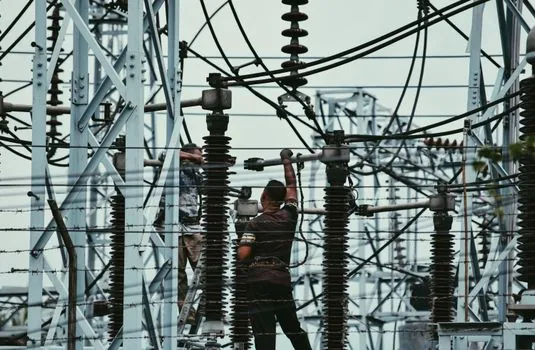
The mast and base plate must be designed for the governing load case under ASCE 7 (wind, ice, and combined wind+ice for the project site), with steelwork to AISC 360 and anchor bolts to AISC Steel Construction Manual Appendix D (or the project's adopted equivalent) [S1]. For a 10 m mast on a fabrication yard, a basic wind speed of 90–115 mph (3-second gust) is the common design bracket depending on county, and the ice thickness (0–1.0 in radial) is added per the same risk category.
Galvanizing or coating thickness (e.g., ASTM A123 hot-dip with 86 µm average minimum for structural shapes) must be on the material certificate, not just a paint-spec line. Anchor-bolt torque values must be written into the commissioning record; a typical 1 in diameter ASTM F1554 Grade 36 anchor in a 2 in embed hits roughly 250 ft-lb at snug-tight plus 1/3 turn, but the actual torque to be applied is the one called out on the fab drawing, not a generic web value. The WMO siting requirement (10 m height over open ground, 10× obstacle height clearance) is structural as well as meteorological, because a sensor mounted lower than the design height invalidates the wind reading the structural engineer assumed.
Electrical, surge, EMC, and safety certification
The sensor head, datalogger, and any radio/cellular modem must carry an electrical safety mark appropriate to the jurisdiction (UL/ETL/CSA for North America, CE-RED plus IEC 61010-1 for the measurement function) and a safety certification mark on the enclosure, not just on the data sheet [S1]. Surge protection must be sized to IEC 62305 and coordinated across the down-conductor, the SPD at the mast base, and the SPD at the data-acquisition panel; "we used the same SPD as the lighting circuit" is not an acceptable line in the submittal.
EMC compliance to FCC Part 15 (intentional radiators) or EN 55032/CISPR 32 (unintentional) is checked against the exact transducer model installed, not a family-level declaration; a substation-style build, where the same mast may live next to HV switchgear, also requires the substation-style grounding and protection review referenced in the IEEE/NETA-aligned substation checklist flow [S2]. Earthing resistance at the mast base is typically targeted at ≤10 Ω for instrument-grade stations and ≤5 Ω where the mast doubles as a lightning air terminal.
Installation, commissioning, and re-inspection triggers

Commissioning records must capture four items that auditors always look for: as-built height of the anemometer (laser-measured, not tape-measured), magnetic-north offset for the vane (with declination applied), datalogger timestamp drift (NTP-synced, recorded at start and end), and a serial-numbered photo of the installed array [S1]. A WMO-class siting cannot be claimed without the as-built height matching the design height; a ±0.5 m error in siting is enough to invalidate the wind record.
Re-inspection cadence mirrors the scaffold model: a documented post-event inspection after any named storm, hurricane, or seismic event above the design threshold; after any structural modification including guy-wire retensioning; and on a fixed annual cycle with a quarterly functional check of the anemometer cups and vane bearings [S1]. The same "qualified person, documented evidence, re-inspect after adverse event" pattern shows up in the hangar/MRO template and translates cleanly to a fabrication-yard mast [S3].
Comparison: the three submittal bundles
Three submittal bundles must be reviewed and approved independently, and they are typically reviewed by three different people: a meteorologist or QC engineer, a structural engineer, and an electrical/safety engineer. Bundling them into a single "weather station" file is the single biggest cause of a stalled audit. [S3]
Bundle 1 (instrument) is reviewed against WMO No. 8, ISO/IEC 17025 calibration, and serial-level traceability; bundle 2 (structural) is reviewed against ASCE 7 load cases, AISC 360 member checks, and ASTM material/galvanizing certificates; bundle 3 (electrical/safety) is reviewed against IEC 61010-1, the jurisdiction safety mark, IEC 62305 surge coordination, and EMC compliance to FCC Part 15 or EN 55032 [S1][S2]. A clean first-pass submission carries all three with no cross-references, because each is meant to stand on its own if the auditor is a specialist in that one field.
Common failure points and how to avoid them

The four highest-frequency first-pass failures are: (1) calibration certificate names the model but not the serial number, (2) EMC/safety certificate covers the datalogger but not the transducer model that is actually bolted to the mast, (3) anchor-bolt torque value is generic rather than project-specific, and (4) as-built anemometer height is missing from the commissioning record [S1][S2]. All four are zero-cost fixes at submittal time and significant cost if the auditor issues a non-conformance report after erection.
Two patterns from the aviation hangar maintenance checklist translate directly to a fabrication-yard mast: re-inspection must be triggered by adverse weather, not just by the calendar, and the documentation must be in a single searchable system rather than scattered PDFs [S3]. For a working fabrication yard, the same logic that drives OSHA 1910.179 overhead crane records applies: missing documentation is treated identically to missing inspections, and the penalty per citation is the same as if the inspection had not happened at all [S3].
Verification: how to confirm a supplier's certificate is real and in scope
Three quick checks separate a valid certificate from a marketing sheet. First, the issuing body's accreditation number must resolve on the issuing body's own register (an A2LA or ANAB number for ISO/IEC 17025, a Notified Body number for CE-RED, an OSHA NRTL mark for UL/ETL). Second, the certificate scope clause must name the exact model and the exact standard; a "covers similar products" line is a red flag. Third, the certificate's issue and expiry dates must cover the fabrication and commissioning window, with re-calibration dates already scheduled for the as-installed sensor, not the factory-floor unit. [S3]
For a substation-adjacent build, push the structural-fabrication checklist into the same review pipeline as the substation QA/QC, grounding, protection, commissioning, and documentation flow so the weather-station mast is treated as one more inspected item on the same form, not a side-attach [S2]. Treating it that way also surfaces the two live signals worth tracking: any change in WMO siting clearance after plant expansion, and any change in the EMC environment after a new VFD or large UPS is commissioned within 50 m of the mast.
For a related structural-decision walkthrough on adjacent instrumentation, the signal calibrator compatibility with corrosion resistance requirements piece covers the same serial-level traceability logic on the bench side. For the structural side of the same family of decisions, single girder crane selection for mining auxiliary lifting: spec-first decision guide applies the same AISC 360 plus OSHA 1910.179 evidence-chain pattern to overhead crane certification, and a fabrication yard typically needs both the weather-station mast and the crane to clear the same audit window.