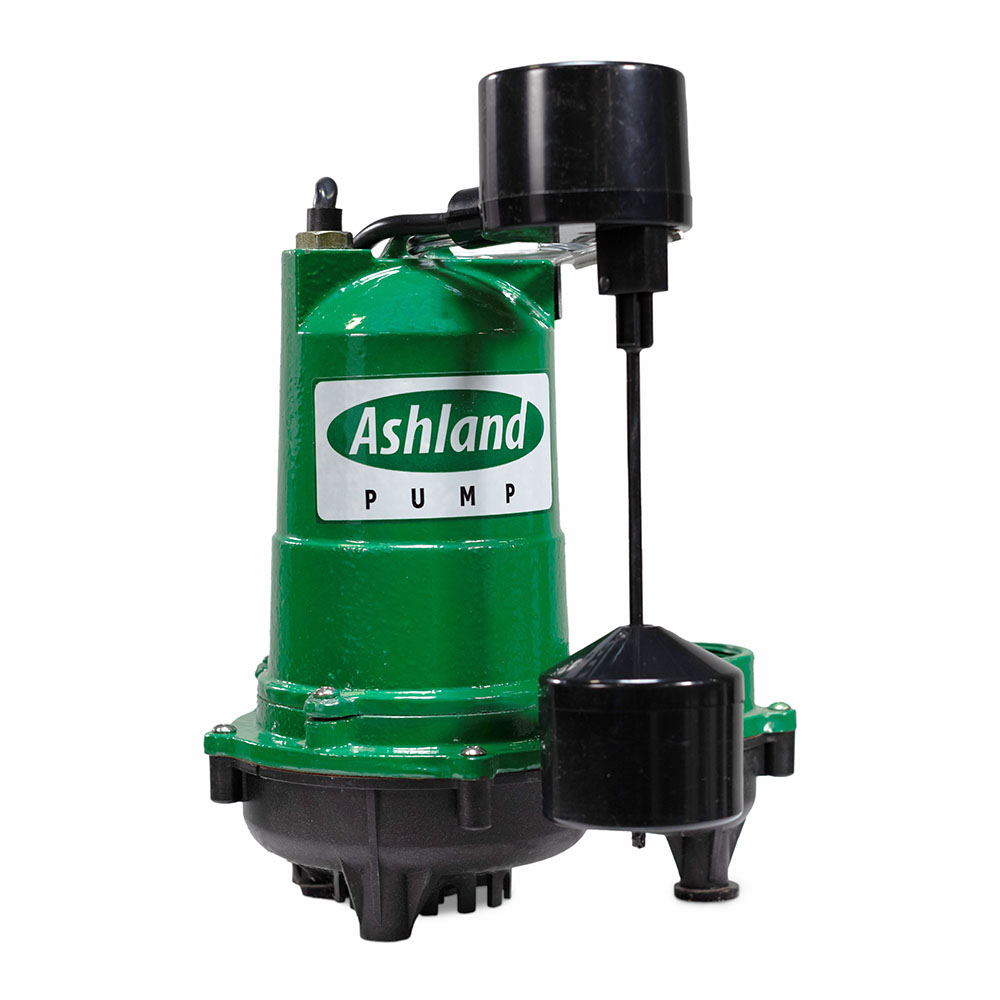
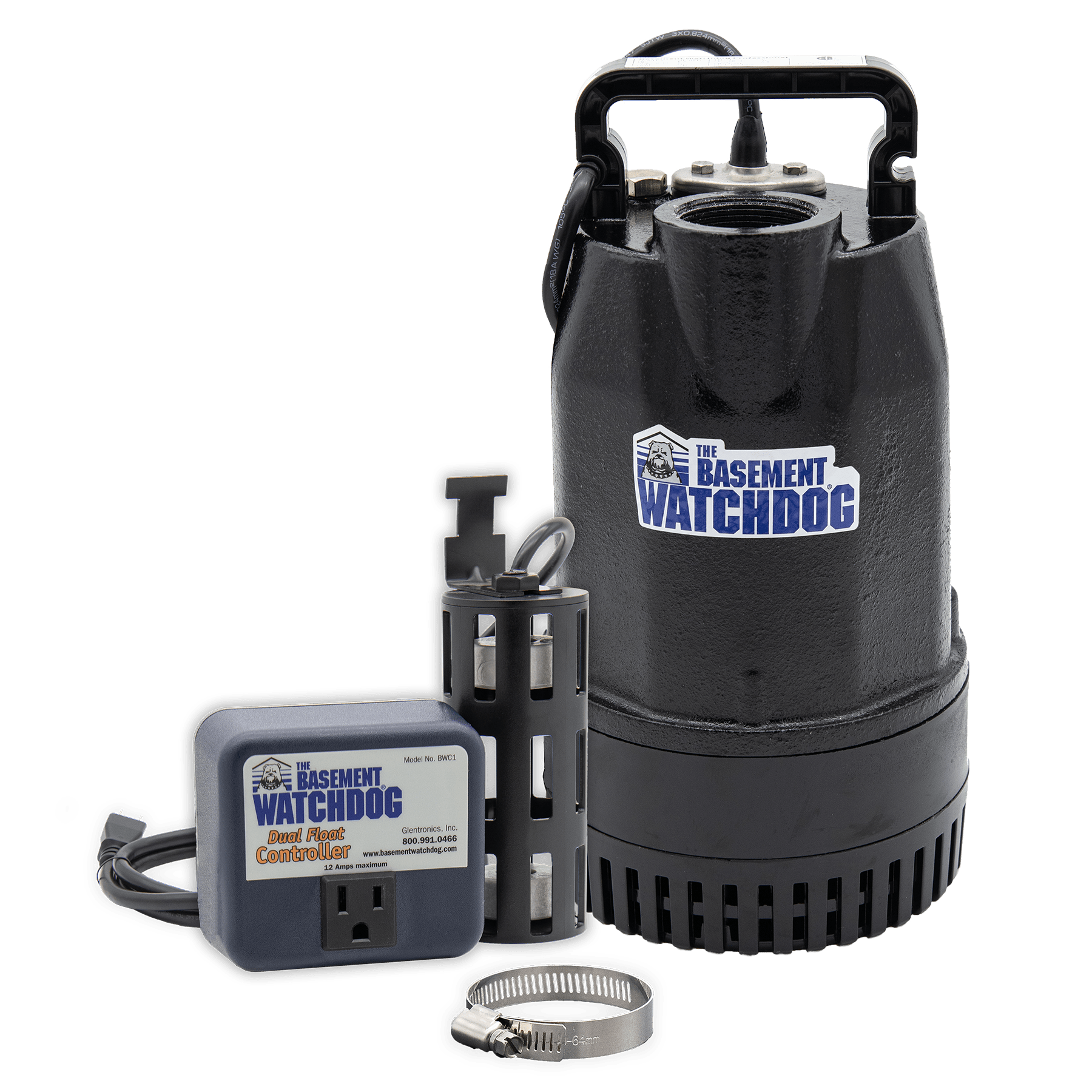
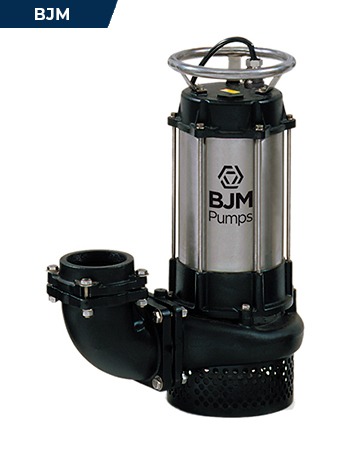
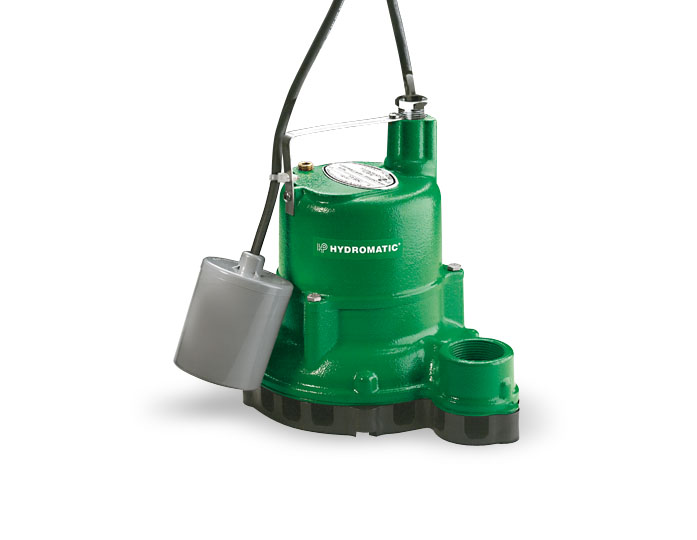
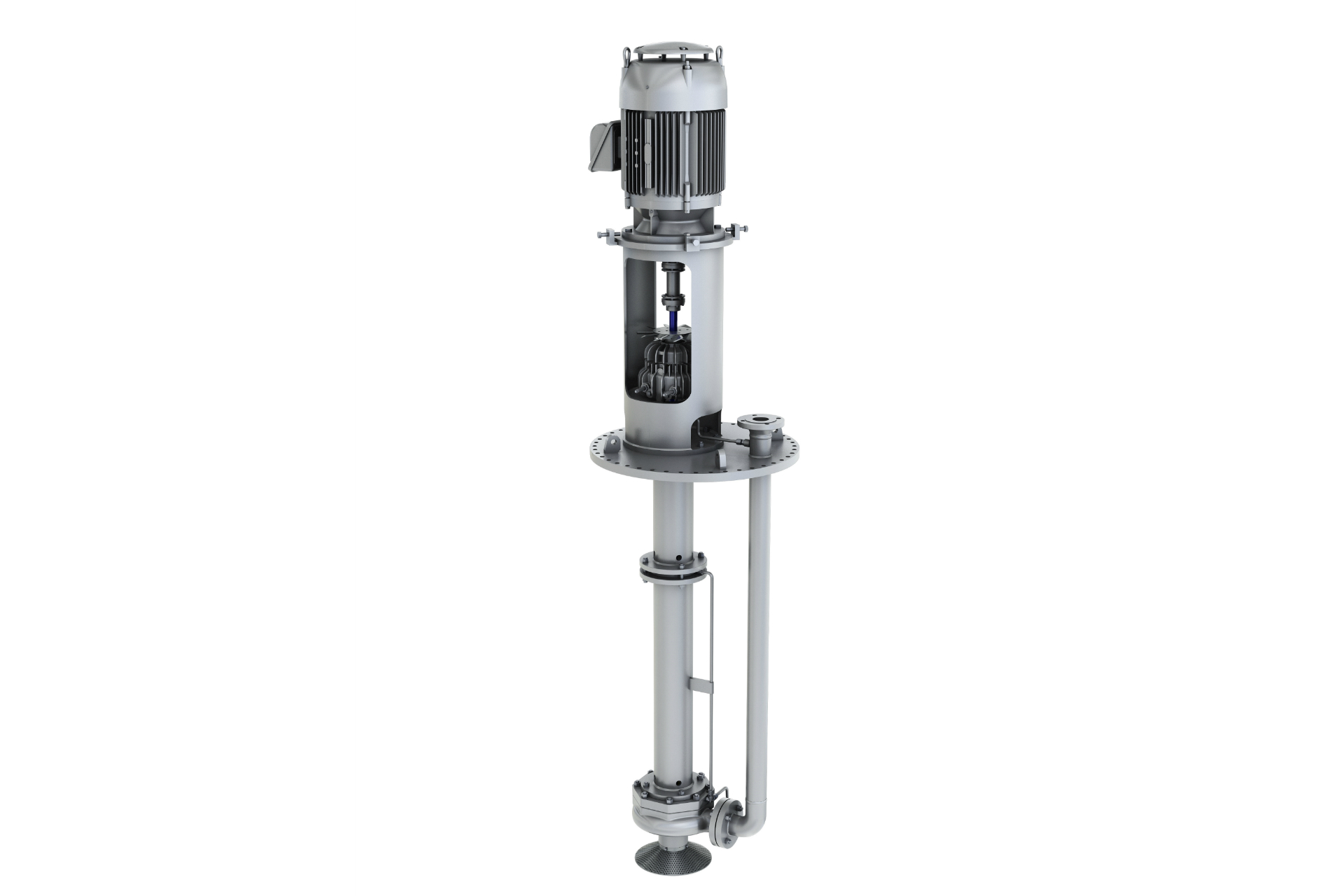
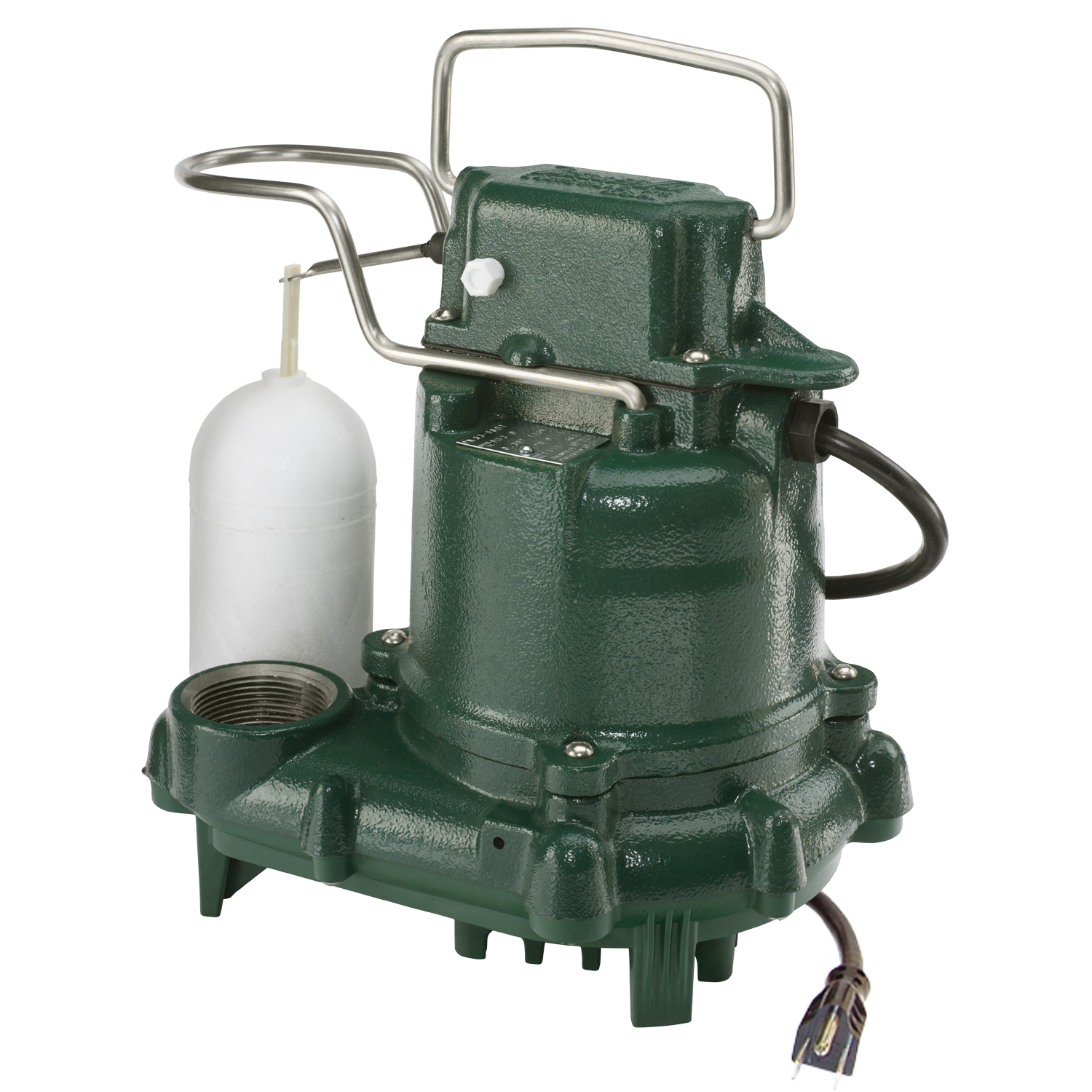
A sump pump is a submersible or pedestal pump installed in a sump pit to remove accumulated groundwater and surface drainage, protecting basements, crawl spaces, foundations, elevator shafts, and industrial floor pits from flooding. When the pit fills, a float or pressure switch starts the motor, and a check-valved discharge pipe lifts the water to a storm drain or daylight outlet outside the structure.
While residential units dominate in volume, the same device family scales up into effluent pumps, sewage ejectors, and dewatering pumps for construction sites, mines, and wastewater lift stations. The selection logic is identical across all of them: match required flow at the actual total dynamic head, choose solids-handling capacity for the liquid, and pick materials and switching that survive the service environment.
This guide is written for procurement and design engineers specifying sump, effluent, and dewatering pumps. It runs through 6 chapters covering what a sump pump is, the submersible and pedestal types, switching and impeller technologies, materials and media, the spec-sheet parameters that drive selection, and a step-by-step decision sequence, followed by 7 selection FAQs and maker comparisons. North American units are evaluated to UL 778 (Motor-Operated Water Pumps) under the National Electrical Code (NFPA 70), with SSPMA guidance and NSF/ANSI certification applying to ejector and potable-water duties.
Chapter 1 / 06
What is a Sump Pump
A sump pump is a motor-driven water pump installed at the low point of a collection basin, called a sump or sump pit, where unwanted water gathers by gravity. Its job is to lift that water out of the pit and discharge it away from the structure before the level rises high enough to flood the surrounding space. The classic application is a residential basement: groundwater seeping through foundation walls, perimeter drain tile, and footing drains is routed to a pit, and the pump empties the pit on demand. The same principle protects crawl spaces, elevator and machine pits, parking garages, and industrial process floors.
A complete sump pump installation is a small system, not just a motor. It consists of the pit or basin (typically a sealed plastic liner), the pump itself, a level-sensing switch that starts and stops the motor, a vertical discharge pipe, a check valve to prevent backflow, and often a vented, gasketed lid to control radon and humidity. Industrial dewatering versions add a strainer base, an alarm float, and sometimes a duplex (two-pump alternating) control panel for redundancy and continuous duty. The pump is the active element, but the switch and the check valve determine how reliably the whole system behaves over years of service.
The core physics is centrifugal pumping. An impeller spinning inside a volute casing accelerates water outward by centrifugal force, converting motor torque into flow and pressure (head). A sump pump is therefore a close relative of any centrifugal pump, distinguished mainly by its submersible packaging, its automatic level control, and its tolerance for the small solids and debris that wash into a pit. Unlike a clean-water booster pump, a sump pump is built to ingest grit, sand, and occasional pebbles without seizing.
The market scale is large. Sump pumps are among the highest-volume pump categories sold worldwide because nearly every basement in a high-water-table or freeze-thaw climate needs one, and building codes in many flood-prone regions effectively require them. Established North American makers such as Zoeller, Liberty Pumps, Wayne (a Pentair brand), Hydromatic and Myers (Pentair Aurora), Franklin Electric (Little Giant), and Barmesa supply both residential and commercial lines, while Grundfos, Wilo, KSB, and Tsurumi anchor the industrial dewatering and wastewater end of the spectrum.
Four engineering metrics decide whether a sump pump fits an application: the flow rate it delivers at the actual total dynamic head, the maximum solids size it can pass without clogging, the duty cycle and motor cooling it can sustain, and the corrosion resistance of its wetted parts. A pump that is correctly sized for one site can be entirely wrong for another with a deeper pit, dirtier water, or higher inflow, which is why selection always starts from the job conditions rather than from a horsepower number on a box.
Chapter 2 / 06
Sump Pump Types and Classification
Sump pumps split first by where the motor sits (submersible versus pedestal) and second by the kind of liquid they handle (clear-water sump, effluent, or sewage). A third axis, primary versus backup, determines how the installation behaves during power loss. Confusing these categories is the most common and most expensive selection error, because a clear-water sump pump dropped into a sewage pit will clog and burn out within weeks. The table below summarizes the primary classification.
Type
Motor location
Solids handling
Typical service
Submersible sump
Inside the pit, water-cooled
≤ 9.5 mm (3/8 in)
Basement and crawl-space drainage
Pedestal sump
On a column above the pit
≤ 9.5 mm (3/8 in)
Budget and shallow-pit installs
Effluent pump
Submersible
≤ 19 mm (3/4 in)
Septic tank gray water, drain fields
Sewage / ejector pump
Submersible
≤ 51 mm (2 in)
Below-grade toilets, lift stations
Backup (DC or water)
In-pit, secondary
≤ 9.5 mm (3/8 in)
Power-failure protection
Submersible sump pumps are sealed units that sit fully inside the pit, submerged in the water they pump. Water surrounding the motor muffles noise and carries away heat, so submersibles run quietly and tolerate longer duty cycles. They are generally more efficient and are the right choice for finished basements and continuous-inflow sites. The trade-off is serviceability: the unit must be lifted out for inspection, and the shaft seal that keeps water out of the motor is a wear item that eventually fails. Cast-iron submersibles dissipate heat better and outlast thermoplastic ones in demanding service.
Pedestal sump pumps keep the motor on a column well above the water, with only the volute and intake at the bottom of the pit. Because the motor stays dry it is cheap, easy to inspect, and simple to repair, which makes pedestal units popular for budget installs and shallow pits. The penalties are noise (the open motor is audible) and exposure: dust, impact, and humidity reach the motor directly, and the tall column needs vertical clearance under the pit lid. Pedestal models commonly run 1/3 to 1/2 HP (0.25 to 0.37 kW).
Effluent and sewage pumps are the heavy-duty members of the family. An effluent pump is built to pass the gray water that leaves a septic tank, handling solids up to roughly 19 mm (3/4 inch), while a sewage pump uses a vortex or non-clog impeller and a larger 50 mm (2 inch) or 76 mm (3 inch) discharge to move raw wastewater with soft solids up to 51 mm (2 inch). Sewage ejector horsepower ranges from about 4/10 HP into multi-horsepower units for larger households and commercial lift stations.
Backup pumps exist because the primary pump is useless during the storm-driven outages when flooding is most likely. A DC battery backup uses a 12 V deep-cycle battery with an inverter or a DC motor; a water-powered backup runs on municipal water pressure through a Venturi jet and needs no electricity at all. Industrial sites instead use duplex configurations where two identical pumps alternate and a standby panel starts the second pump if the first cannot keep up.
Chapter 3 / 06
Switching and Impeller Technologies
Two subsystems make a sump pump automatic and clog-resistant: the level switch that decides when to run, and the impeller that decides what the pump can swallow. Field failures cluster heavily in the switch, because it is the part with moving contacts immersed in dirty water. Choosing the correct switch type for the pit geometry is therefore one of the highest-leverage decisions in the whole specification. The table below compares the four mainstream switch technologies.
Switch type
Mechanism
Best pit
Relative reliability
Tethered float
Buoyant float on a flexible cord
Wide, deep pits
Medium
Vertical float
Float sliding on a vertical rod
Narrow, small basins
Medium-high
Diaphragm (pressure)
Water pressure flexes a diaphragm
Congested, tight pits
Medium-high
Electronic (solid-state)
Capacitive or conductive sensor, no moving parts
Any, debris-prone
High
Tethered float switches hang a buoyant float on a flexible cord. As the level rises the float swings up and trips the switch, and as it falls the float drops and cuts power. The long swing gives a wide on-off band, so the pump runs less often and rests longer between cycles, which helps the motor cool. The catch is that the float needs room to swing freely, so tethered switches suit wide, deep pits; in a narrow basin the float can snag on the pipe or wall, and trapped debris can make it hang up.
Vertical float switches guide the float up and down a fixed rod rather than letting it swing. This keeps the float captive and predictable, so vertical switches fit narrow basins where a tethered float would jam. The on-off band is shorter, which means more frequent cycling, but the action is positive and the switch is harder to fool. Vertical floats are usually more efficient in tight spaces than tethered units and cheaper than diaphragm switches, making them the default on many compact residential pumps.
Diaphragm (pressure) switches dispense with an external float entirely. Rising water increases the pressure on a sealed diaphragm, which flexes and actuates the switch contacts. Because nothing protrudes into the pit to snag, diaphragm switches work well in congested or undersized basins. They are more compact than float switches but can be sensitive to debris packing against the sensing port, so periodic cleaning matters.
Electronic (solid-state) switches use capacitive or conductive sensors with no moving parts at all, which makes them the most reliable and longest-lived option, often lasting 10 years or more. They resist the fouling and mechanical wear that eventually defeat float switches and can add adjustable on-off levels and alarm outputs. On the discharge side, impeller geometry sets the solids limit: a vane (closed) impeller is efficient but clogs on stringy material, while a vortex (recessed) impeller spins the water into a whirlpool so solids pass without touching most of the vane, trading some efficiency for non-clog reliability in effluent and sewage duty.
Chapter 4 / 06
Materials, Media, and Sizing Standards
The wetted materials of a sump pump decide how long it survives in a given pit, and the basin geometry decides how stably it cycles. The three structural materials in common use are cast iron, thermoplastic, and stainless steel, each with a clear cost-versus-durability position. The liquid being pumped, from clean groundwater to gritty effluent, then dictates which material and which impeller belong in the pit.
Cast iron is the workhorse housing and impeller material. It is heavy, rigid, and resists impact, and crucially it dissipates motor heat far better than steel or aluminum, which lets a cast-iron submersible run longer duty cycles without overheating. Cast-iron bodies are the default for continuous-duty and effluent service and routinely outlast thermoplastic in harsh conditions. The penalty is weight and a finish that can rust at unpainted edges over many years.
Thermoplastic (reinforced polypropylene or similar) makes a light, inherently corrosion-proof pump at lower cost. It is well suited to intermittent residential drainage and to mildly aggressive water that would attack iron. The limitation is heat: plastic housings do not shed motor heat as well, so thermoplastic units are happiest on lighter duty cycles. Stainless steel sits at the top of the range, combining high corrosion resistance with strength for industrial, commercial, and municipal service where chlorides, mild chemicals, or abrasive solids would destroy iron or plastic.
Basin sizing is as important as pump choice. A pit that is too small forces the pump to short-cycle, starting and stopping rapidly, which is the single fastest way to wear out a motor and switch. Industry practice puts most residential pits at 18 to 24 inches (450 to 600 mm) in diameter and 22 to 36 inches (560 to 910 mm) deep; an 18-inch pit holds roughly one gallon (3.8 L) per inch of depth, and the common drop-in liner is about 26 gallons (98 L). Sewage ejector basins start at 18 by 30 inches and grow to 30 inches minimum diameter for duplex systems. The table below maps liquid to recommended pump and material.
Liquid in the pit
Recommended pump
Material / impeller
Clear groundwater, drain tile
Submersible or pedestal sump
Thermoplastic or cast iron, vane impeller
Gray water, septic effluent
Effluent pump
Cast iron, semi-open or vortex impeller
Raw sewage, soft solids
Sewage / ejector pump
Cast iron, vortex or non-clog impeller
Gritty, abrasive site water
Dewatering / construction pump
Stainless or hardened cast iron
Chemically aggressive water
Stainless or engineered-plastic pump
Stainless steel or polypropylene
In North America the governing safety standard is UL 778, Motor-Operated Water Pumps, which covers submersible and non-submersible pumps for ordinary locations under the National Electrical Code (NFPA 70). UL 778 explicitly excludes pumps for corrosive or flammable fluids (gasoline, kerosene, oil, chemicals, pesticides) and pumps for fire-protection or swimming-pool service, so those duties require different listings. Sump and sewage ejector packages also reference SSPMA (Sump and Sewage Pump Manufacturers Association) guidance, with CSA listings in Canada and NSF/ANSI certification where the water is potable or food grade.
Chapter 5 / 06
Key Specification Parameters
A sump pump data sheet looks simple, but a handful of numbers carry almost all the selection weight: the pump curve (flow versus head), horsepower, maximum head and shut-off head, solids-handling size, discharge diameter, duty cycle, and the electrical and protection ratings. Reading these correctly, especially the curve, separates a pump that lasts a decade from one that short-cycles to death. Each parameter is explained below.
Flow versus head (the pump curve) is the single most important figure. A pump does not have one flow rate; it has a curve where flow falls as the lift (head) rises. As a published example, the Zoeller M53 (a 0.3 HP cast-iron submersible) delivers up to about 43 GPM with a maximum head near 19 ft (5.8 m) and a 1-1/2 inch discharge, while a 1/3 HP Liberty 257 moves about 3,000 GPH (50 GPM) at zero lift but only about 840 GPH at 20 ft (6.1 m) and shuts off near 23 ft (7.0 m). The lesson is to read flow at your actual total dynamic head, never at the headline zero-lift number.
Total dynamic head (TDH) is what you read the curve against. TDH equals static lift (vertical rise from pit water level to the discharge point) plus friction loss in pipe and fittings plus any outlet pressure head plus velocity head. A representative basement run of 20 ft (6.1 m) vertical lift with about 7.1 ft of pipe friction, 0.8 ft of fitting loss, and small velocity head totals roughly 28 ft (8.5 m) TDH. Each pressure of 1 PSI converts to about 2.31 ft of head when the discharge feeds a pressurized line.
Horsepower and flow capacity follow from the curve, not the other way around. As a rough guide a 1/3 HP (0.25 kW) pump handles up to about 35 GPM (8 m3/h) and a 1/2 HP (0.37 kW) pump up to about 60 GPM (14 m3/h) near zero lift. An average home with an average water table is well served by 1/3 HP; high water tables, flood plains, low-lying lots, or deep basements justify 3/4 to 1 HP (0.55 to 0.75 kW). Pedestal pumps cluster at 1/3 to 1/2 HP.
Solids handling and discharge size must match the liquid. Sump pumps pass small solids up to about 9.5 mm (3/8 inch) through a typical 1-1/4 or 1-1/2 inch discharge; effluent pumps reach 19 mm (3/4 inch); sewage pumps pass 51 mm (2 inch) solids through a 50 mm (2 inch) or 76 mm (3 inch) outlet. Undersizing solids capacity guarantees clogging; oversizing the discharge can drop velocity below the self-scouring threshold and let solids settle.
Electrical, duty, and protection ratings close out the sheet. Most residential units are single-phase 115 V (60 Hz in North America, 50 Hz in many other markets), with full-load amps in the 4 to 12 A range for 1/3 to 1 HP motors; commercial units move to 230 V or three-phase. Watch for the duty cycle (intermittent versus continuous), the thermal-overload protector that shuts the motor down before it burns, the cord length and plug type (including piggyback plugs that let the float override the pump), and the listing mark (UL, cUL, CSA) confirming the unit was tested to UL 778.
Chapter 6 / 06
Selection Decision Factors
To turn the preceding chapters into a specific model, work through the sequence below in order. Most selection mistakes are not single wrong values but decisions taken at the wrong stage, such as fixing horsepower before the head is known. These eight steps double as a fixed RFQ template.
Define the liquid: clear groundwater, septic effluent, raw sewage, or gritty site water. This single choice fixes whether you need a sump, effluent, sewage, or dewatering pump, and the maximum solids size: 9.5 mm, 19 mm, or 51 mm.
Calculate total dynamic head: add static lift, pipe and fitting friction, outlet pressure head, and velocity head. Read every later flow number off the pump curve at this TDH, never at zero lift.
Set required flow: estimate peak inflow (storm rate, fixture units, or measured pit refill) and choose a pump whose curve delivers that flow at your TDH with margin. Avoid gross oversizing, which short-cycles the pump.
Choose submersible or pedestal: submersible for quiet, efficient, continuous duty in finished spaces; pedestal for budget, shallow pits, and easy service. Prefer cast iron for heat dissipation and longevity in demanding duty.
Pick the switch: tethered float for wide deep pits, vertical float for narrow basins, diaphragm for congested pits, electronic for the longest life and debris-prone water. Confirm the float has clearance to actuate.
Size the basin and discharge: 18 to 24 inch (450 to 600 mm) diameter residential pits, larger for duplex sewage; match discharge diameter to the pump and keep velocity high enough to self-scour solids.
Specify backup and check valves: add a DC battery or water-powered backup where outages cause flooding, give each pump its own check valve, and add backflow protection on any water-powered supply line.
Confirm electrical, duty, and listings: voltage, phase, full-load amps, continuous versus intermittent duty, thermal overload, and the UL 778 / cUL / CSA mark, plus NSF/ANSI where the water is potable.
One dimension that buyers routinely overlook is serviceability and redundancy over the life of the installation: how easily the pump can be pulled for inspection, whether spare floats and seals are stocked locally, whether a high-water alarm and a backup pump are present, and whether a duplex panel alternates two pumps to halve the duty on each. A sump pump is a single point of failure protecting an expensive space, so a slightly higher upfront spend on a cast-iron primary, an electronic switch, a battery backup, and an alarm almost always costs less than one flooded basement. Reputable suppliers including Zoeller, Liberty Pumps, Pentair (Wayne, Hydromatic, Myers), Franklin Electric (Little Giant), Grundfos, Wilo, KSB, and Tsurumi maintain parts and service networks that make this redundancy practical to maintain.
FAQ
What is the difference between a sump pump, an effluent pump, and a sewage pump?
The three share a submersible body but differ in solids-handling capacity. A sump pump moves relatively clear groundwater and passes small solids, typically 9.5 mm (3/8 inch) or less. An effluent pump handles the gray water that leaves a septic tank and passes solids up to about 19 mm (3/4 inch). A sewage pump handles raw wastewater with soft solids up to 51 mm (2 inch) and uses a vortex or non-clog impeller plus a larger 50 mm (2 inch) or 76 mm (3 inch) discharge. Choosing a sump pump for sewage duty causes rapid impeller clogging and motor burnout.
Submersible or pedestal: which sump pump should I choose?
A submersible pump sits inside the pit, runs quietly because water muffles and cools the motor, and is generally more efficient, but it is harder to service and its seals eventually fail. A pedestal pump keeps the motor on a column above the pit, so it stays dry, costs less, and is easy to inspect, but it is noisier and exposed to dust and impact. For finished basements and continuous duty choose submersible; for budget installs, shallow pits, and easy access choose pedestal. Submersible cast-iron units dissipate heat better and last longer than thermoplastic ones.
How do I size sump pump horsepower and flow rate?
Size by required flow at the actual total dynamic head, not by horsepower alone. For an average home with an average water table a 1/3 HP (0.25 kW) pump is sufficient; high water tables, flood plains, or deep basements warrant 1/2 to 1 HP (0.37 to 0.75 kW). As a rough capacity guide, a 1/3 HP pump moves up to about 35 GPM (8 m3/h) and a 1/2 HP pump up to about 60 GPM (14 m3/h) near zero lift. Always read the value off the pump curve at your job site head, because flow falls steeply as lift rises.
What is total dynamic head and how do I calculate it?
Total dynamic head (TDH) is the total energy a pump must add to move water, expressed in feet or meters. TDH equals static lift (vertical distance from the pit water level to the discharge point) plus friction loss in the pipe and fittings plus any pressure head at the outlet plus velocity head. A typical basement example with 20 ft (6.1 m) of lift, about 7.9 ft of pipe and fitting friction, and small velocity head totals roughly 28 ft (8.5 m) TDH. Read your target flow off the curve at this TDH, never at the shut-off (zero-flow) point.
Which float switch type is most reliable for a sump pump?
There are four common switch types. A tethered float swings on a flexible cord and suits wide, deep pits because it gives a large on-off band and longer rest between cycles. A vertical float slides on a rod and fits narrow basins where a tethered float could snag. A diaphragm (pressure) switch has no external float and works in cramped pits. An electronic (solid-state) switch has no moving parts, resists fouling, and lasts longest, often 10 years or more. For tight or debris-prone pits choose vertical or electronic; for large clean pits a tethered float is fine.
Do I need a check valve on a sump pump, and where does it go?
Yes. A check valve on the vertical discharge pipe stops the water in the riser from draining back into the pit each time the pump stops. Without it that column refills the pit, the pump short-cycles, and the motor wears out prematurely. Install a spring-loaded or swing check valve on the discharge line just above the pump, ideally 30 to 60 cm above the pit lid for easy service. On systems with both a primary and a backup pump, each pump needs its own dedicated check valve so one cannot back-feed the other.
What backup options protect against power failure?
Three approaches exist. A DC battery backup pump uses a 12 V deep-cycle battery and an inverter or DC motor to run when grid power fails; a pure sine wave inverter avoids motor overheating. A water-powered backup runs on municipal water pressure using a Venturi jet and needs no electricity, moving roughly two volumes of pit water per volume of supply water consumed, but it requires backflow protection on the supply line. A standby generator or UPS can also power the primary AC pump. Battery units are the most common retrofit; water-powered units suit areas with reliable city pressure.
Sump Pump Manufacturers
Source-backed product routes. Open a company dossier for procurement scope and cited evidence.
Franklin documents High Capacity 3 and 5 HP as a bounded fuel-delivery submersible centrifugal-pump route.
Published product fact
FE PETRO High Capacity 3 and 5 HP multi-stage centrifugal pumps for high-volume or high-speed gasoline and diesel fuel delivery; the retained page identifies a two-stage, 60 Hz product configuration.
Published product fact
Little Giant 6 Series one-third-horsepower sump pumps.