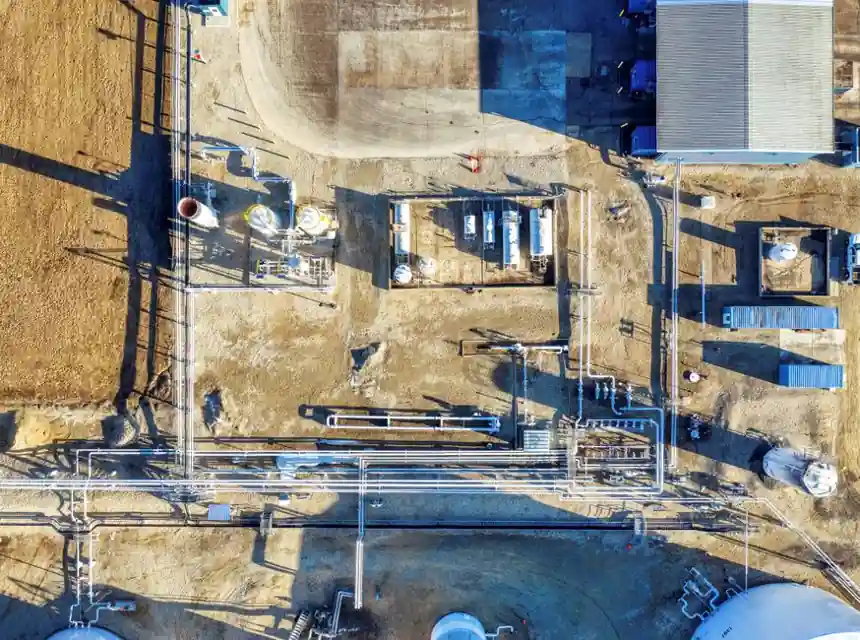
An orifice plate flowmeter for a custody transfer skid is specified against AGA-3 / API 14.3 (and the closely aligned ISO 5167) geometry rules, with the beta ratio, flange tap layout, and meter tube dimensions declared line-by-line on the RFQ, because every dimensional field on that line item drives the meter's legal measurement uncertainty [S2].
For natural gas distribution and downstream hydrocarbon service, AGA Report No. 9 ultrasonic meters require ±0.7% accuracy across range, while AGA-3 / API 14.3 orifice applications must satisfy the installation and calibration conditions of the standard to be admissible as a fiscal measurement [S2]. A mid-sized natural gas distribution station processing a 0.25% measurement error can generate nearly $500,000 USD in annual financial impact at $3/MSCF, which is why orifice plate assemblies for custody transfer are sold as a documented measurement package, not as commodity pipe fittings [S2]. For context on how differential pressure metering compares with Coriolis and other technologies, see the flow meter reference page, and for the orifice plate flowmeter working principle and ISO 5167 beta limits.
RFQ Line Items: Geometry, Material, and Tap Selection
AGA-3 / API 14.3 specifies meter tube dimensions, orifice plate tolerances, differential pressure measurement requirements, and installation conditions including upstream and downstream straight-run length, so each of those parameters belongs on a discrete RFQ line rather than buried in a notes field [S2]. The four geometry-driven fields the vendor cannot quote without are: (1) nominal line size, (2) beta ratio (d/D), typically held between 0.20 and 0.75 for ISO 5167 clean-gas service, (3) plate bore tolerance, and (4) the tap configuration (flange taps, corner taps, or D and D/2). Omitting beta ratio forces the vendor to assume a default that may invalidate the AGA-3 calculation, and the RFQ has to be reissued.
Plate and carrier material are the second decision gate. Standard 316/316L stainless steel is the default for clean natural gas; for sour service (H₂S partial pressure above 0.0003 MPa per NACE MR0175) the plate, carrier ring, and bolting must be qualified to NACE MR0175, and the RFQ must explicitly call this out, because material upcharges are not absorbed by the vendor. The orifice plate assembly data sheet should also state the plate type (square-edged, conical-entrance, or quadrant-edge), the gasket style (RTJ vs. soft), and the carrier vs. plate-only configuration [S5].
Calibration, Uncertainty, and Prover Integration
Custody transfer metering requires not just an accurate meter, but documented calibration traceability, defined uncertainty, and a metering protocol that both buyer and seller sign before first gas flows [S4]. On the RFQ, this translates into three mandatory deliverables: (a) a calibration certificate traceable to a national institute (NIST, NPL, PTB) with stated k=2 uncertainty, (b) a calculated overall measurement uncertainty budget following the ISO/IEC Guide 98-3 (GUM) method, and (c) a metering-procedure document aligned with the GIIGNL Custody Transfer Handbook for LNG or with AGA-3 for natural gas [S1][S2].
For differential pressure transmitters paired with the orifice, the RFQ should specify HART protocol (FSK on the 4-20 mA loop) rather than a digital fieldbus, because most legacy flow computers at custody transfer stations accept the analog + HART combination. Static pressure and temperature transmitters on the meter run should be specified to the same uncertainty class, typically ±0.05% of span or better for fiscal service. If a Coriolis meter is being evaluated as the primary or check meter, the Coriolis flowmeter reference covers the multi-variable output that eliminates the need for separate DP, PT, and TT instruments, while ultrasonic and turbine check meters are also common on flow meter skids as a comparison basis. The Promass F300, for instance, simultaneously measures mass flow, volume flow, density, concentration, and temperature from a single sensor, a hallmark of the design that removes separate instruments at the same measuring point [S3].
Operating Envelope: Pressure, Temperature, and Fluid Service

RFQ reviewers should pull the operating envelope from the process data sheet and write it directly onto the orifice plate line: design pressure (often ANSI 600# or 900# for gas transmission), design temperature, normal flow rate, minimum flow rate (turndown), and fluid composition. For natural gas, the composition drives the calculation of supercompressibility (Z) and isentrohic exponent, both of which feed the AGA-3 discharge coefficient. For LNG service, the operating envelope is much tighter, with state-of-the-art measurement giving LNG volume uncertainty of 0.2-0.55% (k=2) and an overall transferred energy uncertainty of 0.5-0.7% (k=2), corresponding to roughly €250,000-€350,000 financial uncertainty per large transaction [S1].
Hazardous area classification is non-optional on any chemical or petrochemical service skid, and the RFQ must state the ATEX zone or NEC class/division so the transmitter, manifold, and junction box are quoted with the correct rating. In a chemical plant, sulfuric acid attacks standard 316L stainless steel electrodes, hydrochloric acid vapors corrode instrument electronics, and nitric acid destroys materials that withstand HCl, so material compatibility has to be confirmed against every wetted surface, not just the orifice plate itself [S4].
Skid Mechanical, Piping, and Documentation Deliverables
The skid itself is a fabricated assembly, and the RFQ must call out the structural steel, piping class, and welding standard separately from the instrumentation. For structural steel, see the steel plate reference page; for the skid-mounted assembly as a whole, the skid steer loader article touches on modular skid construction principles relevant to instrumentation skids. Piping should be specified to ASME B31.3 (process) or B31.8 (gas transmission), and the welding procedure specification (WPS) and procedure qualification record (PQR) are submittals the buyer should list in the RFQ's documentation section rather than asking for after the fact. [S5]
Documentation deliverables that prevent requote cycles include: dimensional inspection report on the meter tube (bore, roundness, concentricity), orifice plate dimensional report (beta ratio, edge sharpness, plate thickness), material certificates (mill certs to EN 10204 3.1), NACE MR0175 compliance letter for sour service, hydrotest package, FAT (factory acceptance test) procedure, and SAT (site acceptance test) procedure. The calibration certificate for the DP transmitter should arrive with the skid, not be promised as a future deliverable. For chemical plant skids, an additional pre-shipment compatibility review against the process fluid list is cheap insurance against an emergency shutdown within weeks of commissioning [S4].
Comparison: Orifice vs Ultrasonic vs Coriolis on a Custody Transfer Skid
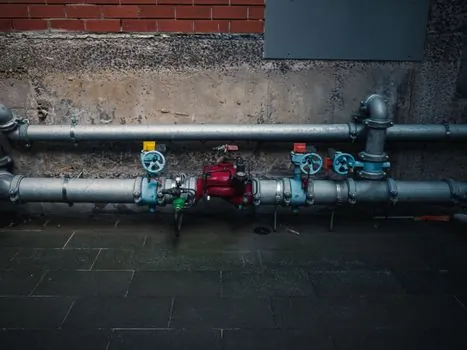
For fiscal measurement on natural gas custody transfer skids, the three dominant primary technologies line up against four decision criteria as follows: [S2]
Orifice plate (AGA-3/API 14.3, ISO 5167): lowest capital cost, longest proven track record, accuracy dependent on installation and beta ratio, no moving parts, limited turndown (typically 4:1), requires periodic re-verification. Ultrasonic (AGA-9): ±0.7% across range, no pressure drop, higher capital cost, no moving parts, requires clean gas and known velocity profile. Coriolis (e.g. Promass F300): multi-variable output, high accuracy independent of fluid profile, highest capital cost, traditionally used for liquid custody transfer rather than gas [S3]. The choice for a given skid is therefore a tradeoff between capital cost, rangeability, and the buyer's tolerance for moving parts; the electromagnetic flowmeter reference covers conductive-liquid service where Coriolis is the typical fiscal choice.
Common RFQ Mistakes That Force Requote Cycles
Four mistakes recur on orifice plate custody transfer RFQs and each one is preventable. First, omitting the operating flow range (normal, min, max) means the vendor cannot size the beta ratio or DP transmitter span, and the quote is returned unpriced. Second, not specifying the fluid composition or calling it "natural gas" without H₂S, CO₂, and water dewpoint data, blocks the AGA-3 calculation and the NACE MR0175 material decision. Third, leaving the calibration certification body off the RFQ (NIST vs NPL vs PTB traceable) leads to quotes that differ by 20-30% because vendors default to different labs. Fourth, failing to call out the prover loop or check-meter requirement, when the skid must have a periodic in-situ verification path defined, requires a re-quote once the buyer realizes a prover connection is needed. [S4]
For chemical and petrochemical custody transfer skids, two additional pre-shipment checks pay off: verifying the material certificates against the wetted-parts list line by line, and confirming the hazardous area certification covers every instrument on the skid, not just the primary flowmeter [S4]. Operators running multi-stream chemical plants routinely standardize on a 316L stainless steel default for clean service, escalate to Alloy 20 or Hastelloy for acidic service, and require NACE MR0175 qualification for any stream with H₂S above the sour threshold.
Buyers preparing a custody transfer skid RFQ in 2026 should track three signals: the revision status of AGA-3 and ISO 5167 for any tightening of beta ratio or straight-run length requirements, the published uncertainty budgets from competing primary meters on the same stream to validate the orifice plate package, and the calibration-lab turnaround times which in 2025-2026 have stretched for fiscal-grade instruments. For PEEK-based wetted parts in sour hydrocarbon service, the PEEK selection for oil and gas grades, ratings, and sour-service rules reference and the PEEK Selection for Energy Equipment spec-first criteria article provide material-pairing context for downstream wetted components on the same skid.