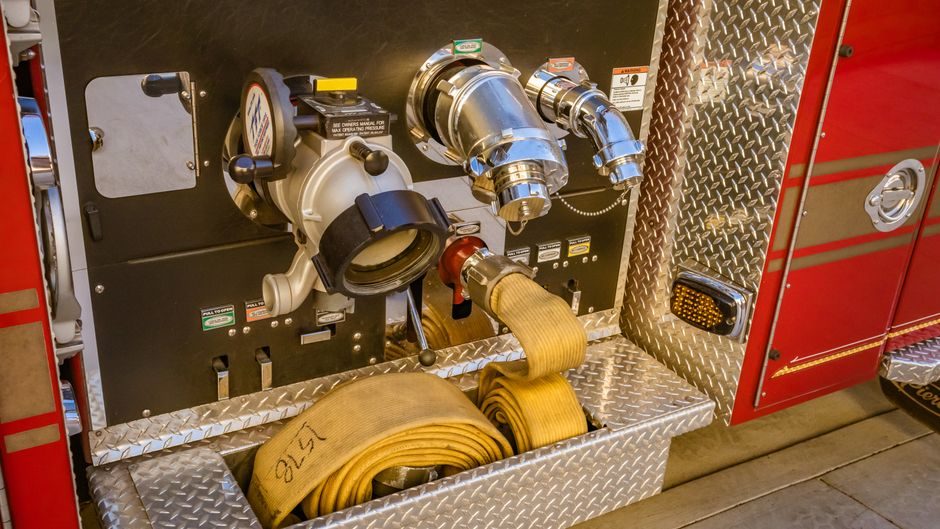
The pneumatic valve actuator, when fitted inside or alongside a motor control cabinet, is the pneumatic-to-mechanical converter that drives the on/off or modulating valve for process interlocks, ESD segments, and instrument-air manifolds — so its torque class, supply pressure, ambient rating, and solenoid voltage have to be pinned down on the RFQ before any quote is realistic.
Across the rotary and linear pneumatic actuator families published on 2026-05-28 to 2026-07-03, the operating envelope is narrow and well defined: supply pressure 2-6 bar, torque 4 Nm to 600,000 Nm, and ambient temperature -60 °C to +149 °C depending on elastomer and housing selection [S3][S4][S7][S10]. Get the envelope right and the actuator drops into the cabinet wiring diagram cleanly; get it wrong and the MCC builder will requote the I/O, the air manifold, and the valve linkage three times.
Line-by-Line RFQ Parameters: Torque, Pressure, Temperature
Spring-return quarter-turn diaphragm actuators are commonly offered at 26 Nm minimum and 930 Nm maximum torque, fed with 2, 3, or 5 bar instrument air and rated -60 °C to +100 °C ambient, which is the typical envelope a buyer should write into the torque / supply / ambient fields [S4].
For larger rotary valves (ball, butterfly, plug) requiring higher break-torque, scotch-yoke hydraulic-pneumatic actuators reach 600,000 Nm maximum and 0 Nm minimum (double-acting variants), and the RFQ should ask for symmetrical or canted torque arms so the vendor can match the actuator to the specific valve torque profile rather than a generic rating [S7]. Compact rack-and-pinion units such as the Max-Air MT series occupy the small end: 3-5 Nm torque, 40-150 psi (2.76-10.3 bar) supply, -20 °C to +80 °C ambient, NAMUR accessory interface, and ISO 5211 mounting — these are the values to put on the RFQ when the valve is a small ball or a process instrument drain [S8]. Single-acting 90° membrane actuators with handwheel, such as the SAMSON Type 3278, span 4-730 Nm at 0-6 bar supply and -35 °C to +9 °C ambient, with a 16-50 kg weight band that the cabinet layout engineer must accommodate [S10].
Linear piston stainless-steel actuators are specced for gate and globe valves up to ANSI 600, with body materials WCB, SS304, or SS316, flow-to-open or flow-to-close direction, and leakage class per ANSI/FC or IEC 60534-4 — a buyer writing an RFQ for high-pressure steam or hydrocarbon service should call out pressure class, body material, and leakage class as three discrete fields [S9]. For API 6A wellhead service, the Cameron MA-series linear membrane actuator is qualified to API Spec 6A Appendix F (PR-2), operates 0 to 180 °F (-18 to +66 °C) standard, fits 1 13/16- through 4 1/8-in gate valves, and ships in 12-, 16-, or 20-in diaphragm sizes — these six values (standard, qualification, temperature, valve size range, diaphragm size) are the fields that go on the RFQ line for upstream oil and gas [S1].
Action Type, Fail-Safe, and Spring-Return Logic
Double-acting and spring-return single-acting are the two configuration fields a buyer must tick; spring-return units default the valve to a safe position on air-loss and the RFQ should specify fail-open or fail-close explicitly so the actuator spring is wound correctly at build [S3][S4].
Spring-return is the standard fail-safe for ESD and hydrocarbon isolation, while double-acting is preferred for modulating duty where the positioner holds the valve at any setpoint and the cabinet I/O only commands open/close on a 24 VDC or 110/230 VAC solenoid. For a Fisher 1052 size 70 rotary diaphragm actuator, the options list includes PED, CUTR, and ATEX certification, on/off or throttling control, ball/butterfly/eccentric-plug/triple-offset valve compatibility, fail-open or fail-close construction, and four mounting positions — these are exactly the configurator fields the RFQ should mirror so the quotation is not padded with a "to-be-determined" allowance [S3]. The MA-series Cameron linear actuator adds fixed-drift adjustment, corrosion-resistant materials, and a rising-stem design with Cameron seal technology as standard, and buyers specifying gate-valve service should write "API 6A Appendix F PR-2" into the qualification field rather than the generic "API 6A" so the vendor is not free to substitute a non-qualified diaphragm [S1].
Area Classification, Certification, and Cabinet Integration

ATEX certification is the standard area-classification field on European RFQs and is offered on the Fisher 2052 quarter-turn and the Rotork GP/GH scotch-yoke range as a stock option, while cabinet-side integration requires NAMUR accessory mounting, ISO 5211 valve-interface pattern, and a solenoid coil voltage that matches the MCC's control-valve I/O card [S4][S7][S8].
For hazardous-area cabinets (Zone 1, Zone 2, Class I Div 1/2), the pneumatic actuator is typically mounted outside the MCC enclosure with the solenoid and limit switches inside, and the RFQ should call out the certification scheme (ATEX, IECEx, UL/CSA) and the gas group (IIA, IIB, IIC) so the coil and switchgear match. The Rotork GP/GH pneumatic-hydraulic scotch-yoke range is described as "compact, modulating, ATEX, rugged, spring-return" with the 0-600,000 Nm torque band — this is the RFQ profile for a buyer who needs a heavy-duty quarter-turn on a high-pressure hydrocarbon block [S7]. For hygienic and pharmaceutical cabinets, stainless-steel forged bodies in A182 F316 / EN 10088 (Air Torque S-series) at 2,000 Nm maximum torque are the typical answer, and the RFQ should pin the material grade and surface finish rather than leaving them as "stainless" [S6].
Actuator Technology Comparison: Membrane vs Piston vs Scotch-Yoke vs Rack-and-Pinion
Four actuator technologies dominate the RFQ landscape and the choice is driven by torque class, valve type, and modulating duty: membrane (diaphragm) for low-to-mid torque on/off, piston for high-thrust linear service, scotch-yoke for high-torque quarter-turn, and rack-and-pinion for compact quarter-turn modulating duty [S3][S4][S7][S8].
Membrane (diaphragm) actuators — Fisher 1052, Fisher 2052, SAMSON 3278, Cameron MA — dominate the 4 Nm to 13,750 Nm torque band, are limited to roughly 6 bar supply, and are simple, spring-return friendly, and inexpensive; the RFQ should accept them as default unless the torque or pressure requirement is outside their envelope [S1][S3][S4][S10]. Piston actuators (linear, stainless-steel) take over above 6 bar and into ANSI 600 service, with a body in WCB, SS304, or SS316, and are specced when the valve is a gate or globe that needs a linear thrust rather than a rotary stroke [S9]. Rack-and-pinion quarter-turn units — Air Torque S-series at 2,000 Nm, Max-Air MT-series at 3-5 Nm — cover the compact modulating-duty segment with NAMUR and ISO 5211 interfaces, and are the default pick when the cabinet builder wants a single actuator family across a range of small ball and butterfly valves [S6][S8]. Scotch-yoke actuators — Rotork GP/GH up to 600,000 Nm — are reserved for the largest quarter-turn valves where high break-torque and a compact envelope beat the simplicity of a rack-and-pinion, and the RFQ should call out symmetrical vs canted yoke arms so the torque curve matches the valve [S7].
RFQ Field Checklist and Common Requote Traps
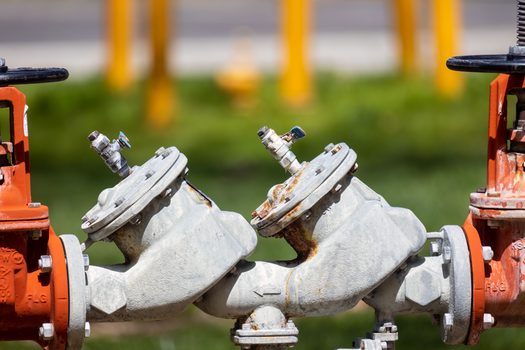
The pneumatic actuator RFQ must include: valve type and size, torque required (Nm or ft-lb), supply pressure (bar or psi), action type (single/double-acting), fail-safe direction, ambient temperature range, area classification with certification scheme, solenoid coil voltage, valve-interface standard (ISO 5211, NAMUR), and any options (positioner, limit switches, handwheel, manual override) [S3][S4][S8][S10].
Omitting any one of these fields triggers a requote: leave torque blank and the vendor will quote the largest unit in the family; leave fail-safe direction blank and the spring is wound ambiguously; leave area classification blank and the coil ships as the cheapest non-certified variant; leave valve-interface blank and the mounting kit is selected by default rather than by fit. For an access-control or ESD segment tied to a pneumatic actuator driven by a pneumatic valve actuator interface, the I/O count on the cabinet door (open/close command, position feedback, ESD override) is set by what the RFQ asks for, and a single missing line item can change a 16-point I/O card to a 32-point card with the corresponding DIN-rail space and wiring cost. Emerson's pneumatic actuator portfolio, published 2026-07-03, is positioned as a turnkey valve-operating-system (VOS) package for fluid control in extreme and hazardous environments, and that bundling is a strong signal that the RFQ should list the actuator, positioner, solenoid, and tubing as a single line item if the cabinet builder is expected to deliver a wired-and-tested assembly [S5].
A verifiable next node: pull the same vendor's rotary and linear datasheets and write the torque / pressure / temperature / certification values into the RFQ template as default fields rather than free text. A trackable signal: a 2026-07-21 review of actuator OEM catalogues for any new ATEX/IECEx dual-certified compact quarter-turn units in the 50-200 Nm band, which is where most MCC-driven process-interlock valves fall.
For related coverage, see 5G Industrial Modules in Smart Manufacturing: Spec, Deployment, and 2026 Selection Map.