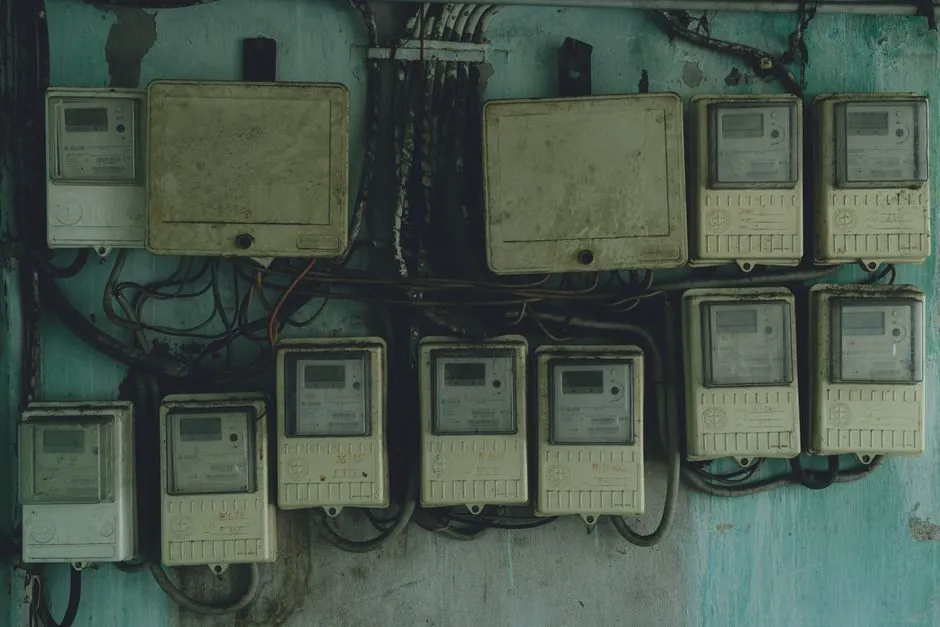
A multifunction power meter on a control-cabinet RFQ is the line that connects revenue metering, power-quality logging, and SCADA telemetry, so its specification has to satisfy the utility billing class, the distribution cabinet short-circuit coordination, and the MCC cabinet motor feeder protection at the same time [S2].
For a three-phase 380/400 V panel, the working minimums a buyer should write on the line are: 96 x 96 mm DIN cut-out, AC 85-265 V or DC 85-330 V auxiliary, 5 A/100 V or 5 A/400 V nominal input, Modbus-RTU on RS-485, and Class 0.5 for active power per IEC 62053-22 [S2]. A second model variant, the Bird 4421A used in RF calibration carts, demonstrates a parallel accuracy tier, with 1% forward/reflected power accuracy and 50 ohm impedance over 100 kHz to 1000 MHz, an extreme example of how "multifunction" can mean different physical quantities entirely [S3].
What the meter must measure on a low-voltage cabinet
The base measurand set on every OEM-cabinet specification is phase voltage Ua/Ub/Uc, line voltage Uab/Ubc/Uca, current Ia/Ib/Ic, per-phase and total active power P, per-phase and total reactive power Q, apparent power S, power factor PF, frequency, and four-quadrant active and reactive energy [S2][S5]. The reason the engineering specification line names every variable individually, rather than a generic "all grid parameters", is that the meter's internal register map has to expose each one to Modbus so the SCADA can map alarms on PF, kVAr, and frequency independently [S2].
Input ranges that must be written explicitly: voltage 30-600 V or 100 V/400 V nominal via PT, current 0-6 A direct or via CT, and frequency 45-65 Hz, because most budget meters clip at 55 Hz and silently drop the reading on 60 Hz diesel-fed sites [S2]. Accuracy classes to write: voltage 0.2% plus or minus 0.1 V, current 0.2% plus or minus 0.001 A, power 0.5% plus or minus 0.4 W, PF 0.5% plus or minus 0.001, frequency 0.1%, and active energy 1.0%, all consistent with Class 0.5S billing requirements at 5 A nominal [S2].
Wiring mode and network configuration
The wiring mode line is the one that most often gets omitted, and it is the single biggest cause of requote cycles. The instrument must be programmable to three-phase four-wire, three-phase three-wire, three-phase four-wire balanced, and three-phase three-wire balanced, and the NET setting in the meter has to match the actual CT/PT count on site, otherwise voltage and power readings come out wrong by a fixed ratio [S2][S5]. For a 3CT/3PT four-wire panel, the meter has to apply phase-voltage measurement; for a 2CT/2PT three-wire panel, the meter has to display only line voltage and back-compute total power from two wattmeter inputs [S5].
CT and PT ratio fields are separate line items: write the primary current (e.g. 600 A or 1000 A) and the secondary (5 A), and the same for the PT primary (10 kV or 35 kV) and secondary (100 V or 400 V), because the meter only knows how to scale from the ratio the engineer programs into it [S2][S5]. Phase sequence must be enforced at the field terminal, and the phase voltage/current pair orientation checked, because reversed polarity on any single phase produces a correct magnitude but a wrong sign on P and E, a fault that only shows up in the energy register after hours of run time [S5].
Auxiliary supply, I/O count, and analogue output
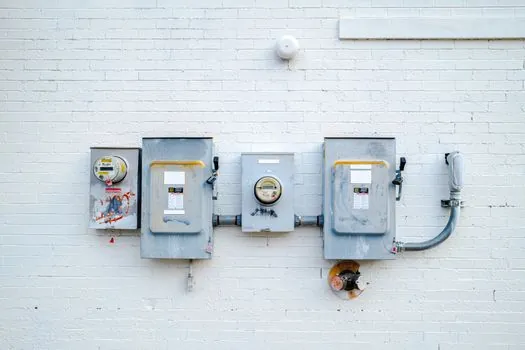
Auxiliary supply on the OEM-cabinet line is universal AC/DC 80-270 V, with a 1 A fuse on the live side recommended, and the instrument is rated at less than 4 VA consumption so that a single 24 V DC cabinet bus can feed several meters without derating [S2][S5]. For sites with poor power quality, the engineering specification has to call out a surge suppressor on the auxiliary line, because repetitive transients are the dominant failure mode for switch-mode supplies inside budget meters [S5].
Output and I/O count has to be itemised: two relay outputs (normally open, programmable alarm), two digital inputs for dry-contact status with no external supply needed, one 4-20 mA analogue output assignable to any one of Ua/Ub/Uc or Ia/Ib/Ic, and one RS-485 port supporting up to 32 or 128 nodes on the bus [S2]. The analogue output is the field that most buyers forget to assign at quote time, and adding it later means opening the meter case to move a jumper, which is why the "output mapped to" line should name a specific measurand such as total kW or Ia [S2].
Communication protocol and SCADA integration
The communication line is RS-485 Modbus-RTU, address range 1-247, baud 1200-19200, parity N/E/O selectable, because that is the protocol every Chinese-OEM cabinet meter ships with and the only one the typical power meter listing under RS-485 will talk to [S2]. When a buyer writes "RS-485" without the protocol, half the quotes come back with a PROFIBUS-PA variant or an M-bus variant that physically fits but does not interoperate, and the bus has to be re-terminated [S2].
For sites that need to feed data into a building management system or a utility-grade SCADA, the same register map can be read over Ethernet gateways, but the engineering specification should call out a meter with a dedicated Ethernet port or a documented RS-485-to-Modbus-TCP converter, because the on-board protocol stack is fixed at the factory [S2]. For RF-power applications, the same "multifunction" label covers a completely different product class: the Bird 4421A reads forward and reflected power plus return loss on a 50 ohm coaxial line, with 1% measurement accuracy, and is specified by frequency band (100 kHz-1000 MHz for 4020 sensors, 250 kHz-65 MHz for 4027A, 1.8-65 MHz for 4027F) and load rating (1-10 kW), not by grid voltage [S3].
Certifications, environment, and mechanical fit
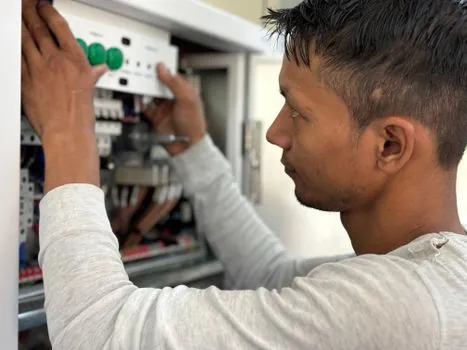
Compliance and certification lines that belong on the RFQ: IEC 62053-22 Class 0.5S for active energy, IEC 62053-23 for reactive, IEC 61010-1 for safety, IEC 61326-1 for EMC, and for products sold into the EU the relevant CE conformity statement, plus the Chinese GB 14048.4 and JB/T 7435 conformance that Anshun-class meters declare [S2][S5]. On hazardous-area or marine panels, the engineering specification line should also name any ATEX/IECEx zone or DNV/ABS ship-class requirement, since a Class 0.5S meter without the zone rating will be rejected at the certificate review even if the electrical spec matches [S5].
Mechanical fit: 96 x 96 mm bezel, 95 mm depth, 92 x 92 mm panel cut-out, and an operating envelope of -15 to 55 degrees Celsius and 20-95% non-condensing humidity for an indoor cabinet [S2]. For outdoor or washdown enclosures, the bezel IP rating (typically IP54 front, IP20 rear) and the tropicalised PCB option have to be on the line, because the IP rating of the front face only protects the operator; the rear terminals need a separate enclosure rating [S2]. A buyer who writes only "panel mount" without bezel and cut-out will receive four different form factors, of which two will not fit the existing cut-out.
RFQ line template and common requote pitfalls
The single-line specification that survives a typical OEM-cabinet procurement without requote looks like: model code, 96x96 mm bezel, AC/DC 80-270 V auxiliary, 5 A/100 V or 5 A/400 V input, three-phase four-wire, Class 0.5S, Modbus-RTU RS-485, 2 DI, 2 DO, 1 AO (4-20 mA mapped to total kW), PT ratio X/Y, CT ratio X/5, operating temperature -15 to 55 C, IEC 62053-22 + GB 14048.4 [S2][S5]. Items whose omission consistently forces a second or third quote cycle are analogue-output mapping, CT/PT ratio, wiring mode, and certification list, because the seller cannot price them without an assumption and the buyer's assumption usually differs [S2].
A multifunction power meter and an access controller look alike on the same panel BOM line only in the 96x96 mm form factor, but they have completely different qualification paths: the meter is a revenue-or-near-revenue instrument governed by IEC 62053-22, while the access controller is governed by IEC 60839-11-1 and carries no energy-accuracy class, so the two should never be cross-substituted on the same RFQ even when the cut-out matches [S2]. Treat the meter line, the multifunction process calibrator bench-instrument line, and the power meter RF-coaxial line as three separate product classes with three separate spec sheets, and the cabinet's bill of materials stops generating RFQ surprises.
Background reading: Selector switch certification checklist for packaging line retrofit.