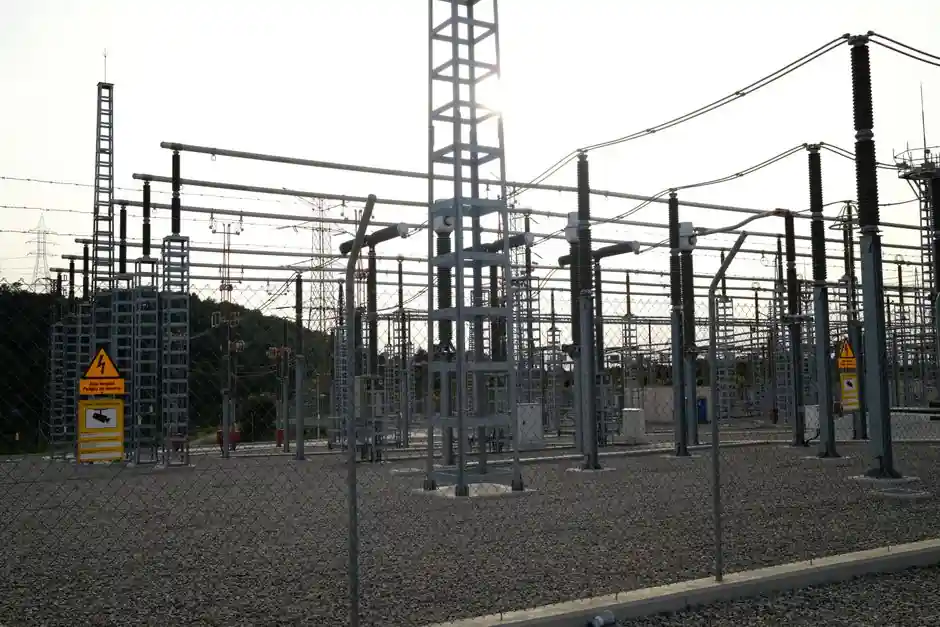
High voltage rated resistance decade boxes and resistor calibration standards are the traceable reference for verifying 1 kV, 5 kV and 10 kV insulation testers (megohmmeters), with commercial units from IET Labs (HRRS-5kV/10kV, VRS-100), Megger (CB101 5 kV) and Hoyt (RCB-1) covering resistance spans from 1 kΩ up to 10 TΩ at maximum applied voltages of 5000 V or 10000 V [S3][S4].
Insulation tester calibration is mandated by IEC 61557-2:2007 operating uncertainty limits (B) of ±30% maximum permissible at the working test points, and laboratories operating under ISO/IEC 17025:2017 must source those reference resistors from instruments whose own accuracy is traceable to national standards [S5]. Selecting the wrong reference box, for example a low-voltage decade used above its rating, risks both resistor damage and a lethal touch potential during a 5 kV verification [S1].
Why a dedicated HV-rated box, not a general-purpose decade
General-purpose resistance decades such as the IET GenRad 1433 or HARS series are typically rated for low-voltage operation, and pushing them to 1 kV or higher causes resistor heating, coefficient-of-resistance drift, insulation breakdown between switch contacts, and in worst cases a flashover to the operator [S1][S3]. A dedicated HV-rated resistance decade uses custom high-voltage switches and resistors selected for low voltage coefficient and high stability, with the IET HRRS-5kV/10kV series explicitly advertised for "calibration of Meggers and sourcing out precision high resistance" up to maximum applied voltages of 5000 V or 10000 V [S3].
Beyond voltage withstand, a high voltage resistance standard must hold its calibration under the actual test stress. The IET VRS-100 series of high resistance standards is supplied as a set of nine to eleven fixed resistors (1 kΩ, 10 kΩ, 100 kΩ, 1 MΩ, 10 MΩ, 100 MΩ, 1 GΩ, 10 GΩ, 100 GΩ, 1 TΩ and 10 TΩ, or open circuit depending on model), with accuracy up to 20 ppm and a standard voltage rating up to 5 kV, with 10 kV builds available, expressly described as "excellent for calibration of Meggers" [S3]. That single-axis fixed-resistor approach eliminates the switch leakage paths that compromise variable decades at the GΩ/TΩ end of the range.
Resistance range vs. test voltage: matching the box to the megohmmeter
The selection criterion is the cross-product of two axes, the tester's full-scale resistance and the highest voltage it can source, and these jointly determine which reference box family is appropriate. Common commercial coverage on 5 October 2026 lines up as follows: the Megger CB101 (P/N 6311-077) provides a quick-check range of high-quality resistors rated for 5 kV operation across the typical insulation tester span [S4]; the Hoyt RCB-1 Resistor Calibration Box is built specifically to "verify and proof any High Voltage Insulation Testers" and is listed at USD 31,373.00 in distributor catalogues [S2]; the IET HRRS series extends coverage to maximum applied voltages of 10000 V with maximum selectable resistances of 1 GΩ, 10 GΩ, 10 GΩ, 1 TΩ or 11 TΩ depending on the model, while the VRS-100 fixed-standard set goes from 1 kΩ to 10 TΩ at 5 kV standard or 10 kV optional [S3].
For a 1 kV/500 MΩ handheld insulation tester, a 2 kV-class HV resistance decade such as the standard IET HRRS Series is the cost-effective match; for a 5 kV/10 TΩ cable or generator insulation tester, the 10 kV HRRS or 10 kV VRS-100 is required because operating above 5 kV on a 5 kV-rated reference is out-of-spec [S3]. A simple acceptance test for any reference box is: applied test voltage must be less than or equal to the box's marked maximum, and the resistor's measured value at that voltage must remain within the box's stated accuracy, typically 0.01% to 1% depending on series (GenRad 1433 and HARS at 0.01% or 100 ppm; HPRS at 0.5% to 1%; VRS-100 at up to 20 ppm) [S3].
Traditional manual setup vs. modern automated calibrator
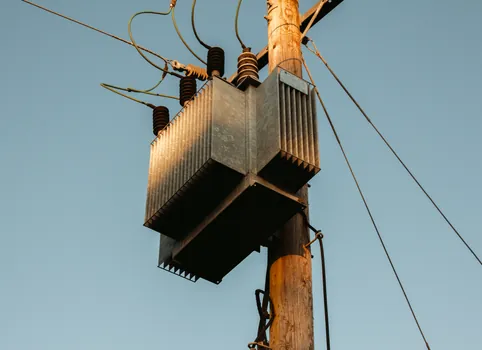
Traditional calibration stacks 2 to 3 high voltage decade boxes with a digital multimeter that monitors the applied voltage, and the technician manually switches between resistance values to walk the megohmmeter through its test points [S1]. The Transmille guidance is explicit about the failure modes: it is time-consuming, hazardous because leads must be changed under high voltage, error-prone because the operator is juggling multiple instruments, and physically dangerous if a decade is used above its voltage rating, which can damage the internal resistors [S1].
Modern multifunction calibrators such as the Transmille 3200B or 1000 Series source resistance automatically while simultaneously measuring the applied voltage, so a single instrument covers both the stimulus and the measurement roles, cutting the typical 1 kV/5 kV/10 kV verification across multiple resistance points from hours to minutes, with fewer manual reconnections and a lower touch-voltage exposure for the operator [S1]. The trade-off is capital cost: a programmable calibrator plus software automation (for example Transmille ProCal) is a different budget tier than a passive HV resistor box, and many in-house calibration benches still keep at least one passive reference box as an independent check.
Regardless of the stimulus method, the reference resistors used by an automated calibrator must themselves be traceable. That is why ISO/IEC 17025:2017-accredited labs source their resistance standards from suppliers such as IET Labs (VRS-100 with up to 20 ppm accuracy), or use OEM-issued boxes such as the Megger CB101 5 kV calibration box that arrive with traceable calibration certificates and are used as a "quick check of insulation tester calibration" against manufacturer tolerance [S4][S5]. For a deeper look at how the resistance/voltage trade-off is taught in adjacent low-voltage standards work, see the reference page on process calibration.
Calibration workflow, test points, and acceptance criteria
Calibration applies known reference resistors to the megohmmeter at a defined set of test points and compares the displayed reading against the reference, with any deviation documented on a calibration certificate [S5]. The as-found data captures the instrument's state on arrival, and the as-left data captures the state after any adjustment; calibration itself is not repair, and an out-of-tolerance reading triggers a separate repair action [S5]. Under IEC 61557-2:2007 the operating uncertainty B must stay within ±30% maximum permissible, and the manufacturer's own base accuracy is typically tighter (commonly ±2% to ±5% of reading depending on model), so a unit reading 2.1% against a ±3% specification is in spec, while 4.5% is out of spec and must be adjusted or removed [S5].
A defensible insulation tester calibration program therefore needs three pieces: an HV-rated reference box (or fixed resistor set) whose maximum voltage rating meets or exceeds the highest test voltage the megohmmeter can source, with the resistance values covering the test points of interest; a documented procedure that walks at least five to ten test points across each voltage range (typically 100 kΩ, 1 MΩ, 10 MΩ, 100 MΩ, 1 GΩ, 10 GΩ, 100 GΩ), per IEC 61557-2:2007 and the OEM manual; and a measurement management system aligned to ISO/IEC 17025:2017 and ISO 10012:2003 with a defined calibration interval and between-calibration verification checks [S5]. For background on how the megohmmeter itself is selected and what its stated accuracy really means, see the insulation resistance tester reference page.
Failure modes, safety constraints, and when to replace, not repair
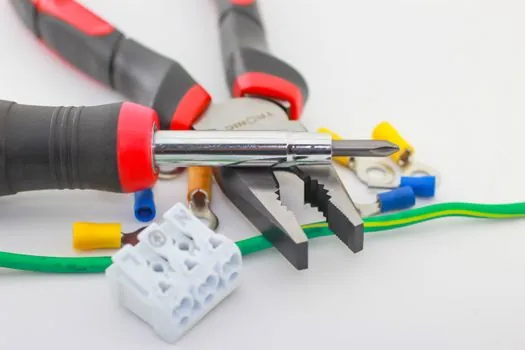
The most common field failure on HV resistance decades is switch contact degradation: the silver-alloy contacts used in long-life HV switches (GenRad 1433 family) slowly pit after thousands of high-voltage operations, and the contact resistance adds directly to the decade's stated tolerance, so a 0.01% decade can drift toward 0.1% or worse [S3]. The corrective action is to verify each decade step against a transfer standard annually and to replace the switch assembly if any step exceeds the rated accuracy. A second failure mode is surface leakage across the PCB or terminal insulation at high humidity, which shunts the reference resistor and reads low; this is mitigated by guarding, by desiccant packs inside the enclosure, and by re-calibrating only after the box has acclimatized to the lab environment.
When the reference box itself is out of specification, the correct action is to return it to the manufacturer or an ISO/IEC 17025-accredited lab; the user must not attempt internal adjustment of HV-class resistance standards because the clearances and resistor-matching work require factory jigs [S5]. Likewise, an insulation tester that fails calibration and cannot be adjusted back into ±30% (IEC 61557-2) or the tighter manufacturer specification should be removed from service, not "recalibrated in the field," because a megohmmeter reading 30% high will pass a healthy motor as marginal and a failed motor as healthy, which is a personnel-safety and audit-liability outcome [S5]. The safety boundary for the operator is the box's marked maximum voltage: 5000 V or 10000 V for HRRS, 5 kV standard or 10 kV optional for VRS-100, 5 kV for the Megger CB101, and the voltage class stamped on the Hoyt RCB-1 nameplate [S2][S3][S4]. For a related perspective on managing test voltage versus insulation class on rotating machinery, see the high voltage tester reference.
Comparison of mainstream HV resistance reference families
The mainstream commercial options as of October 2026 line up against the decision criteria a calibration lab actually uses: IET HRRS-5kV/10kV covers variable resistance up to 1 GΩ, 10 GΩ, 1 TΩ or 11 TΩ at 5000 V or 10000 V with custom HV switches, used where a variable decade is needed across a wide GΩ/TΩ span; IET VRS-100 is a fixed set of nine to eleven precision resistors from 1 kΩ to 10 TΩ at up to 20 ppm and 5 kV (10 kV optional), used where the highest accuracy and lowest leakage are required at known test points; Megger CB101 (6311-077) is a 5 kV quick-check calibration box with high-quality resistors for wide-range checks, used by field service teams for between-calibration verification; Hoyt RCB-1 is a single-box high voltage resistor calibration standard for proof-testing any HV insulation tester, listed around USD 31,373.00, used in dedicated HV test benches [S2][S3][S4].
The decision rule is: pick VRS-100 where the lab is ISO/IEC 17025-accredited and needs the lowest stated uncertainty at fixed test points; pick HRRS where the test program sweeps a wide GΩ–TΩ range and needs variable steps; pick CB101 or RCB-1 for in-house quick checks and field verification, not as the primary 17025 traceable reference. For a deeper dive on the underlying switched-resistor architecture used in low-voltage variable decades, see the decade resistance box reference.
Two trackable signals to watch through 2026: IET Labs and other reference-standard vendors are expected to continue extending the 10 kV fixed-resistor sets to higher decade counts to cover the new generation of 15 kV insulation testers used on EHV cable and large generator windings; and ISO/IEC 17025:2017-accredited labs are tightening between-calibration verification rules, which increases demand for self-contained quick-check boxes such as the Megger CB101 as a daily pre-use check rather than a full annual calibration substitute [S3][S4][S5].
Related analysis: AR500 vs AR400 plate: when the hardness gain pays for the bending penalty.