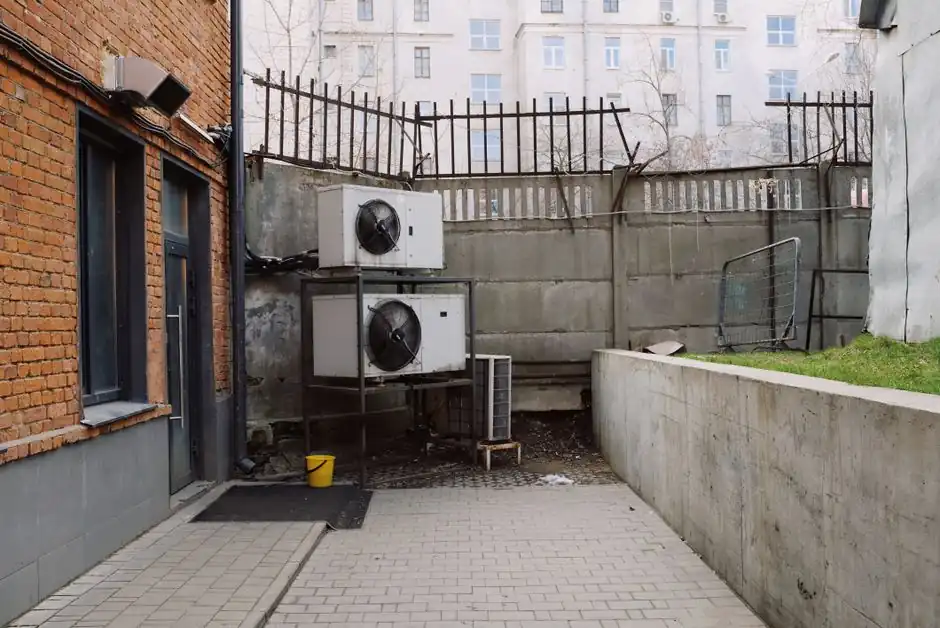
An internal electric concrete vibrator rated 0.55–2.2 kW with a 1–1.75 in head diameter covers roughly 80% of HVAC mechanical-room pad and housekeeping-base pours, based on the head-size and power tiers stocked by current online and rental channels [S3][S5].
For HVAC work, the most common configuration is a 1.5 kW 220 V single-phase or 2.2 kW 380 V three-phase motor driving a flexible-shaft internal head, available in 10 ft (120 in) shaft lengths from major industrial suppliers and rental fleets in 2026 [S3][S5].
Head Diameter and VPM Bands for HVAC Pad Pours
Head diameter governs the radius of consolidation, and HVAC housekeeping pads typically fall in the 4–8 in thick range, so a 1–1.25 in head is the practical default for most indoor pours [S3]. The rule of thumb is roughly 8–10 head-diameters of effective radius; a 1.25 in head consolidates approximately a 10–12 in radius, which covers typical 12–24 in pad dimensions without over-vibration that would segregate the cement concrete mix [S2].
Most 2026-spec'd internal electric vibrators operate in the 10,000–12,000 VPM (vibrations per minute) range, which is the sweet spot for low-to-medium slump concrete used in equipment pads, inertia blocks, and duct-penetration infill [S5]. For thicker structural slabs, contractors commonly step up to 1.5–1.75 in heads; smaller 0.75 in pencil heads are reserved for narrow wall pockets and thin topping slabs around refrigerant line set penetrations [S2][S5].
Power Source, Phase, and Indoor Air Quality Constraints
Single-phase 220 V units from 0.55 kW up to 1.5 kW are widely stocked for 2026 jobsite use and are the safe indoor default because they eliminate exhaust fumes in occupied or partially occupied mechanical rooms, per current vendor listings [S5]. For continuous-duty pours exceeding roughly 2 cu yd per lift, three-phase 380 V 2.2 kW models supply the higher torque needed to keep head speed from bogging down as the concrete admixture package stiffens [S5].
Battery and gas-driven units exist, but for indoor HVAC work the prevailing 2026 practice is corded electric to meet jobsite air-quality rules common in hospitals, data centers, and tenant-occupied buildings; rentals in the San Jose market explicitly stock electric concrete vibrator units for slab, footing, and wall work [S4]. Attached-style bracket-mount vibrators in the 1–4 HP class (0.75–3 kW) are an alternative when the form face is accessible and rebar congestion rules out internal insertion [S5].
Shaft Length, Reach, and Formwork Geometry
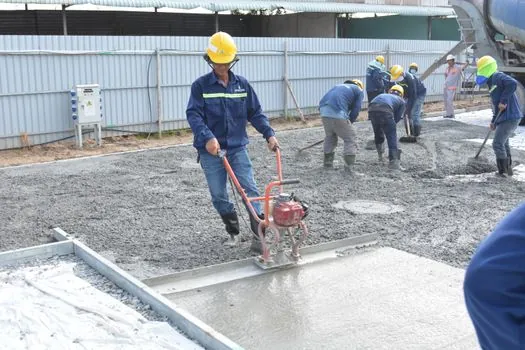
A 10 ft (120 in) flexible shaft is the baseline rental and stock length at industrial suppliers in 2026, and it gives the operator enough reach to stand outside shallow formwork while inserting the head into HVAC pad and housekeeping-base corners [S3]. For mezzanine-mounted equipment pads, sump receptors, and roof-curb concrete infill, contractors commonly add 14–21 ft shafts to reach the pour point without walking on reinforcement [S2].
Shaft construction is typically a rubber-encased steel core with a quick-connect motor coupling, so a single motor can drive multiple head/shaft combinations on the same job; current OEM listings confirm 120 in × 1 in × 1 in flexible shafts with quick-connect motors in stock [S3]. Replaceable head tips, bearings, and seals are also stocked as OEM parts from major concrete tool brands, which matters because shaft and head failure is the most common field issue, not motor failure [S6].
Internal vs External Form Vibrators for Rebar-Heavy HVAC Pours
External form vibrators, typically bracket-mounted 0.75–3 kW units clamped to the form face, are the right answer when rebar congestion, embed plates, or anchor-bolt clusters make internal insertion impossible, as flagged in current 2026 product listings for attached vibrator motors [S5]. They are also the correct call for thin sections under 100 mm where an internal head would strike the mat or the form face on the opposite side.
For most other HVAC concrete work, internal insertion wins on consolidation quality because it places energy directly into the concrete fiber-reinforced matrix; the failure mode with form vibrators is incomplete consolidation at the far form face, which shows up as surface bugholes on finished housekeeping pads. ACI 309-style practice still favors internal vibration for structural concrete, with external vibration reserved for sections where the internal method is mechanically blocked; the 2026 ZW-series bracket-mount units in 0.55–3 kW sizes are the current commercial offering for that role [S5].
Selection Criteria Comparison: Internal Electric, Attached Form, and High-Frequency Pencil
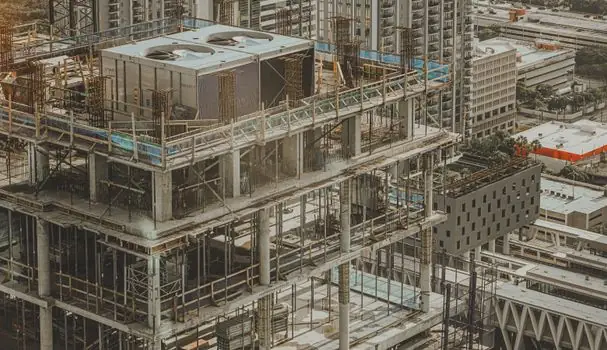
Across the three principal types, the decision matrix for HVAC work is driven by section thickness, rebar density, and indoor air-quality rules. Internal 0.55–2.2 kW with 1–1.75 in heads covers the majority of 4–12 in pad and slab pours in occupied spaces; attached form 0.75–3 kW bracket units cover rebar-dense or thin sections where internal insertion is blocked; pencil heads under 0.75 in handle wall pockets, beam sides, and topping slabs around line-set penetrations [S2][S3][S5].
Concrete vibrator selection for plumbing installation follows similar rules but with more emphasis on trench-and-pipe bedding work, which is a useful reference for narrow linear pours next to HVAC condensate and refrigerant piping [S6]. For slab-on-grade housekeeping pads, matching head size to rebar spacing is the controlling criterion, as outlined in our general spec-first guide on concrete vibrator selection by head size, VPM, and power source [S3].
Sourcing, Spare Parts, and Repair Network
National US industrial distributors in 2026 stock OEM vibrator-head repair parts including steel heads, bearings, and seals, and operate factory-authorized repair centers across the West Coast, Mountain West, Midwest, South-Central, and Mid-Atlantic regions [S1][S6]. For a 1.5 kW single-phase motor or a 120 in flexible shaft, off-the-shelf lead time at major industrial suppliers is typically 1–3 business days, with the shaft itself listed as a stocked SKU rather than a build-to-order item [S3].
The maintenance signal to watch on 2026 jobsites is a drop in head VPM under load, which almost always points to worn bearings in the head, not motor failure; OEM replacement bearing and seal kits are stocked for the major head brands, and a 15-minute field swap restores rated VPM [S6]. When the head casing is cracked or the eccentric weight is loose, replacement is cheaper than repair and is the recommended action rather than attempting a weld repair on a hardened steel head [S6].
For 2026 spec writing, anchor the HVAC concrete-vibrator requirement on three concrete numbers: head diameter matched to the thinnest section (0.75–1.75 in), VPM in the 10,000–12,000 band, and motor power at 0.55–2.2 kW electric for indoor work; require a 10 ft minimum shaft length and stock at least one spare head and bearing kit on site before the pour starts [S3][S5][S6].