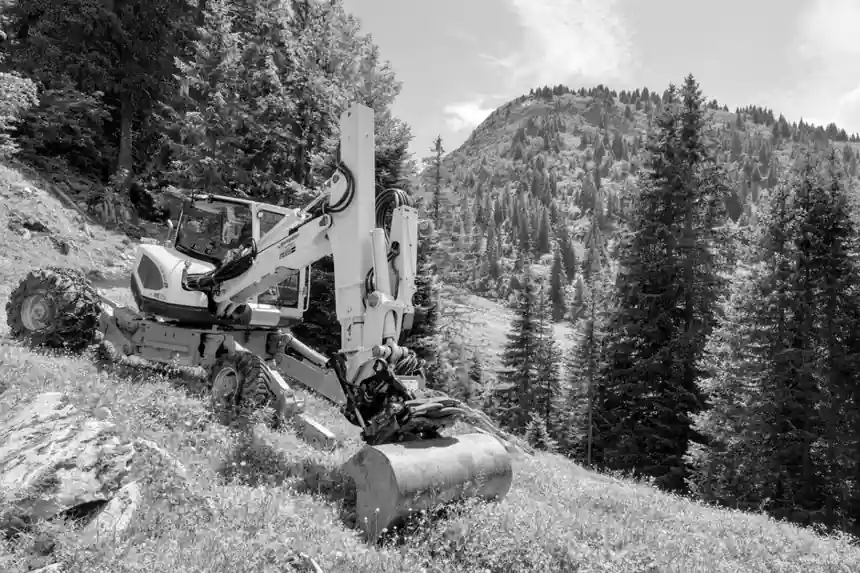
The global hydraulic cylinder market is tracked at USD 21.11 billion in 2026 by The Business Research Company, with a 5.4% CAGR taking it to USD 26.06 billion by 2030 [S2]. Research Nester pegs the same year at USD 16.99 billion on its way to USD 26.13 billion by 2035 at 5% CAGR [S3], while Polaris Market Research values the 2026 base at USD 18.13 billion, growing at 4.3% to USD 25.48 billion by 2034 [S5].
Across all four houses the demand engine is the same: infrastructure pipelines, mining and construction equipment replacement, and the slow electrification of mobile machinery. For a working definition, a hydraulic cylinder is a fluid-powered linear actuator that converts pump pressure into unidirectional or bidirectional stroke force, sitting downstream of a hydraulic pump and usually controlled by a hydraulic valve in a closed hydraulic circuit.
Segment Split: Welded, Tie-Rod, Telescopic, and Mill-Type
Polaris puts welded cylinders at 52.3% of 2025 revenue, the largest single product family, ahead of tie-rod, telescopic, and mill-type constructions [S5]. The welded form dominates because the body is a single fabricated tube with no tie rods, so it tolerates higher pressure peaks, side loads, and shock loading typical of mobile equipment booms, dump bodies, and refuse trucks [S5][S2]. Tie-rod cylinders remain the default for industrial presses and factory fixtures where the bore is under 150 mm and the duty cycle is moderate, while mill-type cylinders (essentially heavy-duty welded bodies with reinforced end caps) take the high-pressure, large-bore (>150 mm) end of mobile hydraulics [S2].
The Business Research Company breaks the bore range into three bands: <50 mm, 50–150 mm, and >150 mm, with the mid-band typically the volume sweet spot for agriculture and material handling [S2]. Telescopic cylinders, where multiple nested stages extend sequentially, are the format of choice for tipper trucks and dump trailers because stroke length can exceed the retracted length by a factor of four or more [S2]. A useful cross-reference for buyers evaluating cylinder-tube sourcing is the Jinyo 2026 hydraulic cylinder tube trends note, which flags that construction and manufacturing remain the dominant pull for honed tubing in 2026 [S6].
Function Split: Double-Acting Now Owns the Market
Polaris reports the double-acting function at 70.2% of 2025 revenue, with Research Nester projecting the same family at 45.2% share by 2035 on a different segmentation basis [S5][S3]. Both are consistent with the engineering reality: a double-acting hydraulic cylinder uses pressurized fluid on both the cap and rod ends, so it produces force in both directions and gives the machine designer active retraction, which is mandatory for excavator booms, injection moulding clamps, and most precision industrial presses [S2].
Single-acting cylinders, extended by pump pressure and retracted by load weight or an internal spring, are now a niche used in low-cost lifting jacks, small dump beds, and simple clamping fixtures where retraction force is not critical [S2]. The share gap between houses (45.2% vs 70.2%) reflects different segmentation choices, not a contradiction: Research Nester isolates the function family against a wider mix that includes more single-acting specialty units, while Polaris reports a higher share against the same product mix because it weights mobile hydraulics more heavily. For the buyer, the directional conclusion is the same: if the application needs controlled force in both stroke directions, specify double-acting from the outset.
Regional Map: Asia-Pacific Leads, North America Lags on Growth Rate
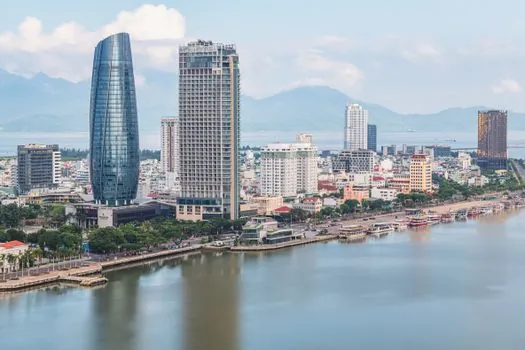
Asia-Pacific is the largest and fastest-growing region, with Polaris recording 42.73% of 2025 global revenue and Research Nester projecting 35.1% by 2035 [S5][S3]. China, India, Japan, and South Korea are the volume core, driven by construction equipment output, mining haul-truck demand, and the continuing build-out of agricultural mechanization. The Business Research Company explicitly names Asia-Pacific as the largest and fastest growing region in 2026 [S2].
North America is tracked by Global Market Insights at USD 4.7 billion in 2025 with a 4.8% CAGR through 2035, while Research and Markets pegs the U.S. at a 4.9% CAGR through the same window [S7][S4]. Polaris narrows the U.S. share of the regional market to roughly 78%, attributing the U.S. lead to automation and demand for sophisticated hydraulic systems in construction and aerospace [S5]. Europe is projected by Research Nester at 25.2% share by 2035, sustained by manufacturing activity and the shift toward energy-efficient hydraulic systems [S3]. A practical buyer note: market growth is concentrated where infrastructure, mining, and construction equipment are produced, so a sourcing strategy anchored to Asia-Pacific vendors will hold the deepest catalogue and the shortest lead time, while North American and European suppliers will compete on service, certification, and local inventory.
Tariff Pressure and Localization: Steel Tubes Are the Choke Point
Tariffs on imported steel tubes, precision rods, seals, and machined components are the single most cited structural pressure on the 2026 supply base, per The Business Research Company [S2]. North America and Europe are the most exposed because they rely on imported raw material and subcomponents, while Asia-Pacific suppliers face reduced export competitiveness into those markets [S2]. Research Nester records the concrete response: Pennsylvania-based Burnside America secured a USD 3.3 million Pennsylvania Industrial Development Authority (PIDA) loan plus a USD 20,000 workforce development grant, redirecting assembly lines from hydraulic system builds toward in-house production of industrial cylinders for construction customers [S3].
The practical effect on buyers is twofold. First, lead times on imported tie-rod and mill-type cylinders into North America have lengthened as OEMs re-qualify domestic tube and rod sources. Second, the Section 232 duty-free pathway for steel tubing from qualifying countries, including Australia and India, is now a procurement lever that U.S. and EU buyers should explicitly confirm with their vendor before issuing RFQs [S3]. For readers tracking the cost side of cylinder procurement, the industrial rubber TCO breakdown lays out the same seal-and-material price mechanics that now drive cylinder bill of materials, and the nickel alloy TCO note covers the rod and end-cap alloy side of the same cost stack.
Vendor Map: Who Is Actually Named in the 2026 Field
Research Nester names Bosch Rexroth AG, Parker Hannifin Corporation, Eaton Corporation plc, Caterpillar Inc. (Hydraulics Division), Wipro Infrastructure Engineering, Hydac International GmbH, Bucher Hydraulics GmbH, Hengli Hydraulic Co. Ltd., Precision Hydraulic Cylinders (PHC), Doosan Hydraulic Machinery Co. Ltd., Osac Engineering Sdn. Bhd., Hannon Hydraulics, Doosan Corporation (Hydraulics Division), and HYVA Holding B.V. as the key global players in 2026 [S3]. The cluster splits cleanly into three groups: Western premium (Bosch Rexroth, Parker, Eaton, Caterpillar, Hydac, Bucher, HYVA), Chinese cost-competitive scale (Hengli Hydraulic, Doosan Hydraulic Machinery), and regional specialists (Wipro, PHC, Hannon Hydraulics, Osac).
The Business Research Company also flags Idroteck introducing BIM (Building Information Modeling) object models for hydraulic cylinders to streamline engineering and design processes in 2026, a tooling move that targets the construction-side design chain where cylinder geometry must be embedded in the 3D model before fabrication [S2]. For procurement teams, the vendor choice in 2026 is less about the brand name and more about three binary questions: does the vendor hold the bore and stroke combination you need, can they hit the pressure rating under the relevant ISO 6020 / ISO 6022 duty envelope, and do they have documented metallurgy for the rod and end-cap so NACE MR0175 or equivalent corrosion service can be cleared.
End-Use Pull: Construction, Mining, Agriculture, and the Energy Transition
Research Nester puts the construction end-user at 32.1% of 2035 demand, the single largest vertical, with agriculture and mining also material contributors [S3]. The Business Research Company lists the broader end-user set as construction, material handling, agriculture, mining, oil and gas, marine, aerospace and defense, and automotive, with mobile equipment outpacing fixed industrial equipment in growth [S2]. The 2026 specific driver on top of the construction baseline is the renewable energy surge, where hydraulic cylinders are specified for pitch and yaw actuators on utility-scale wind turbines and for dam-gate and turbine-governor hydraulics in hydro plants [S2].
For a procurement team running a 2026 RFQ, the practical end-use split looks like this. Welded double-acting cylinders in the 50–150 mm bore band are the default for excavators, wheel loaders, and agricultural tractors. Mill-type cylinders above 150 mm bore go into mining shovels, large dump trucks, and offshore cranes. Tie-rod cylinders under 50 mm bore remain the workhorse for factory automation, presses, and machine tool fixtures. Telescopic single-acting cylinders stay in tipper trailers and refuse trucks. If a quote crosses these lines, ask why; the vendor is either stretching catalogue coverage or specialty-building, and the lead time and price difference will be visible.
Decision Criteria and Selection Logic
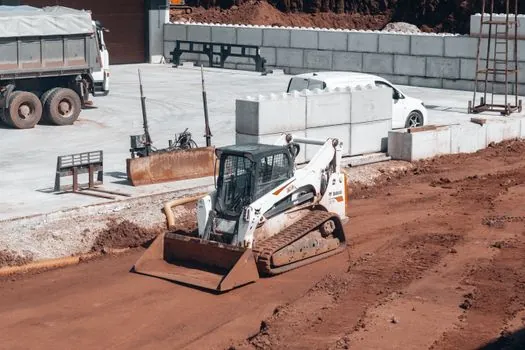
A defensible 2026 cylinder spec lines four decision criteria against the four product families. (1) Pressure rating: welded and mill-type cover the 250–700 bar mobile envelope, tie-rod sits at 160–250 bar, telescopic is application-specific. (2) Duty cycle and side load: welded tolerates shock and side load; tie-rod needs alignment to avoid rod buckling. (3) Service life and sealing: mill-type and welded bodies accept higher-end seal stacks (polyurethane, PTFE composites) for one million cycle targets, while tie-rod is limited by rod bearing life at extended stroke. (4) Lead time and tariff exposure: Asian-sourced welded units are the cheapest and fastest in 2026 but carry the highest tariff risk into North America and Europe; Western premium welded and mill-type units cost more but localize cleanly under Section 232 pathways where applicable [S2][S3][S5].
For buyers weighing the cost-of-ownership math, the POM TCO breakdown covers the polymer bushing and wear-pad side of the same engineering envelope, since POM (polyoxymethylene) is a common cylinder bearing material in light-duty designs. A buyer decision rule: if the application is mobile, high-cycle, and tariff-exposed, default to a North-American or European mill-type or welded vendor with a documented domestic tube source; if the application is fixed industrial and price-sensitive, the Asian tie-rod and welded catalogue is the rational pick.
Trackable signals to watch through the rest of 2026: any Section 232 adjustment that reopens Asian steel tube flow into U.S. cylinder plants, and the next round of Idroteck-style BIM catalogue launches from major Western vendors, which will set the de facto standard for how cylinder geometry is exchanged between OEM design teams and procurement.