
Hydraulic motors convert pressurised fluid flow into rotational torque, and the five commercial families, axial piston, radial piston, gerotor, vane, and gear, are differentiated by displacement, max operating pressure, and volumetric efficiency, per recent industry guidance [S1][S2].
Hydraulic motors pair a hydraulic motor drive with a fixed- or variable-displacement pump, accumulator, directional control valves, and reservoir, and the same envelope that produces the high power density also drives the maintenance, leak, and heat-loss penalties reviewed below [S3][S4].
What a Hydraulic Motor Is, and How the Five Types Compare
All hydraulic motors apply Pascal's law: pump-discharge pressure acts on the motor's displacement chamber, and the resulting force times the moment arm produces shaft torque at a speed set by flow divided by displacement, with typical commercial units spanning 10-450 cc/rev displacement and 200-420 bar continuous rating [S1][S2].
Axial-piston and radial-piston motors dominate heavy-duty mobile machinery because they tolerate 350-420 bar continuous pressure and reach 90-95% volumetric efficiency at rated speed, with piston designs preferred where starting torque and long dwell at low RPM are required [S1][S2][S3]. Gear motors (external or internal) are cheaper and simpler, limited to roughly 150-200 bar and best at medium speed with steady load, while vane motors deliver smooth low-speed output but lose efficiency as vane wear opens internal clearances past 200 bar [S3][S5]. Gerotor and orbital motors slot between gear and piston types on cost and pressure, and Impro Precision's design notes explicitly list "higher power density, high torque at low output speed, less complex than piston motors, more durable than vane motors" as the trade-off that defines the orbital class [S5].
Advantages: Power Density, Torque, Overload, and Stall Safety
Hydraulic motors generate high starting torque from a standstill without the inrush current an electric motor needs, and they can hold a static load at zero RPM with zero added energy input because the trapped fluid pressure alone balances the external force [S1][S2][S3].
The system can also store energy in an accumulator at the motor's working pressure, smoothing peak demand and recovering braking energy, which a rigid electric drive cannot do without a separate battery or supercap [S1][S2]. A further operational win is tolerance to contamination: because the wet side is already sealed to contain the oil, a hydraulic hydraulic actuator drive keeps running in wet, dusty, or muddy environments that would destroy an equivalent electric servo, and this is the main reason excavators, crawler cranes, and combine harvesters stay hydraulic [S2][S3][S4].
Compared with electric drives of equal continuous power, a hydraulic package is markedly smaller and lighter, with industry sources citing 4-6x the power-to-weight ratio as the headline figure, and the package is also field-scalable because motor torque scales with pressure, not motor size [S2][S3]. For plant engineers, this means you size the motor for the average load and let pressure peaks handle the rest, rather than oversizing an electric drive for its worst-case stall torque [S1][S2].
Disadvantages: Efficiency, Heat, Noise, Leaks, and Maintenance Load
Overall hydraulic-system efficiency lands in the 60-80% band, materially below the 85-95% typical of a modern electric drive, and the gap widens at part load and low speed where throttling and leakage losses dominate [S1][S3].
Three failure modes drive the rest of the downside. First, hydraulic fluid leaks are an operational and environmental hazard, with research noting that fluid leakage increases both safety risk and contamination liability, especially in food, pharmaceutical, and marine duty [S1][S2][S3]. Second, the system is multi-component: pump, reservoir, filters, valves, hoses, and accumulators all need periodic inspection, and hydraulic fluid must be checked, cleaned, and topped up on a far tighter cycle than the bearing grease on an electric motor [S1][S2][S3]. Third, high-cycle vibration eventually fatigues fittings and seals, so even a well-installed loop will develop drips over years of service, and the noise floor of a typical piston motor at 300 bar runs 75-85 dBA without sound enclosures [S1][S2][S3].
Hydraulic Motor vs Electric Motor: A Four-Criteria Comparison
On four common decision criteria, the trade-off is direct: power density and starting torque favor hydraulics, while efficiency and maintenance interval favor electrics [S1][S2][S3][S4].
Hydraulic systems offer a higher power density than electric drives, delivering more power with less volume and weight, and hydraulic motors provide high starting torque that makes them well suited to heavy-duty applications [S2][S3][S8]. Efficiency runs the other way: electric drives commonly reach 85-95% across the working range, while a hydraulic system including pump, valves, and motor usually lands at 60-80% and drops further under partial load [S1][S3]. Maintenance burden follows the same split, with electric motors needing only periodic bearing inspection versus hydraulic systems requiring filter changes, fluid sampling, leak checks, and valve adjustments on a defined hour-meter schedule [S1][S2][S3]. Environmental tolerance still tilts to hydraulics, since a sealed wet-side running in mud, water spray, or washdown is the original use case, while electric motors need at least IP65 enclosures to match [S2][S4].
Where Hydraulic Motors Win, and Where They Don't
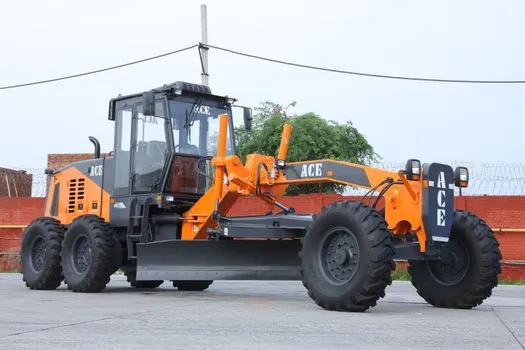
Hydraulic motors are the right call for mobile equipment with high starting loads, long holds at zero speed, and harsh site conditions, including excavators, crawler cranes, skid-steer loaders, agricultural tractors, drilling rigs, and marine deck machinery, and orbital motors in particular have become the default for low-speed high-torque winches and conveyor drives [S1][S2][S3][S5].
They are the wrong call for cleanrooms, food-grade conveyors, indoor AGVs in warehouses, and any duty cycle where quiet operation, low maintenance touch-points, or strict fluid-containment rules dominate, because the noise, leak risk, and fluid service burden will outweigh the torque and power-density wins in those settings [S1][S3][S4]. For a deeper look at how hydraulic motors compare to linear hydraulic cylinders on the same axes, the spec-first trade-off in Hydraulic Cylinder Advantages and Disadvantages: A Spec-First Trade-Off Map is a useful adjacent read, and the lifecycle cost framing in Hydraulic Cylinder TCO: Cost Drivers and Lifecycle Spec Map applies almost line-for-line to hydraulic motors as well. The hydraulic encyclopedia entry also covers the pump-side fundamentals that determine which motor class you should specify.
Sourcing, Standards, and Selection Checks
Specify the motor class against the duty profile, not the other way around: confirm continuous pressure, peak pressure, displacement, and required starting torque from the OEM datasheet, then verify that the pump, relief valve, and cooler are sized to handle the motor's heat rejection at full-load duty cycle [S1][S3].
Confirm the mounting interface, shaft seal type, and port threading against ISO 4391 hydraulic fluid power connector and component identification conventions, and require fluid cleanliness to at least ISO 4406 18/16/13 or better for piston-motor service life [S3][S5]. For the build context, review the construction machinery and equipment encyclopedia entry so the motor spec is written against the machine's full hydraulic system, not in isolation. As an installation-side check, the field-procedure and failure-mode map in Hydraulic Motor Installation: Field-Procedure and Failure-Mode Map is the right next page to read before commissioning, since most premature failures trace to contamination, overpressure events, or misaligned couplings rather than the motor itself [S3][S5].