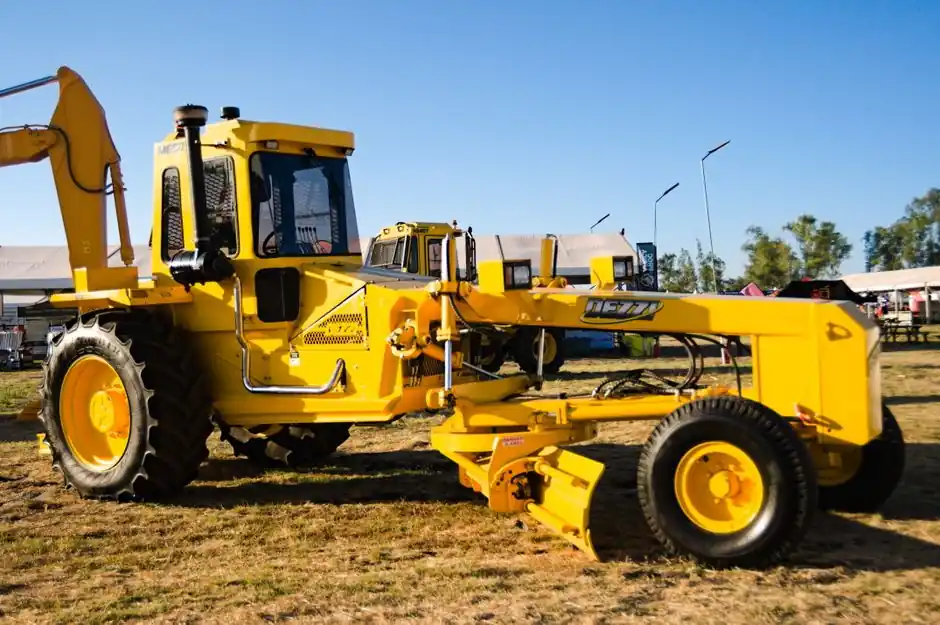
A hydraulic cylinder is a mechanical actuator that converts pressurized hydraulic fluid into controlled linear force and motion, using Pascal's Law to multiply pump pressure across a piston area into thousands of pounds of push or pull [S4][S5].
Across construction machinery, hydraulic presses, and material handling, the same physics that makes hydraulic cylinders compact and powerful also drives the recurring pain points engineers flag in service: leak sensitivity, fluid contamination, and idle-power losses compared with electric linear actuators [S1][S2].
Force Output and Power Density: Where Hydraulics Win Decisively
Hydraulic cylinders can deliver thousands of tons of force from a compact envelope because fluid pressure is transmitted equally in all directions across the piston face, so a small pump combined with a large piston area produces outsized mechanical work [S1][S5]. Electric actuators, by contrast, are bounded by motor torque converted through a ball-screw, which typically limits them to lighter-duty linear tasks [S2].
Double-acting configurations extend this advantage by providing full force in both directions across the entire stroke, which is why they dominate excavator booms, presses, and machine tool clamps; telescopic variants add long stroke in a short collapsed length for dump trucks and tippers [S4][S7]. A practical consequence: a single hydraulic cylinder on a 20-ton excavator can replace an array of mechanical linkages that would otherwise weigh several times more.
Control Precision, Smoothness, and Overload Behavior
Hydraulic systems allow micrometric speed variation through flow control valves, plus constant force or torque independent of speed changes, which is hard to match with all-electric drives in the same power class [S3]. The fluid itself acts as a built-in cushion, so motion is smooth and vibration is reduced when the system is properly valved and bled [S1][S5].
Overload protection is another structural plus: relief valves cap maximum circuit pressure, so a stalled cylinder does not mechanically self-destruct the way an over-torqued ball-screw can, and the circuit simply bypasses flow at the set pressure [S5]. Counterbalance and regenerative valving further refine descent control on boom and tilt functions, which is why mobile equipment still specifies hydraulic actuators for safety-critical motions.
Energy Efficiency, Heat, and the Electric-Actuator Comparison

Continuous-pressure idle losses are the headline efficiency penalty: a hydraulic system keeps the pump unloaded or pressurized even when no cylinder is moving, while an electric actuator only draws power when its motor is actively driving the screw [S2]. Convert that into kWh per shift and an idling hydraulic press can consume several times the energy of an electromechanical alternative at the same nominal force rating.
That said, well-tuned hydraulic systems with load-sensing pumps, variable-frequency drives on the electric motor, and accumulator-assisted peak shaving can narrow the gap, and at very high force ratings hydraulics still beat electric on specific energy per newton of output [S1]. The selection decision is rarely "hydraulic vs electric" globally; it usually splits by axis, with high-force, long-stroke motions on hydraulics and high-cycle, low-force pick-and-place on electrics, a trade-off mapped in detail for the upstream valving in Hydraulic Valve Pros and Cons: A 2026 Spec-First Trade-Off Map.
Leakage, Contamination, and Maintenance Burden
Leakage is the single most-cited hydraulic cylinder disadvantage: any compromise in seal integrity, piston rod finish, or steel pipe joint releases working fluid, drops performance, and creates a safety and cleanup problem [S1][S3]. Improper shaft material selection lets surface scratches initiate rust, which then scuffs seals and accelerates internal leakage [S1].
Contamination is the second-order failure mode: particulates in the fluid damage valves, pumps, and cylinder bores, so continuous filtration and periodic fluid analysis are mandatory, not optional [S3]. Real-world service intervals on a well-maintained industrial cylinder typically fall in the 2,000-4,000 hour range for seal kits, with full overhaul often scheduled by hours or cycles whichever comes first, and the cost-of-ownership side of that picture is unpacked in Hydraulic Pump TCO: Energy, Maintenance, and Pump-Type Cost Drivers Compared.
Noise, Vibration, and Environmental Constraints
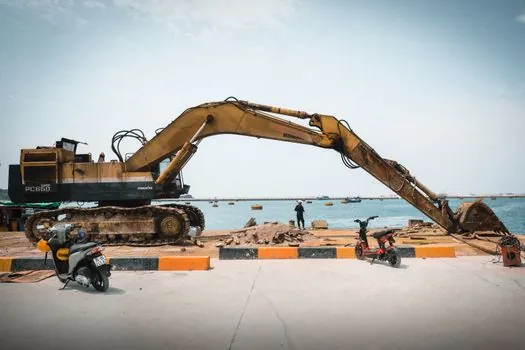
Hydraulic circuits inherently generate noise and vibration from pump pulsation, valve switching, and fluid turbulence, typically in the 70-90 dBA range at operator station on mobile equipment without active silencing [S1]. Noise-reducing components (sound-dampening pump mounts, accumulator pulsation absorbers, and low-noise valving) and proper hose routing can cut several decibels, but rarely to the silent operation of an electromechanical axis.
Environmental constraints stack on top: hydraulic fluid spills are hazardous, fluid production carries greenhouse-gas cost, and some operators are moving away from hydraulics in food-grade and clean-room settings for that reason [S1]. Where the cylinder still has to deliver high force inside a construction machinery and equipment envelope, the practical answer is bio-degradable or synthetic ester fluids paired with leak-resistant welded-body cylinders rather than abandonment of the technology [S4].
Configuration Options and Sizing Logic
Configuration choice is the spec lever that resolves most of the trade-offs above: single-acting cylinders use spring or gravity return, suiting lifts and clamps where force is only needed one way; double-acting cylinders deliver controlled powered motion in both directions, the default for most mobile equipment [S4][S7]. Telescopic cylinders stack multiple stages to multiply stroke inside a short retracted length, at the cost of stepped force output and more seal surfaces.
Tie-rod designs are easier to disassemble for field service, while welded-body designs are more compact and leak-resistant, which is why heavy mobile machinery (excavators, loaders, dump trucks) almost universally specifies welded bodies and industrial plants prefer tie-rod for serviceability [S4]. Bore and rod sizing follow the textbook F = P × A relationship, with the rod-end area penalty (roughly 20-30% force loss versus cap end on typical rod ratios) routinely deciding whether an application needs a double-rod or re-phase circuit.
Selection Criteria: When a Hydraulic Cylinder Is the Right Spec
Spec a hydraulic cylinder when the duty cycle demands very high force in a compact envelope, the application tolerates routine seal and fluid maintenance, and energy use at idle is acceptable (mobile equipment, presses, heavy lifts). Spec an electric actuator instead when the duty cycle is high repetition at low to moderate force, the environment is clean-room or food-grade, and energy cost per cycle dominates total cost. [S1]
Useful gates before committing: required force at working pressure (typical industrial circuits run 160-250 bar, mobile 250-350 bar), stroke length, mount type, and duty cycle in cycles per hour, plus a hard look at the hydraulic power unit's idle losses. When heavy lifting on a site also involves cutting or demolition, the broader tool-spec conversation usually starts with Oxy-Fuel Cutting Torch Selection for Steel Construction: Spec Gates and Capacity Map before the cylinder package is finalized.
Limitations, Failure Modes, and Standards Watch-Points
Common failure modes trace back to three root causes: seal wear from contaminated fluid or rod scoring, internal leakage from piston-seal hardening at high temperature, and external leakage from rod seal or port-fitting fatigue [S1][S3]. Correct fluid selection for the operating temperature range and centralized automatic lubrication reduce both wear modes substantially [S3].
Standards worth flagging for any spec sheet: ISO 6020 (telescopic single-acting industrial cylinders), ISO 6022 (double-acting), and ASME B30.4 / B30.9 for the lifting and slinging side, with manufacturer test certificates typically including proof pressure at 1.5× working pressure and burst at 3-4× working pressure. Track on the next revision: rod-coating and seal compound updates driven by bio-fluid compatibility, and tighter reporting on energy consumption per cycle under ISO 4413 / 4414 fluid-power safety rules.