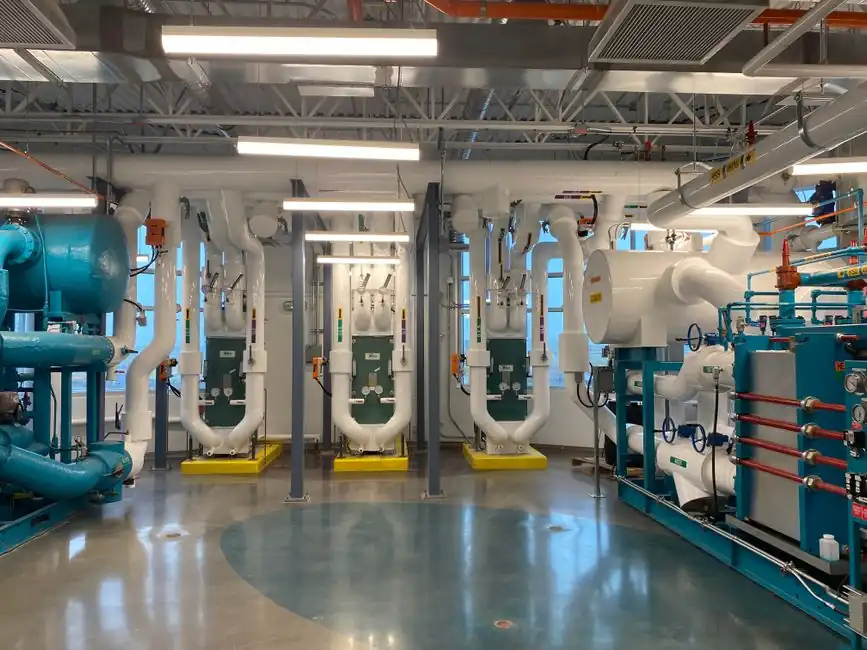
Hydraulic system manufacturing equipment spans the pumps, cylinders, valves, accumulators, reservoirs, and control hardware that go into a working hydraulic power unit, and buyers in 2026 are selecting those subassemblies against a market projected to expand from $55.49 billion in 2026 to $80.08 billion by 2034 at a 4.7% CAGR [S4].
The same research frames the buyer landscape across pumps, flow dividers, cylinders, and motors as the four core product lines a manufacturer or integrator must cover to serve steel, recycling, and heavy-mobile end markets [S1]. For a process engineer, the practical question is not which brand, but which subassembly class and which operating envelope matches the machine being built.
Pressure classes and where each one applies
Hydraulic circuits in industrial machinery cluster into three operating bands that any spec sheet should call out: low pressure below 100 bar for clamping, gate actuation, and furnace door drives; mid pressure 150 to 250 bar as the working band for general force delivery including tire processing presses and balers [S3]; and high pressure 250 to 350 bar reserved for servo-hydraulic roll gap positioning in rolling mills and similar precision force applications [S2].
The pressure band drives component selection. A cylinder sized for 200 bar will deliver roughly 40% more force at 280 bar but at the cost of seal life, hose rating, and energy losses, so overspecifying pressure is a common and expensive mistake. Buyers building general industrial machinery should default to the 150 to 250 bar window and only step up to 350 bar when sub-millimetre position accuracy or very high force from a small bore cylinder is required [S2][S3].
Pump, cylinder, valve, and accumulator: the four build blocks
Every hydraulic system manufacturing equipment list starts with a pump, a cylinder, a directional or proportional control valve, and a reservoir, with accumulators added wherever peak demand exceeds average demand by more than a factor of two [S3]. Internal gear and vane pumps cover fixed-displacement low-to-mid pressure circuits, while variable-displacement piston pumps are the standard choice above 250 bar and for any circuit where energy efficiency matters, because load-sensing piston units cut unloaded losses dramatically compared with fixed-displacement gear setups.
For cylinders, the spec-first questions are bore, rod diameter, stroke, and rated pressure, plus seal kit compatibility with the chosen fluid. For control, electronic proportional pressure control has displaced mechanical relief-only architectures in modern equipment, allowing the controller to program different pressure profiles for different workpieces without manual adjustment and to clamp pressure inside safe limits in milliseconds [S3]. Accumulators, typically nitrogen-charged bladder or piston type, store energy during low demand and release it during peak demand, which both reduces prime mover sizing and improves valve response [S3].
Fluid, contamination, and thermal management
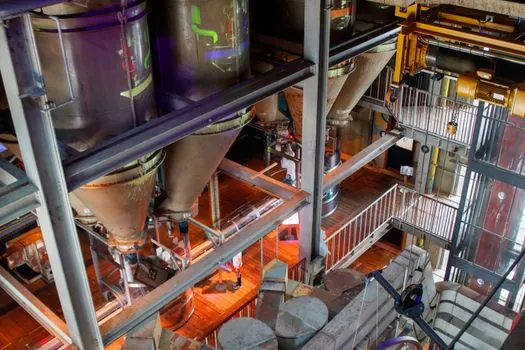
Mineral hydraulic oil ignites at 150 to 170 degrees Celsius, a temperature range routinely present within 2 metres of EAF tapping and BOF blowing operations, so fluid selection and thermal control are not comfort issues, they are fire-safety issues [S2]. In tire processing equipment, sustained high-pressure operation without adequate oil cooling degrades viscosity, accelerates seal wear, and shortens component life, which is why modern hydraulic power units for that market ship with dedicated oil coolers and thermal monitoring as standard rather than optional [S3].
Contamination control links directly to servo-valve life and to the cleanliness codes published under ISO 4406. Servo valves fail first in dirty circuits, and in steel mill rolling mill circuits a single servo-valve fault can stop a mill immediately with no workaround, which is why the spec-first answer is to budget for offline filtration, kidney-loop flushing, and a written ISO 4406 target on the control drawing rather than treat filtration as a commodity line item [S2].
Selection criteria: who needs which architecture
A buyer fitting out a steel mill rolling mill servo loop needs a 250 to 350 bar variable-displacement piston pump, servo or proportional valve, high-response accumulator, and ISO 4406 cleanliness controls, with a downtime exposure of $150,000 to $800,000 per hour of unplanned stop in flat-rolled production shaping the maintenance budget [S2]. A buyer fitting out a tire baler or sidewall cutter needs a 150 to 250 bar fixed or variable displacement pump, electronic proportional pressure control for mixed-tire recipe changes, and a bladder accumulator sized for peak cutting demand, with thermal monitoring to keep fluid viscosity inside seal-friendly limits [S3].
A buyer building a low-pressure clamping or furnace door system can stay with gear or vane pumps, mechanical or simple proportional relief, and a smaller reservoir. Across all three, the comparison axes are: pressure class, cleanliness target, thermal management, and peak-to-average flow ratio, with the right combination chosen from the duty cycle, not from the catalogue. For related spec-first selection logic on sealing components that interface with these systems, see this O-ring buying guide 2026: material, size, grade, and supplier shortlist reference, and for the broader supplier landscape, see this hydraulic system market share by manufacturer: 2026 ranking and supplier landscape breakdown.
Where the standard production hardware falls short
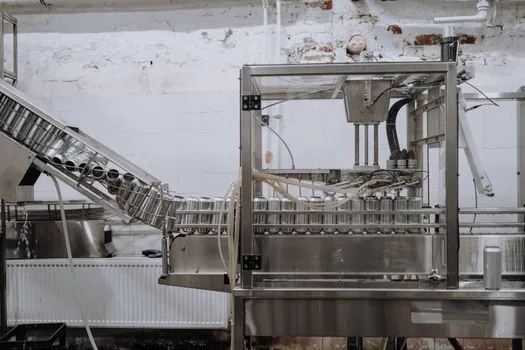
Catalogue hydraulic system manufacturing equipment is built for clean factory duty, and three classes of application punish that default: high ambient temperature near molten metal, dirty foundry or recycling environments, and high-cycle precision force applications [S2][S3]. In each case, the failure mode is the same, a standard pump, valve, or seal degrades faster than its design life, and the maintenance budget takes the hit.
For high-temperature service, the fix is heat-resistant seals, higher fluid flash point fluids, and external coolers. For dirty service, the fix is heavy filtration and offline kidney-loop flushing. For high-cycle precision service, the fix is servo or proportional valves, accumulators for peak shaving, and tight ISO 4406 cleanliness. None of these fixes are exotic, but skipping any one of them is how a 200 bar general-purpose hydraulic power unit gets installed into a 300 bar servo rolling mill circuit and then fails on day 30.
Standards, safety, and the numbers behind the spec
Hydraulic systems in steel plants carry layered standards, with safety, environmental, and pressure-equipment rules all touching the build. The numbers that drive real engineering decisions include the 250 to 350 bar operating window for rolling mill servo systems, 150 to 250 bar for general industrial force delivery, 150 to 170 degrees Celsius mineral oil flash point, $150,000 to $800,000 per hour of unplanned downtime in flat-rolled steel, and a 4.7% CAGR for the global hydraulic equipment market through 2034 [S2][S3][S4].
For sourcing, North American hydraulic equipment and component suppliers, including pumps, flow dividers, cylinders, and motors, remain concentrated through industrial directories that list manufacturers by capability rather than by brand, which gives a spec-first buyer a way to shortlist on pressure class, fluid compatibility, and control architecture before any sales call [S1]. For deeper component-level support, this bearing process control and instrumentation: 2026 spec-first reference for miniature and article on instrumentation upstream of the hydraulic loop is a useful adjacent read.
Trackable signals to watch over the next quarter: quarterly updates to the hydraulic equipment market sizing [S4], any new ISO 4406 or pressure-equipment standard revision affecting industrial hydraulic power units, and steel mill capex announcements that confirm whether the 4.7% CAGR is concentrating in servo-valve-intensive rolling mill upgrades or in lower-pressure general industrial machinery.
For the relevant spec sheets and selection criteria, see additive manufacturing material, linear guide, and crossed roller guide.