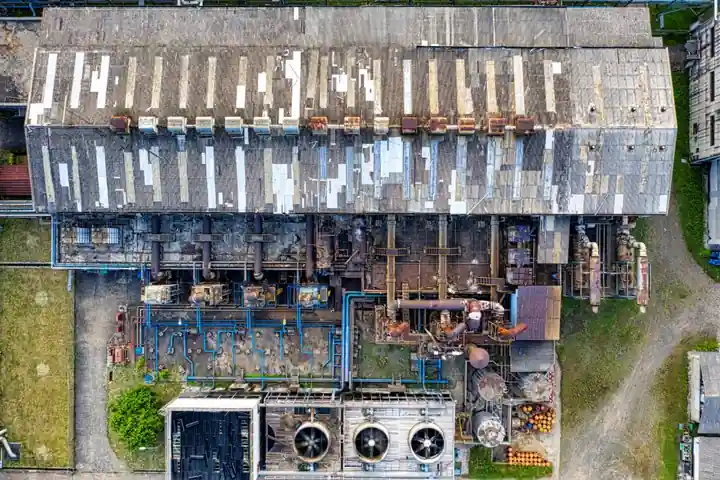
In a hydraulic sourcing project, OEM and ODM describe who owns the design: the brand owns geometry, schematics and IP under OEM, while under ODM the factory owns the platform and the brand rebrands or lightly customizes it [S1]. This single ownership question cascades into mold cost, MOQ, lead time, and test-program scope, and it is the first decision a hydraulic system buyer should lock before talking to suppliers.
For a typical 250 bar hydraulic power unit with cylinders, valves, and a power pack, ODMs that already run a catalog platform can quote in 2-4 weeks on a 50-100 unit MOQ, while a true OEM build of a new manifold, custom hydraulic cylinder bore/stroke, and bespoke tank usually sits in the 8-16 week tooling-to-sample window, plus a higher MOQ and amortized mold/tooling charge per project [S2][S3].
Definition and Ownership Split
An OEM engagement in hydraulics means the customer supplies the working pressure, flow, port geometry, mounting interface, duty cycle, and usually a 2D/3D model, while the supplier manufactures to that print and is responsible for process capability, traceability, and quality records [S1][S2]. The brand retains design liability and IP, and the supplier typically cannot reuse the part geometry on another customer's build without written release.
An ODM engagement in hydraulics means the supplier already has a proven hydraulic pump / motor / cylinder / valve platform with established test data, drawings, and tooling, and the customer selects from it, modifying paint, branding, port fittings, and limited dimensional options [S1][S3]. ODM works well when the application fits within an existing performance envelope and the buyer's differentiator is service, integration, or branding rather than the hydraulic architecture itself.
Decision Criteria Side by Side
Cost, development time, IP control, MOQ, and differentiation line up very differently between the two models, and the table that follows is the spec-level view a buyer should pressure-test every quote against [S1][S2][S3][S4].
Criterion 1, design and IP ownership: OEM keeps geometry, schematics, and proprietary circuit logic with the brand; ODM keeps frame design, engineering data, and process know-how with the factory [S1][S4]. Criterion 2, development cost and tooling: OEM carries higher upfront engineering hours and customer-funded mold/tooling; ODM reuses existing tooling, often at minimal or zero new mold spend [S2][S4]. Criterion 3, lead time: OEM prototypes typically run 8-16 weeks before serial production, with multi-stage sample loops; ODM samples can drop out in 2-4 weeks because the platform is already validated [S2][S3][S4]. Criterion 4, MOQ and flexibility: OEM MOQs are commonly higher for a fresh project because mold amortization is spread over fewer parts; ODM MOQs are more flexible and frequently lower because the factory is running the platform for multiple customers [S3][S4].
Criterion 5, differentiation ceiling: OEM can deliver a unique manifold, a custom hydraulic actuator bore, or a proprietary cooling loop that no competitor can copy without the prints; ODM differentiation caps at paint, decals, port adapters, and selected tunable parameters within the platform's structural envelope [S1][S4]. Criterion 6, test program: OEM requires a fresh validation cycle, including pressure-cycle, burst, and EMC/electrical checks where a hydraulic motor controller is in scope; ODM leverages the platform's existing test record and only runs delta checks on changed features [S2][S4]. Criterion 7, risk profile: OEM carries higher development risk because new geometry can fail fatigue or seal-life targets late in the cycle; ODM shifts most of that risk to the factory's proven platform [S4].
Who OEM Is For vs Who ODM Is For
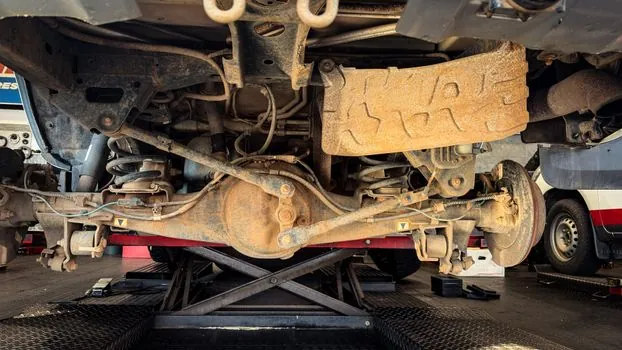
OEM fits established brands building a flagship machine, an export-specific hydraulic platform, or any application where the hydraulic circuit is itself part of the sales argument, such as a high-tonnage press, a custom injection-molding clamp, or a wind-pitch actuator with proprietary load profiles [S1][S2]. It also fits buyers who need a sealed, brand-controlled supply chain because the machine is sold with a long warranty or because field engineers must be able to order a part to a brand-internal part number.
ODM fits new entrants, regional distributors, and machine builders chasing fast time-to-market on a category where the underlying hydraulics are commoditized, including agricultural implements, forestry heads, light construction attachments, and standard material-handling carts [S3][S4]. It also fits projects whose bottleneck is certification and integration, not the hydraulic design, because a factory-validated ODM platform usually comes with pre-built ISO 9001 process records and a documented test dossier the buyer can drop into a CE/UL technical file [S2][S3].
Process and Documentation Discipline
Both routes benefit from a five-stage gate that locks the requirement before tooling is released: requirement review, selection or design, sample confirmation, mass production, and delivery plus ongoing support, with a quality-control hold at every stage [S2][S3]. On the OEM path, the buyer should hand the supplier working pressure, flow, duty cycle, ambient range, fluid cleanliness target (typically ISO 4406 18/16/13 or better for servo systems), port standard, and a 2D/3D model so the supplier can return a manufacturability review rather than a guess.
On the ODM path, the buyer should request the platform's existing performance map, including pressure range, flow range, speed envelope, and validated life-cycle data, before committing to a brand variant, and should confirm in writing which design parameters are locked and which the factory will release for customer tuning [S3][S4]. The quote package should break out unit price, tooling/mold cost, NRE, sample cost, and the MOQ tier, because ODM quotes often look lower on unit price but bundle tooling and NRE in ways that hide the real project cost [S2][S4].
Failure Modes and Selection Traps
The most common trap on the OEM side is underestimating the iteration loop: a custom manifold that passes 250 bar proof pressure can still fail 1 million-cycle fatigue or leak at a port interface the FEA missed, and each lost iteration costs roughly one mold cycle in schedule [S2][S4]. The most common trap on the ODM side is over-customizing a platform past its validated envelope, for example specifying a non-standard cylinder stroke on a catalog actuator, which forces the factory into a hybrid build that inherits neither the OEM test discipline nor the ODM cost advantage.
A second OEM trap is treating the supplier as a contract manufacturer rather than a design partner, which strips out the manufacturing-DFM input that a specialist factory can contribute on bore size, seal selection, and porting layout [S1][S2]. A second ODM trap is assuming a lower MOQ is automatic; some ODM platforms only reach the discount tier at 200-500 units per quarter, so the apparent unit-cost win evaporates below that volume [S3][S4]. Buyers who want a third-party reality check on supplier capability and category-level economics can cross-reference the broader hydraulic system competitive landscape in 2026 before signing a tooling PO.
Trackable next nodes for a buyer evaluating this decision in Q3-Q4 2026 include: (1) request the supplier's ODM platform performance map and OEM DFM feedback within 2 weeks of RFQ, and (2) confirm in writing which IP, mold, and test records transfer to the brand on project close, since these two items decide whether the engagement was truly OEM, truly ODM, or a hybrid that inherits the cost of both.