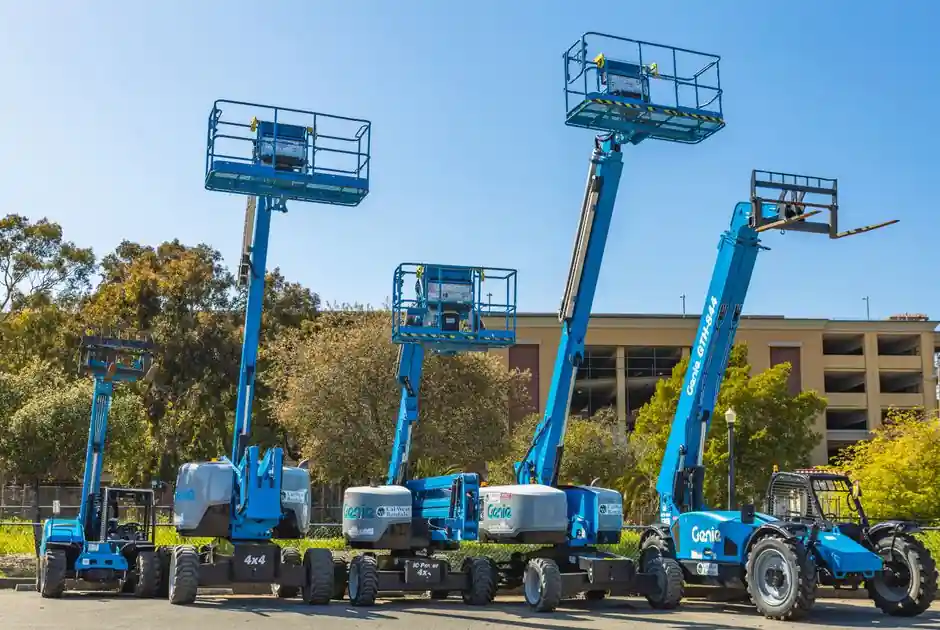
Aerial work truck platform leveling is a direct trade between mechanical parallelogram linkages, passive hydraulic slave circuits, and electro-hydraulic closed-loop control, with the third method now standard on booms above roughly 12 m of working height because mechanical drift and passive-cylinder lag become unsafe at longer lever arms [S4].
Mechanical leveling is the oldest of the three and still ships on many folding-arm aerial work trucks; hydraulic and electro-hydraulic leveling are specified for telescopic and hybrid booms where a parallel four-bar linkage cannot be packaged inside the boom profile [S4].
Three Leveling Architectures Used on Boom-Mounted Platforms
The leveling job is to keep the work platform horizontal while the boom luffs, so the operator can stand, weld, or tie off without rebalancing every cycle. Three architectures cover nearly every aerial work platform in service: a mechanical parallelogram linkage of bars, chains, or wire rope; a passive hydraulic slave circuit (two cross-connected cylinders of identical bore and rod); and an electro-hydraulic closed-loop system driven by an inclination sensor and a solenoid valve [S4].
Mechanical leveling sets a parallelogram between turntable and basket so the opposite sides stay parallel through deformation, which keeps the platform flat without any actuator, but the linkage is bulky and only fits a folding-arm geometry; the hydraulic slave circuit (large chambers tied together, small chambers tied together) gives equal-and-opposite cylinder motion for active-and-follower pairs, while the electro-hydraulic system reads a tilt sensor and commands a proportional valve until the error drops below a programmed threshold [S4].
How Each System Behaves Under Load and Motion
Mechanical parallelogram leveling carries the platform's full weight on the linkage itself, so the structure must be sized for both the platform load (typically 200-250 kg for a two-person bucket) and any shock load from boom acceleration; the trade-off is that the platform position is purely a function of boom angle, with no time-domain lag, which makes it the most predictable of the three architectures [S4].
Passive hydraulic leveling transmits force through oil, not a rigid bar, so the slave cylinder only approximates the active cylinder's stroke; the residual angular error is small at modest working heights but grows as the boom lever arm lengthens and the oil volume between cylinders increases [S4]. Electro-hydraulic leveling closes the loop with a sensor (typically a MEMS inclinometer) and a proportional or servo valve, so steady-state error can be held under roughly ±0.5° on most production booms, but the correction is sampled, which means a transient lag of 100-300 ms is normal during a fast luffing motion [S4].
Cost, Maintenance, and Service-Interval Comparison
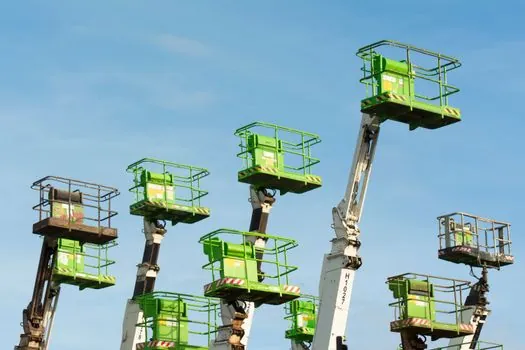
The mechanical linkage has the lowest recurring maintenance cost of the three because it has no hydraulic fluid, no seals, and no electronic controls, but its spring/counterweight elements (where fitted) and pivot pins still need annual greasing and a periodic check for cracked weldments on the four-bar members [S4].
Passive hydraulic leveling adds a closed-loop hydraulic circuit with two matched cylinders, interconnecting hose, and a small reservoir; typical service items are hydraulic fluid analysis at 1,000-hour intervals, cylinder seal replacement at 5,000-7,000 hours, and a hose inspection every 12 months because the long oil route through the boom is the dominant failure point on telescopic machines [S4]. Electro-hydraulic leveling layers a tilt sensor, a controller, and a proportional valve on top of the same hydraulic circuit, so its service burden is the highest of the three; in return, calibration of the inclinometer and valve dead-band is required roughly once per year, and the controller can log platform-tilt history for incident review [S4].
Decision Matrix: Mechanical, Passive Hydraulic, Electro-Hydraulic
On a four-criterion comparison drawn from manufacturer and operator data, the architectures line up as follows: working-height suitability favors electro-hydraulic above 12 m, passive hydraulic from 8-12 m, and mechanical at or below 8 m; load-handling capacity is highest for hydraulic (because cylinder force scales with pressure, not linkage geometry) and lowest for mechanical on long booms where the parallelogram weight penalty cuts into useful payload; control precision is best on electro-hydraulic (±0.5° steady-state typical) and only approximate on passive hydraulic because of cylinder and hose compliance; recurring cost is lowest for mechanical, mid for passive hydraulic, and highest for electro-hydraulic [S4].
Spec the mechanical system when the boom is a folding-arm design under roughly 8 m, the platform sees occasional rather than continuous use, and the operator profile tolerates the slight tilt that the linkage can exhibit under sudden stops. Spec passive hydraulic for telescopic booms in the 8-12 m working-height band where cylinder equal-and-opposite motion tracks the boom closely enough and the OEM wants to avoid sensor calibration. Spec electro-hydraulic for any unit above 12 m, any hybrid boom where the geometry blocks a parallelogram, and any application with frequent luffing combined with personnel on the platform [S4].
Failure Modes and Safety Constraints Buyers Should Price In
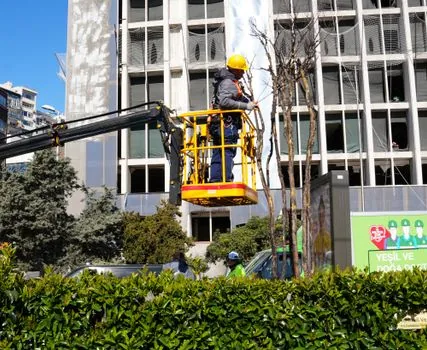
Mechanical parallelogram leveling fails when a pivot pin shears, a tie rod cracks, or the chain stretch exceeds the design tolerance, and the failure is typically catastrophic (platform tilt to one side) rather than gradual, so visual inspection of the four-bar welds at every annual inspection is the primary mitigation [S4].
Passive hydraulic leveling fails when the connecting hose between active and slave cylinders ruptures, when seal bypass lets the two chambers cross-talk, or when air entrainment softens the response, and the visible symptom is a platform that lags the boom by a growing angle as oil warms. Electro-hydraulic leveling fails when the inclinometer drifts, the proportional valve sticks, or the controller loses its zero reference; most production systems include a watchdog that latches the last valve command and alarms the operator, but the response time is only as good as the diagnostic firmware in the controller [S4].
Applicable Standards and Specification Anchors
Aerial work truck platform leveling is governed by the EN 280 / ANSI A92.2 family of vehicle-mounted elevating aerial device standards, which set the platform-level envelope (typically within 5° of level under static and specified dynamic conditions) and the requirement for a secondary or redundant leveling path on most booms above a defined reach threshold. The platform itself is a component of the larger aerial work truck system and is designed together with the outrigger pad sizing, the truck chassis stability, and any on-board jib options. [S4]
For procurement, a defensible spec line item for a hydraulic or electro-hydraulic leveling system should state: leveling architecture (mechanical four-bar / passive hydraulic / electro-hydraulic closed-loop), steady-state platform angle (typically ≤1.5°), dynamic tracking error (typically ≤3° at maximum luffing rate), sensor type if electro-hydraulic (single-axis or dual-axis inclinometer), and the maximum working height above which the architecture becomes mandatory by OEM policy. The cost premium for electro-hydraulic over passive hydraulic is small relative to the boom cost, and most OEMs will not offer a passive-hydraulic system on telescopic booms above roughly 12 m because the residual tilt exceeds their internal comfort threshold [S4].
For more on the platform-side trade-offs (working height, electric versus diesel power, outrigger spread) that interact with leveling choice, see the spec-driven breakdown of electric vs diesel aerial work platforms.