
Mounting a cable tray section or a tool rack on an aerial work platform bucket is treated by OSHA 29 CFR 1910.67(b)(2) as a field modification: the bucket, the bracket, and any hardware that alters load path must be certified in writing by the manufacturer or a nationally recognized testing laboratory as conforming to ANSI A92.2-1969 (as incorporated by reference in 1910.67) and as being at least as safe as the unmodified equipment [S1].
That single rule is the gating item for almost every bracket sold for an aerial work truck: OEM cable-tray brackets, magnetic parts trays, and rail-mounted tool bins all sit on top of an A92.2-1969 platform, and a buyer who skips the certification step inherits the compliance gap, not the vendor [S1][S9].
What OSHA 1910.67 actually allows on the platform
29 CFR 1910.67(a)(7) defines a platform as "any personnel-carrying device (basket or bucket) which is a component of an aerial device," and 1910.67(b)(2)(ii) explicitly authorises field modification for uses other than those intended by the manufacturer, conditional on written certification that the modified assembly still meets A92.2-1969 and is at least as safe as the original [S1]. For a cable-tray bracket or tool rack, the load the certifier must sign off on includes the dead weight of the rack, the cable or tool payload, the lever arm created by an outboard mount, and any snag load introduced into the guardrail.
Two operational limits travel with the rule: the truck may not be moved with the boom elevated and personnel in the basket (1910.67(c)(2)), and for any work near energised overhead lines the employer must apply 1910.333(c)(3) clearances on top of the platform rating [S1]. A bracket that projects past the guardrail can violate the no-movement rule by creating an unrecoverable snag geometry during a stowed travel check.
Bracket types, materials, and the loads they actually carry
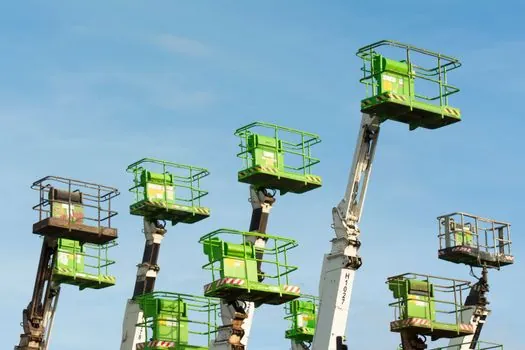
Off-the-shelf options for the platform fall into four families, each with a different load and snag profile: (a) OEM rail-clamp cable-tray brackets such as the Platform Basket 4804001600 series, designed to hang a short tray run off the bucket rail; (b) non-conductive polymer tool bins with OSHA locking bolts, the AERIAL TOOL BIN listing at 17 in length x 21 in width x 17 in depth with a magnetic parts tray, rated for general hand tools and small fasteners; (c) lip-mount bucket trays such as the EZ-RAMP blue bucket tray with patented ramp and magnetic hardware holder; and (d) OEM boom-platform accessories such as the Genie Boom Lift Tool Tray and the Genie Lift Pan, the latter rated to hold up to 15 gal (59 kg) of spilled liquids or dry materials on 8 ft / 2.4 m platforms with a drain valve [S3][S5][S9].
Comparison of the four families on four decision criteria, useful for a buyer writing a spec line item:
OEM rail-clamp cable-tray brackets: best for sustained cable-pull loads up to the bracket's marked working load, low snag risk if mounted inside the rail envelope, requires OEM or NRTL sign-off, and is the only family that is typically line-listed in the platform's A92.2 documentation [S1][S9]. Non-conductive polymer tool bins: best for hand-tool organisation and small parts, zero electrical conduction risk to the operator, working load effectively limited to hand tools in the 5-15 kg range, and tri-lingual warning labels as shipped [S3]. Lip-mount bucket trays: best for fasteners and small hardware, fast install without drilling, lower load rating, and the magnetic strip is a contamination concern near outdoor substations [S3]. OEM boom-platform accessories: best for matched compliance documentation, mid-range load capacity (the Lift Pan is rated to 15 gal / 59 kg), integrated with the platform's accessory rail pattern, and the highest unit cost of the four [S5].
How cable-tray hardware and bucket hardware actually meet
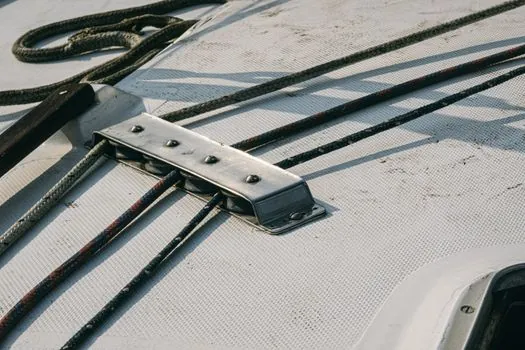
Cable-tray products on the ground side are rated by NEMA load classes, and Eaton's KwikRail system is published for classes 12A and 12B with a defined accessory set for commercial and data-centre cable management, which sets a useful reference point for the support span and fitting pattern even when the tray is cut down to a 1-3 m bucket run [S4]. A bracket that picks up those fittings must carry the tray's published edge load back into the platform rail without prying the rail outwards; in practice that means the bracket's vertical face should land on the rail's flat centre section, and any cantilevered length should be flagged in the modification cert [S1][S4].
Material handling aerial work platforms, the sub-class that linesmen use to hang cable and set insulators, are the same vehicle family that picks up most of these brackets, and the use case is the reason the rail pattern and accessory ecosystem exist at all [S10]. The platform does not become a different machine class when a tray is bolted on; the A92.2-1969 envelope still applies, and the platform's marked platform capacity minus the bracket-and-cable dead load is the available working load for the crew [S1][S10].
Manufacturer ecosystem and what each one documents
Versalift and Armlift truck-mounted aerial devices, as integrated by upfitters such as Aspen Equipment, ship with options for rear-mount over-centre units to 63.67 ft working height, behind-cab over-centre units to 75.83 ft working height, 10 ft boom tower elevators, hydraulic tool circuits at the platform, and fully insulated upper boom and lower insert for utility work, and those options are the documented envelope inside which a bucket-mounted bracket can be specified without retesting the boom [S2]. Palfinger's bucket-truck line publishes customisable work-platform size and mounting-location options together with tool organisation as a factory offering, which means a tray or rack can be ordered as a BOM item rather than a field retrofit, and the A92.2 paperwork travels with the truck [S7].
Tadano's Manitex truck-mounted aerial work platforms package the boom, the truck, and the outrigger stability as one mobile unit, exactly the "mobile unit" combination 1910.67(a)(6) defines, and a cable-tray bracket on the Manitex platform therefore modifies the mobile unit, not just the basket, which broadens the certification scope the NRTL must sign [S1][S6]. For high-reach tree-care and forestry units on a Peterbilt chassis, the same bracket logic applies: the bracket sits on the A92.2 platform, and the truck below supplies only stability [S1][S2].
Selection rules a process engineer can write into a purchase order
A spec line that survives an audit usually contains six fields, and three of them come directly from the research material: (1) "Bracket shall be supplied with written certification per 29 CFR 1910.67(b)(2)(ii) that the installed assembly conforms to ANSI A92.2-1969 and is at least as safe as the unmodified platform" [S1]; (2) "Working load shall not exceed the platform's marked capacity minus bracket-and-cable dead load, with the platform's combined load posted at the controls" [S1]; (3) "Non-conductive components shall be used for any tool, bin, or bracket within reach of an operator working to 1910.333(c)(3) clearances" [S1][S3]; (4) "Bracket projection shall remain inside the platform guardrail envelope in stowed position so the truck can be moved at highway travel with the boom in the lower travelling position per 1910.67(c)(2)" [S1]; (5) "Cable-tray fittings shall match a NEMA 12A or 12B load-class pattern such as Eaton KwikRail to keep spare fittings interchangeable" [S4]; (6) "Tool tray or pan shall be rated and labelled, with the Genie Lift Pan 15 gal / 59 kg rating as a typical reference point for liquid containment" [S5].
Buyers renting rather than owning should still demand the same paperwork, since the cert runs with the platform, not with the bracket, and a rental fleet that has retrofitted bins to every machine in the yard will hold the certs centrally rather than on each truck [S1][S5].
Failure modes and constraints the rulebook does not spell out
Three failure modes show up repeatedly in incident reports even when the bracket is certified: snag during stow, where an outboard tray hook catches on the boom knuckle as the basket is lowered; overload creep, where the crew adds cable, then tools, then a second tray until the platform's marked capacity is silently exceeded; and galvanic or chemical attack on the rail clamp, where dissimilar-metal contact at a stainless bracket on a galvanised rail corrodes the rail faster than the bracket and weakens the underlying A92.2 structure [S1][S5]. Each one is invisible at install and surfaces only after a near-miss, which is why the 1910.67(b)(2)(ii) cert is a one-time check at install, not a recurring inspection.
A second constraint is the pallet-rack and storage-rack analogy: a bucket tray is to an aerial platform what a shelf beam is to an industrial rack, in the sense that both are bolt-on accessories that must respect the host structure's rated capacity and the anchor pattern of the host. Buyers who already run a rack-capacity discipline in the warehouse tend to apply the same logic to the bucket; buyers who do not, tend to over-pack the platform.
Where the market is heading on this bracket class
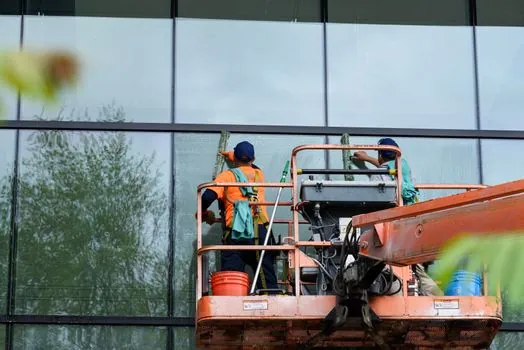
Two signals are worth tracking over the next two reporting cycles. First, the A92.2 family itself: the legacy reference in 1910.67 is the 1969 edition, and any migration to a newer ANSI A92.22 or A92.24 framework will redraw the certification path for every bracket on the market, so a specifier who locks in cert language to "ANSI A92.2-1969" today should also ask the vendor what the cert looks like under a successor standard [S1]. Second, the OEM accessory catalogue: Genie's published accessory list now spans power generation, white-noise alarms, larger 13 ft / 4 m platforms, and fluid-containment pans, which is the direction major OEMs are pushing the bucket from a bare platform into a tooled workstation, and that shift is the cleanest signal that bolt-on brackets are becoming factory items rather than field retrofits [S5]. For related context on working-height selection that interacts with bracket choice, the working-height ranges for construction sites reference and the weekly rental rate by working height benchmark both feed into the same buying decision.
