
Edition 4 of IEC 60947-5-2, published on 2019-10-18, is the current international reference for inductive and capacitive proximity switches and, since the 2012 amendment, also covers ultrasonic, photoelectric, and non-mechanical magnetic proximity switches [S1]. The standard defines the rated operating distance Sn on a square 1 mm-thick Fe 360 (mild steel) standard target, with the target edge dimension set to roughly 3 times the nominal sensing distance [S6]. For every switch that ships, the manufacturer must publish a usable sensing range Sr, a hysteresis H (as a percentage of Sr), and an assured operating distance Sa that the installer can rely on without re-calibration [S2][S9].
Beyond sensing distance, the 2019 edition tightened construction requirements via IEC Guide 116, refreshed EMC tables 9 and 10, rewrote the impulse withstand voltage test (5.3.1.3, 9.3.3.4.5), added a new photoelectric type D with background suppression, and absorbed the environmental condition annexes O, W and Q of IEC 60947-1:2007 plus its A1:2010 and A2:2014 amendments [S1]. BIS in India enforces the same text as IS/IEC 60947-5-2, and testing there covers sensing distance and accuracy, hysteresis, switching frequency, voltage and current ratings, short-circuit and overload, environmental resistance, IP protection, and mechanical durability [S3].
What the standard actually defines: Sn, Sr, Sa, H, and the 1 mm Fe 360 target
Sn is a conventional design variable, not a guaranteed in-machine distance: it is measured on the standard target (square mild steel Fe 360, 1 mm thick, side roughly equal to 3·Sn) under defined temperature and supply conditions [S6]. The manufacturer then publishes Sr, the real usable range, which for inductive and capacitive devices sits at 0.9·Sn or higher under rated supply and at 23 °C ambient, with the target approaching axially [S2][S9]. Hysteresis H, the difference between switch-on and switch-off point expressed as a percentage of Sr, typically lands between 1 % and 20 % depending on the device family, and is one of the values reported on the BIS test report [S3].
For functional-safety or safety-related circuits built on the same sensor, the assured operating distance Sa is the figure the safety calc must use: 0.81·Sn, or about 0.7 of the measured switching distance when the device is qualified to a NAMUR safety characteristic [S7]. Edition 4 keeps the 0.81·Sn derivation but reframes the wording under the "specifications concerning the sensing range and operating distance" change introduced in 2019 [S1]. Installers should read Sn as a comparator, Sr as the in-spec operating number, and Sa as the worst-case safety number, and avoid mixing the three.
2019 vs 2007: what changed and what did not
The 2007 base text (Edition 3) plus Amendment 1:2012 still drives a large installed base and is the version most legacy datasheets cite, and the CENELEC harmonisation has rolled forward as EN IEC 60947-5-2:2020 plus A11:2022, both used in conjunction with EN 60947-1:2007+A1:2011+A2:2014 (Group Differences entry last modified 2025-07-15) [S1]. Edition 3.1 already brought ultrasonic and photoelectric proximity switches into the document and added magnetic types, so the technology scope is unchanged in 2019; what changes is the depth of the safety, EMC, and environmental requirements [S4][S8].
The 2019 changes that hit a process engineer's spec sheet most directly are the new photoelectric type D background-suppression definitions and tests, the rewritten impulse-withstand clause, the new connector references in Annex D, and the major update of Annex A (new dimensions and shapes, plus definition updates) [S1]. Construction requirements were realigned with IEC Guide 116, which covers material requirements, artificial optical radiation, hot surface, unattended operation, and foreseeable misuse, and Annex F now ships extra symbols for photoelectric proximity switches [S1]. For a panel builder, the practical consequence is that any device first placed on the market after late 2019 should be qualified to the 2019 text for new builds, even if older 2007/2012 stock remains acceptable on a like-for-like spare.
Selection criteria: which sub-clause applies to which sensor family
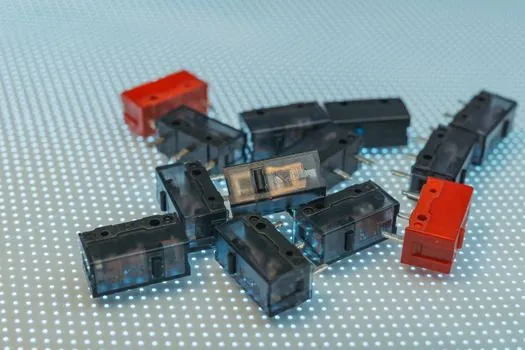
Inductive proximity sensors remain the workhorse for detecting ferrous and non-ferrous metal targets; capacitive units cover non-metallic targets (plastics, liquids, wood, granulate) at the cost of tighter grounding and shielding rules; ultrasonic proximity switches handle sound-reflecting objects at ranges that exceed inductive capability; photoelectric proximity switches (including the new 2019 type D with background suppression) detect a wider object set and integrate the new test procedure in this edition; non-mechanical magnetic proximity switches detect the presence of a magnetic field from a separate actuator [S1]. The standard explicitly limits itself to proximity (i.e., presence), not to through-beam or retro-reflective photoelectric measurement, so a spec written around a laser distance sensor for true ranging is operating outside IEC 60947-5-2.
For a practical pick-list the engineer usually compares three numbers: Sn (target design value), Sr (the in-range number on the datasheet), and Sa (the safety calc number), plus switching frequency f, voltage and current ratings, IP rating, and EMC class. Edition 4 routes EMC through updated Table 9 (emission) and Table 10 (immunity), and the impulse-withstand test is now a more aggressive 5.3.1.3 / 9.3.3.4.5 procedure, so any device specced for a substation or drives cabinet should be re-qualified against the 2019 text rather than a 2007 datasheet [S1]. When the application is a measurement chain, a separate measurement test philosophy applies, and the proximity switch under 60947-5-2 should be treated as a binary presence element, not an analogue transducer.
Standards coverage comparison across the four main switch families
On the four decision criteria that matter to a controls engineer, the families covered by IEC 60947-5-2:2019 line up as follows. Sensing target: inductive handles ferrous metals cleanly and non-ferrous at reduced Sn; capacitive handles almost any solid or liquid with a dielectric constant above a few units; ultrasonic and photoelectric handle sound- or light-reflecting objects regardless of material; magnetic needs a dedicated actuator. Range relative to body size: inductive is shortest (typical Sn from 0.8 mm flush-mount M5 to roughly 10 mm on a long-distance M12 or M18, with 10 mm a commonly cited upper figure for standard inductive bodies) [S5]; capacitive is similar in body size but a bit longer in air; ultrasonic and photoelectric extend further, with photoelectric type D background suppression now a defined sub-type in the 2019 edition [S1][S5].
Environmental and EMC: all four families are pulled into the same Table 9/10 regime and the same impulse-withstand test from 2019, so a vendor that has only qualified to 2007/A1:2012 needs a re-test plan if the build is post-2019 [S1]. Hysteresis and switching frequency also vary by family: inductive is fast (commonly 1-3 kHz on small M5/M8 bodies), capacitive is moderate and depends strongly on the target dielectric, magnetic sits in the low-kHz range but offers near-zero hysteresis, and ultrasonic/photoelectric switching frequency is governed by the time-of-flight or light-pulse timing. The functional-safety treatment (Sa at 0.81·Sn, or 0.7× measured distance under NAMUR) is the same for inductive and capacitive but the BIS test sequence still covers all four families on the same test bench [S3][S7].
Real use cases and the limits of the standard
A typical 24 V DC M12 inductive proximity switch with Sn = 4 mm flush-mount will spec Sr at 3.6 mm and Sa at roughly 3.2 mm; install the target on a clean axial approach, leave at least one body diameter of clear zone around the active face, and respect the standard target's geometry when justifying the published Sn in a vendor datasheet [S2][S9]. Capacitive proximity switches are common on plastic- and liquid-level detection in packaging and water-treatment skids, but the 0.81·Sn assured figure assumes the standard target or an equivalent ground reference, so a thin plastic wall in front of the sensor will pull the effective range down and is not covered by the standard's default numbers [S3][S6]. For more demanding non-contact ranging, the spec should move off IEC 60947-5-2 entirely and toward a true ranging device, where a laser distance sensor or laser distance meter gives millimetre-class output rather than a binary 0/1.
Magnetic proximity switches under the same standard are non-mechanical and rely on a separate magnetic actuator, so they are the natural pick for safety door monitoring on a guarding cell, where the assured distance number feeds directly into the Cat 3 / PL d calculation via the 0.81·Sn factor [S1][S7]. Photoelectric type D with background suppression, new in 2019, addresses the old problem of false trips on a shiny background and is now covered with its own definitions and test method, so any new diffuse-reflective photoelectric spec for a conveyor or a pallet infeed should be written to type D [S1]. For an end-of-line check of a proximity sensor on a harness or a printed circuit board, a bench proximity probe on a precision rig is a better fit, because IEC 60947-5-2 is a switching-element standard, not a metrology standard.
Cross-standard interaction and certification pathways
IEC 60947-5-2 is a Part 5-2 of the IEC 60947 low-voltage switchgear and controlgear family, and Edition 4 cross-references IEC 60947-1:2007 plus its A1:2010 and A2:2014 amendments for the environmental information framework, EMC test conditions, and a set of definitions in Annexes O, W and Q [S1]. The CENELEC mirror EN IEC 60947-5-2:2020 plus A11:2022 must be read against EN 60947-1:2007+A1:2011+A2:2014, and the CENELEC Group Differences entry was last refreshed on 2025-07-15, which is the date to check if a European plant buys on EN rather than IEC text [S1].
In India, IS/IEC 60947-5-2 is enforced by the Bureau of Indian Standards under the ISI Mark Scheme (Scheme I) with a Quality Control Order from the Ministry of Heavy Industries, and a foreign manufacturer applies through the Foreign Manufacturers Certification Scheme (FMCS) with an Authorized Indian Representative [S3]. The test sequence covers sensing distance and accuracy, hysteresis, switching frequency, voltage and current ratings, short-circuit and overload, environmental resistance, IP protection, and mechanical durability, all run in BIS-recognised labs [S3]. The IECEE CB scheme lists test report form IEC60947_5_2B for this standard, so a CB certificate plus a CENELEC or IS deviation is usually enough to ship into Europe, India, and most of the IECEE member economies without re-testing the common clauses [S1].
Limits, failure modes, and what the spec does not cover
Three failure modes consistently bite in the field even when the device is fully compliant. First, target material and geometry: Sn is defined on 1 mm Fe 360, so non-ferrous metals (stainless 316, aluminium, copper) typically reduce the effective range on a standard inductive device, and the standard does not mandate a vendor to publish a correction factor for every alloy [S6]. Second, mounting and clear-zone effects: a flush-mount device needs a metal-free zone around the active face, and a non-flush device needs the opposite, and a vendor that fails to call this out on the datasheet forces the installer to discover it on commissioning, outside the standard's guaranteed Sn [S2][S9].
Third, temperature drift and EMC: Edition 4 tightened both, but only within Table 9/10 and the 5.3.1.3 / 9.3.3.4.5 impulse test, so a plant in a high-EMI substation should still verify EMC on the actual cabinet, not just on a bench [S1]. The standard also does not cover ultrasonic distance measurement beyond simple presence, photoelectric ranging, or any analogue output, so any spec that says "0-10 V proportional to distance" is outside IEC 60947-5-2 and should re-route to a switching power supply plus a dedicated ranging instrument, not a 60947-5-2 proximity switch. Finally, NAMUR-style safety applications need a vendor that publishes a Declaration of Conformity for Functional Safety, because the 0.81·Sn / 0.7×-measured figure is a vendor-published characteristic, not a guaranteed property of every 60947-5-2 device [S7].
For a controls engineer buying in October 2026, the workable spec is: cite IEC 60947-5-2:2019 (or EN IEC 60947-5-2:2020/A11:2022 in CENELEC scope, or IS/IEC 60947-5-2 in India), require the vendor to publish Sn on a 1 mm Fe 360 target with side equal to 3·Sn, demand Sr and Sa values from the same datasheet, confirm CB or BIS coverage, and re-verify the photoelectric type D background-suppression clause if the application uses diffuse-reflective optics. Track the CENELEC Group Differences page for changes after 2025-07-15, watch for any IEC 60947-1 amendment that re-routes the environmental annexes, and confirm the BIS QCO implementation date before shipping non-certified stock into India.
Background reading: Hybrid vs Permanent Magnet vs Variable Reluctance Stepper Motors: 2026 Selection Specs.